
REVIEW · ROSE VALLEY TOURS
Buzludzha Monument and the Rose Valley Guided Day Tour
Bulgaria’s strangest summit awaits. This long day from Sofia pairs the Buzludzha Monument with the fragrant traditions of the Rose Valley, giving you two very different views of rural Bulgaria. I like the hotel pickup and small-group format, and I especially like that the day moves beyond Sofia’s usual sights into the mountains and villages. The main drawback is the length: expect roughly 10 to 11 hours, with about three hours of driving before you even reach Buzludzha.
I also like the contrast between the stops. You get bold communist-era art at a remote mountaintop, then family-run rose production in Skobelevo. The high elevation and moderate walking make warm clothes and sturdy shoes important, while the $183.97 price means you should value convenience and a full day of guiding rather than expect a cheap countryside outing.
In This Review
- Key points to know before booking
- Why Buzludzha and the Rose Valley make a good pair
- The early pickup and three-hour mountain drive
- Reaching the 1,441-meter Buzludzha Monument
- Descending into the Valley of Roses and Thracian Kings
- Two distilleries, two ways to understand rose oil
- What the $183.97 price really covers
- Who will enjoy this day most
- Booking, cancellation, and simple preparation
- Should you book the Buzludzha and Rose Valley tour?
- FAQ
- Where does the tour begin?
- What time does pickup start?
- How long does the tour last?
- How high is the Buzludzha Monument?
- What should I wear for the Buzludzha stop?
- Is transportation included?
- Are meals included in the tour price?
- What is the cancellation policy?
Key points to know before booking
- Buzludzha rises to 1,441 meters, so mountain weather can be much colder than in Sofia.
- The flying-saucer-shaped monument is the day’s most unusual sight and a major draw for photographers.
- Two rose distilleries show both old and modern methods of making rose oil.
- Hotel pickup and drop-off remove the need to arrange rural transport yourself.
- The minivan holds no more than 15 people, keeping the group smaller than a large coach tour.
- Meals are not included, so budget separately for lunch, tastings, and personal purchases.
Why Buzludzha and the Rose Valley make a good pair
I like this tour because it does not force you to choose between Bulgaria’s twentieth-century past and its older rural traditions. In one day, you see a huge political monument built on a mountain summit, then visit a village where rose oil production follows methods passed down through generations.
The contrast is almost comic. Buzludzha is cold, stark, and futuristic, with concrete forms and communist mosaics. The Rose Valley stop is warm, fragrant, and tied to family work, food, drink, and local products.
That variety gives the day more shape than a simple scenic drive. You are not only looking out of a minivan window. You are learning how Bulgaria’s countryside has been shaped by industry, ideology, agriculture, and village life.
The tradeoff is time. Sofia to Buzludzha takes about three hours by road through the Sredna Gora Mountain and the Thracian Valley. You will spend a good part of the day in transit, though the route itself provides changing mountain and valley views.
More Rose Valley trips:
- Symbol of the Communism Buzludzha monument and the Rose valley
★ 5.0 · 3 reviews - Kazanlak Full-Day Tour from Sofia
★ 4.5 · 2 reviews - Day Tour in Communist Monument Buzludzha and the Rose Valley
★ 4.5 · 2 reviews
The early pickup and three-hour mountain drive
The tour begins with pickup at your Sofia hotel or chosen address at about 8:30 in the morning. That is useful if you do not want to find a bus station or arrange a taxi for a remote day trip. You simply meet the English-speaking guide, board an air-conditioned minivan, and let someone else handle the driving, parking, and route.
The vehicle is a practical part of the experience, not just a minor convenience. Buzludzha sits high in the Balkan Mountains, and the Rose Valley is far outside Sofia. A rental car would give you more independence, but this tour includes transportation costs and parking, and you do not have to navigate mountain roads or plan the stops yourself.
The drive takes around three hours to reach Buzludzha. The route passes through the Sredna Gora Mountain and the Thracian Valley before climbing toward the summit. You should expect a full travel day, not a quick excursion with only brief time on the road.
The small-group limit is 15 people. That is large enough to keep the price from becoming a private-tour rate, but small enough to make the minivan feel more personal than a full-size coach. It also gives you a better chance to hear the guide during the history portions and ask questions.
Reaching the 1,441-meter Buzludzha Monument
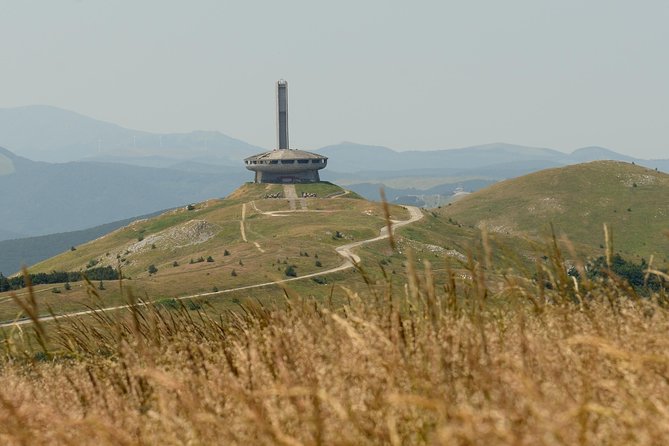
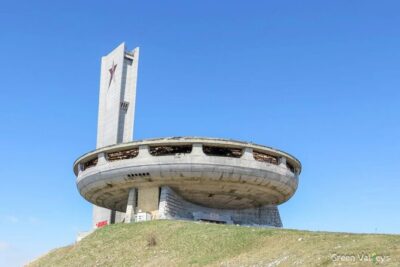
Buzludzha is the star of the tour. Its concrete form resembles a flying saucer stranded on a mountain summit, which explains why it attracts photographers and people interested in unusual abandoned structures. Even from the outside, the design is hard to confuse with anything else in Bulgaria.
The monument is tied to Bulgaria’s communist era and is often called the Ghost of communism. The nickname fits the setting: a giant, isolated structure high above the valleys, surrounded by mountain air and a sense of abandonment.
The artistic details are as important as the shape. You will see communist-era art and mosaics connected with communist leaders and political themes. This is not a polished palace or a restored museum. Its appeal comes from the mixture of grand ambition, striking design, remote surroundings, and decay.
I would approach the stop with historical curiosity rather than treating it only as a spooky photo opportunity. The monument raises questions about how a government wanted to present its ideals, how much effort and material went into that message, and what happens to such symbols when the political system changes.
One strong point from the available feedback is the call to preserve the site as history rather than erase it for ideological reasons. That is a useful way to think about Buzludzha. You do not have to admire communism to value the monument as evidence of Bulgaria’s past.
Bring your camera, but do not forget practical clothing. At 1,441 meters, the summit may feel cold even when Sofia is mild. The tour specifically advises warm clothes and comfortable shoes, and you should take that seriously. The activity is not suitable for people with disabilities, and a moderate level of physical fitness is required.
The information provided does not promise a full interior tour or guaranteed access to every part of the structure. I would think of the stop primarily as a guided visit to the monument and its visible art, with the exact experience shaped by conditions at the mountain site.
Descending into the Valley of Roses and Thracian Kings
After Buzludzha, the minivan descends toward the area around Kazanlak. This region is known as the Valley of Roses and Thracian Kings, and the setting changes quickly from a high mountain summit to rural valley country.
The drive through the rose-growing area gives you useful context before the distillery visit. Instead of seeing rose oil as a generic souvenir, you see the rural setting where the crop belongs. If the fields are in bloom, the visual and fragrant side of the region should be especially appealing, although the supplied details do not promise a particular flowering date or harvest activity.
The next stop is the village of Skobelevo. Here, you visit a private family rose oil distillery beside an ethnographic museum. This is one of the tour’s more grounded stops because it connects production with household traditions and village life.
The family setting also changes the tone of the day. Buzludzha represents a huge state project, while the distillery presents work at a much smaller human scale. You get a look at the practical side of Bulgarian rural tradition, not just a scenic photo stop.
More communist-era history in Sofia:
- Communist Walking Tour of Sofia
★ 5.0 · 690 reviews - Sofia Communist History 2-Hour Tour in a Classic Trabant
★ 5.0 · 45 reviews - Sofia Food & Tasting Tour with Communist-Era Tram Ride
★ 5.0 · 35 reviews - Buzludzha Monument and the Museum of Socialist Art
★ 5.0 · 25 reviews
Two distilleries, two ways to understand rose oil
The rose experience includes a modern distillery and an older installation known as gulapana. The older setup is arranged according to methods used more than 340 years ago, giving you a direct comparison between traditional and modern production.
A demonstration explains how rose oil is made during the season. The wording matters here: the demonstration is connected to the production season, so the exact process you see may depend on the time of year. Still, the visit offers more substance than simply entering a shop filled with rose-scented products.
The traditional installation helps explain the labor and technique behind a product that can seem almost weightless once it reaches a small bottle. You can see the link between the crop, the equipment, and the finished oil.
The fragrant rose garden adds another layer to the visit. Afterward, you can taste traditional rose products, including rakia, a Bulgarian brandy, and local dishes in the restaurant. The restaurant has a view toward the mountains, which makes it a natural place to pause after the long drive and the outdoor walking.
Food and drinks are not included in the tour price, so plan to pay separately. The same applies to personal purchases. The gift shop sells rose products, essential oils, aromatherapy items, and souvenirs. I would treat the shop as optional rather than part of the tour’s main value, but it can be useful if you want a practical reminder of the visit.
What the $183.97 price really covers
At $183.97 per person, this is not a bargain day trip. The value comes from the distance, the private rural transport, the guide, and the amount of ground covered in one day.
Your price includes hotel pickup and drop-off, all transportation and parking costs, a licensed English-speaking guide, VAT, and local taxes. Those inclusions remove several costs that can quietly add up when you arrange a remote excursion independently.
The price makes more sense if you are staying in Sofia without a car and want Buzludzha plus the Rose Valley in one organized day. It is also useful if you prefer having the history explained rather than visiting the monument and distillery with no context.
It makes less sense if you want a slow village visit, a private guide, or a short outing. The schedule is long, the drive is substantial, and meals are extra. Group discounts are available, which may improve the value for a larger party.
The average booking point is 78 days in advance. That is a helpful planning signal, especially if Buzludzha is a priority during a short Sofia visit. I would not wait until the last moment if your dates are fixed.
Who will enjoy this day most
I would recommend the tour to you if you enjoy unusual architecture, modern political history, rural traditions, and scenic road trips. Photographers should find Buzludzha especially appealing, while anyone interested in Bulgaria’s communist past will have plenty to think about at the summit.
It also suits visitors who want convenience. Hotel transport, a small group, an air-conditioned minivan, and a licensed English-speaking guide make the day easier than assembling the same route yourself.
You should think twice if long drives make you miserable. The round trip from Sofia takes much of the day, and the mountain stop requires warm clothing, comfortable shoes, and moderate physical fitness.
This is not the best choice for a fully accessible outing. The tour states that it is not suitable for people with disabilities, and the high mountain location adds another practical challenge.
Booking, cancellation, and simple preparation
Free cancellation is available if you cancel at least 24 hours before the 8:30 a.m. start time. Cancellations made less than 24 hours ahead are not refunded, and late changes are not accepted.
Wear layers. Sofia’s weather is not a reliable guide to conditions at Buzludzha’s summit. Comfortable shoes matter because the monument and village stops are not designed as a standard city walk.
Bring a camera, but also leave room in your day for the guide’s explanations. The strongest part of the experience is not only the unusual shape of Buzludzha or the rose products at the shop. It is the connection between a mountain monument, Bulgaria’s political past, and the working traditions of the valley below.
Should you book the Buzludzha and Rose Valley tour?
Book it if you want an ambitious, all-day outing that combines one of Bulgaria’s strangest monuments with a working rose tradition. The small-group setup, hotel transfers, and guide make the $183.97 easier to justify, especially without a car.
Skip it if you want a relaxed half-day, a low-cost trip, or a fully accessible route. For everyone else, the appeal is clear: Buzludzha provides the drama, Skobelevo provides the local tradition, and the long drive links two sides of Bulgaria that are rarely seen together.
FAQ
Where does the tour begin?
The tour begins with pickup from your hotel or address in Sofia, Sofia Region.
What time does pickup start?
The scheduled start time is 8:30 a.m.
How long does the tour last?
The experience lasts approximately 10 to 11 hours.
How high is the Buzludzha Monument?
Buzludzha Monument is located at 1,441 meters above sea level.
What should I wear for the Buzludzha stop?
Bring warm clothes and wear comfortable shoes because the monument is high in the mountain.
Is transportation included?
Yes. Hotel pickup and drop-off, transportation, parking costs, and local taxes are included.
Are meals included in the tour price?
No. Meals, tips, and personal expenses are not included.
What is the cancellation policy?
You can cancel for a full refund up to 24 hours before the experience starts. Cancellations or changes made less than 24 hours before the start time are not accepted for a refund.
Just added in Sofia
- Private Winter Day Trip to the Rila Mountain★ 4.5 · 3 reviews
- Weekend in Bulgaria★ 5.0 · 1 review
- Wind Mills Hydropark Tours & Activities★ 5.0 · 1 review
- Sofia Hidden Gems: Small-Group Walking Tour with Tram Ride★ 5.0 · 7 reviews
- Vratsa Karst and Caves★ 5.0 · 1 review
- Via Ferrata Adventure on Kuklata peak 2257 m in Rila Mountain★ 5.0 · 8 reviews
- Vitosha Trail Hunter Bike Tour from Sofia★ 5.0 · 9 reviews
- Vitosha Mountain- Heritage and Hiking- Private Day Trip★ 5.0 · 2 reviews
Rose Valley Tours, compared.
Kazanlak-Rose Valley-Valley of the Thracian Kings – private tour from Plovdiv
Read our review →
A Day trip to the Thracian Kings, The Valley of Roses & Buzludzha
Read our review →
Private Access Rose Festival Kazanlak 05-07.06.2025
Read our review →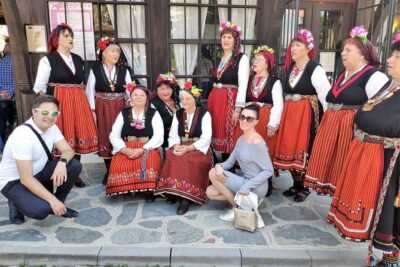
Picking Roses Workshop & Extracting Rose Oil in the Rose Valley
Read our review →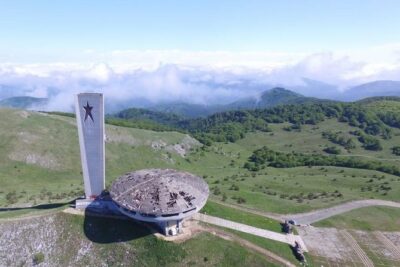
Symbol of the Communism Buzludzha monument and the Rose valley
Read our review →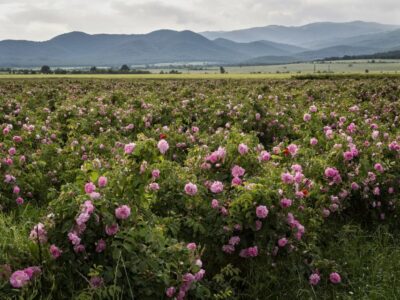
Day Tour in Communist Monument Buzludzha and the Rose Valley
Read our review →
Browse the lists this tour appears in