
REVIEW · COMMUNIST HISTORY TOURS
Communist Walking Tour of Sofia
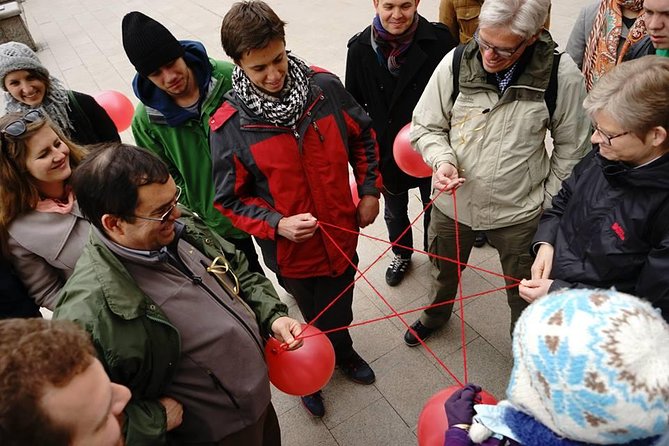
Sofia’s recent past is written into its streets. This three-hour walk links Soviet monuments, party buildings, churches, and public squares while your guide explains how communist rule changed daily life in Bulgaria. I especially like the personal family stories and the way the tour connects grand buildings with ordinary life. The route also gives you a useful introduction to central Sofia, not just a lesson in politics.
The price, about $21.77 per person, is fair for a small-group tour with a professional local guide and no extra admission fees. The main caution is the 4:00 pm start. In winter, the final hour can be dark, making some monuments harder to see, and the route covers a good stretch of the city on foot.
In This Review
- Key points before you book
- Why Sofia’s communist past needs a walking tour
- Starting at the Sofia Court House
- A small church and the place of Soviet arrival
- The Largo, the party headquarters, and the missing symbols
- City Garden and the story of the Mausoleum
- The Monument to the Soviet Army
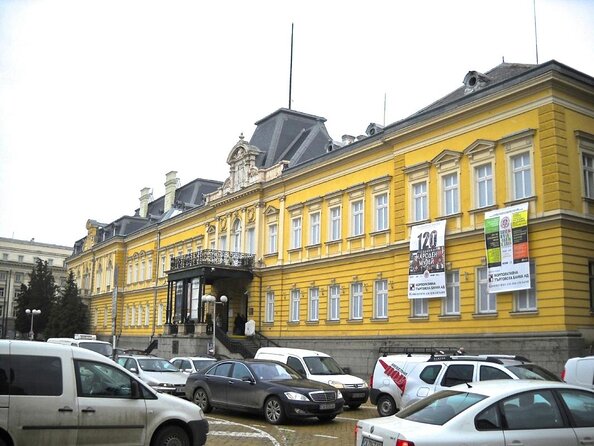
- The former Royal Palace and the changing city center
- National Palace of Culture, Sofia’s grand communist project
- Ending beside a piece of the Berlin Wall
- What the guides do well
- Is $21.77 good value?
- Who should take this walk?
- Should you book the Communist Walking Tour of Sofia?
- FAQ
- How long does the Communist Walking Tour of Sofia last?
- What time does the tour start?
- Where does the tour begin?
- Where does the tour end?
- Is the tour offered in English?
- How many people can join the tour?
Key points before you book
- The tour connects major landmarks with everyday life: You hear about ideology, shortages, surveillance, religion, family memories, and the fall of the regime.
- The route begins at the Sofia Court House and ends at the Berlin Wall fragment near NDK: You move through central Sofia rather than viewing communist sites in isolation.
- The Monument to the Soviet Army is a major stop: Its political meaning, graffiti, and controversial status give the tour plenty to discuss.
- Guides use stories, pictures, and humor: Guides named Niki, Nikola, Vasko, Martin, Stefan, Vasil, and Yoan have all been praised for making difficult subjects clear.
- Expect a real walk, not a short plaza talk: The tour lasts about three hours, with breaks along the way.
- Winter timing matters: At 4:00 pm, daylight may fade before the tour reaches its final stops.
Why Sofia’s communist past needs a walking tour
Communism in Bulgaria lasted from the end of the Second World War until 1989. Sofia still carries that period in its monuments, government buildings, broad public spaces, and carefully planned ceremonial areas.
You can read dates in a guidebook, but the subject makes more sense when you are standing beside the places where power was displayed. A former party headquarters tells one story. A small Orthodox church squeezed between newer buildings tells another. The contrast is the point.
This tour focuses on Bulgaria’s political and social history from the arrival of Soviet influence through the end of the regime. Your guide explains communist ideology, why it took hold, how the system worked, and why it eventually collapsed.
I like that the tour does not treat the period as a simple contest between good and bad. The strongest guides explain the system’s promises and failures, then connect them to family experience. Several guides have used personal stories to discuss school, work, politics, religion, and the limits placed on daily life.
That approach is especially helpful if you know little about Bulgaria. The tour gives you a framework for understanding Sofia before you visit museums or explore the city on your own.
More Walking Tours in Sofia
- Sofia Highlights 2 Hour Sightseeing Walking Tour
★ 5.0 · 442 reviews - Guided Walking Tour of Sofia
★ 5.0 · 143 reviews - Private city walking tour of Sofia
★ 5.0 · 141 reviews
Starting at the Sofia Court House
The meeting point is outside the Sofia City Court, also known as the Palace of Justice, at 2 Vitosha Boulevard. This is in the old city center and near public transportation, so it is a practical place to begin.
The opening discussion takes about ten minutes. The building itself helps set the tone: this is a tour about institutions and power, not just statues. Your guide introduces the route and places the communist period within Bulgaria’s wider political story.
The Palace of Justice is also listed as the location associated with 365 Association Sofia Tours, the local company connected with the experience. Check that you are at the start point, not the ending location at NDK. One person arrived at the final stop after following incorrect directions and missed part of the walk, so confirm the meeting point before setting out.
A small church and the place of Soviet arrival
The next stop is the ancient Orthodox Church of Saint Parascheva, often called the old Saint Petka Church. It is a compact, easy-to-miss building, and that is exactly why it works well here.
The guide uses the church to explain the place of religion under communist rule. The regime promoted atheism and restricted religious influence, yet churches and religious traditions did not simply vanish. At this stop, you get a more personal view of how public ideology met private belief.
The walk then reaches the Presidency Building. Here, the subject shifts to the arrival of the Soviet Army in Bulgaria and the political change that followed.
Expect about ten minutes at each of these early stops. The pace is not built around long interior visits. You are mainly listening outdoors, looking at the buildings, and asking questions.
The Largo, the party headquarters, and the missing symbols
In the heart of Sofia, the route reaches the Largo complex and the former headquarters of the Bulgarian Communist Party. This is among the most important architectural sections of the walk.
The Largo was designed as a grand civic center, with imposing government buildings arranged around a broad open space. The setting makes sense once your guide explains how architecture was used to project order, strength, and control.
The guide also tells the story of the Red Star and the former Statue of Lenin. These symbols were once part of the official image of the state. Their removal after the fall of communism shows how quickly a city can revise its public memory.
Look closely as you walk. You may notice traces where communist symbols were chipped away from buildings. The tour also points out less obvious locations connected with interrogation and state control, including a restaurant entrance that once had a darker purpose.
Those details are valuable because they move the story beyond famous monuments. You are not only learning what the government wanted people to see. You are also hearing about what it preferred to keep out of sight.
More communist-era history in Sofia:
- Sofia Communist History 2-Hour Tour in a Classic Trabant
★ 5.0 · 45 reviews - Sofia Food & Tasting Tour with Communist-Era Tram Ride
★ 5.0 · 35 reviews - Buzludzha Monument and the Museum of Socialist Art
★ 5.0 · 25 reviews - Self-guided Tour in the Museum of Socialist Art
★ 4.0 · 4 reviews
City Garden and the story of the Mausoleum
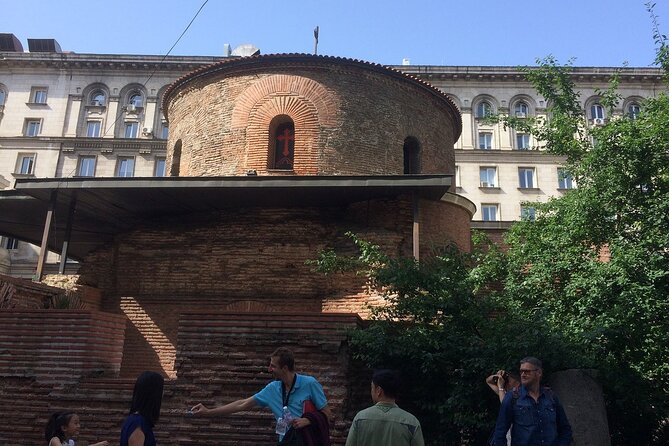
The City Garden brings the tour to the story of the Mausoleum. The building itself is gone, but its disappearance is part of Sofia’s political story.
A mausoleum for Georgi Dimitrov, Bulgaria’s first communist leader, once occupied a central place in the city. Its removal marked the effort to break with the old regime. Your guide explains what the building represented and how people responded to its construction and destruction.
This stop also shows why a walking tour can work better than a basic monument checklist. A missing building can tell you as much as one that remains. The empty space raises questions about memory, public ritual, and who gets to decide what stays in a capital city.
The itinerary also includes the former Royal Palace during the early communist years. The palace offers another useful contrast. Bulgaria moved from monarchy to communist rule, and existing royal spaces had to be given new meaning under the new political order.
The Monument to the Soviet Army
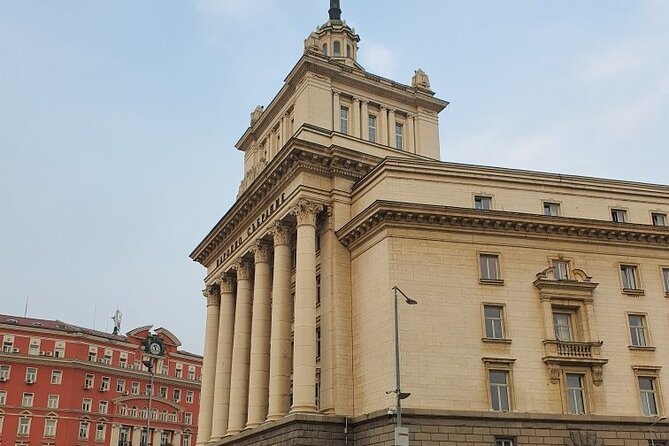
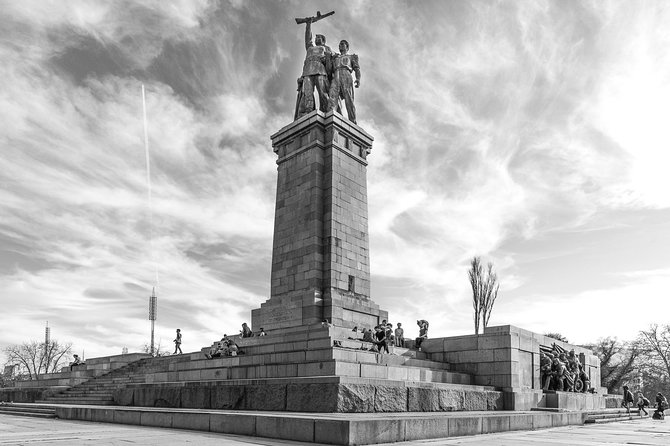
The Monument to the Soviet Army is the longest stop, at about fifteen minutes, and it is one of the tour’s main highlights.
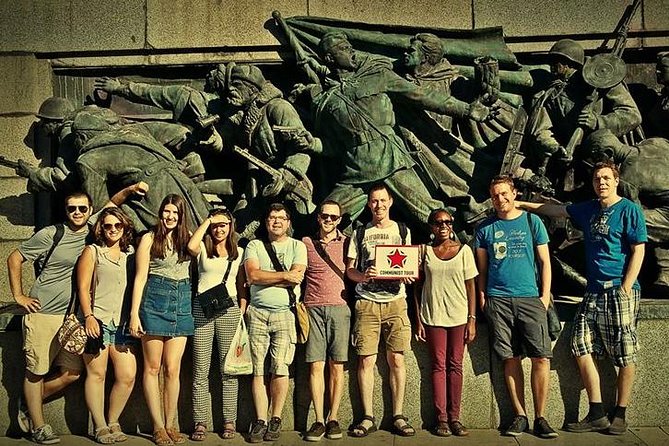
The monument is large, dramatic, and politically charged. It honors the Soviet Army’s role in Bulgaria, but its meaning remains disputed. For some people, it represents liberation from Nazi influence. For others, it represents the beginning of decades of Soviet-backed communist rule.
Your guide explains the debate rather than asking you to accept one official version. That balance is important at a site where history and present-day politics remain closely linked.
The monument has also become known for graffiti and changing artwork. Painted figures and slogans have turned the structure into a public argument. The clash between the original military imagery and newer graffiti makes the site visually striking, but the real value comes from understanding why people keep contesting it.
The stop also includes early opposition to the communist regime. You hear about the first uprisings and how resistance developed under a system that did not welcome open political competition.
Bring a little patience here. The monument is not a quick photo stop. The guide may spend time answering questions, and this is one of the places where personal examples and pictures help make the subject easier to grasp.
The former Royal Palace and the changing city center
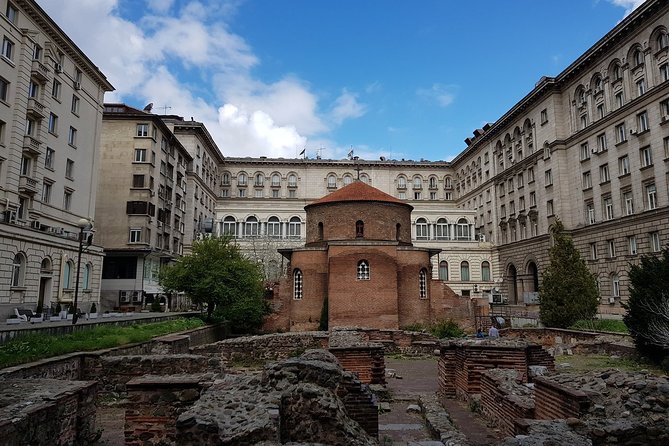
The former Royal Palace adds another layer to the route. Bulgaria’s political system changed sharply in the middle of the twentieth century, and royal buildings did not escape that change.
You may find this stop especially useful if you are also visiting Sofia’s traditional sights. It links the monarchy, the Soviet-backed government, and the later effort to remove communist symbols from public life.
The tour does not suggest that every building has only one meaning. A palace can be royal property, a state building, a cultural site, and a reminder of political change, depending on the period being discussed.
That habit of looking at buildings through several time periods is one of the best reasons to take this walk early in your stay.
National Palace of Culture, Sofia’s grand communist project
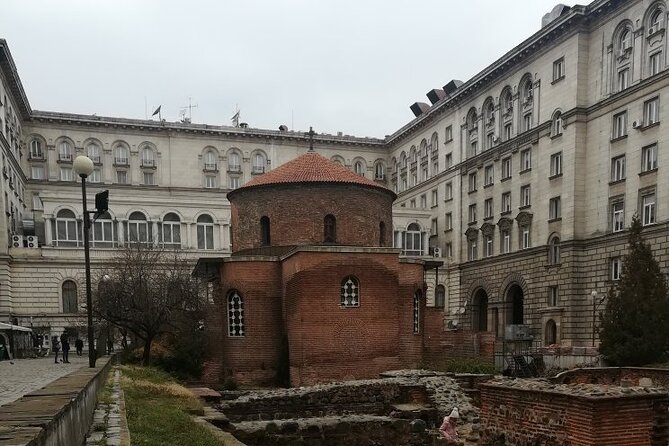
The National Palace of Culture, usually called NDK, is the biggest communist-era landmark on the route. The building is also a major cultural hub, so it remains part of Sofia’s active public life rather than a frozen relic.
The scale is the message. NDK was built to project confidence and cultural power. Its broad setting and imposing design show how communist governments used public architecture to represent the state’s ambitions.
Your guide explains the building’s place in the city and the role of culture under communism. The subject is not limited to political speeches or party leaders. It also covers the way concerts, official events, art, and public gatherings fit into the system.
This is a good point to judge your energy. By now, you have covered a lot of ground. The route is manageable for most people who can take a regular city walk, but it is not ideal if you have limited mobility or dislike walking for several hours.
Ending beside a piece of the Berlin Wall
The final stop is beside a section of the Berlin Wall on the left side of the park near NDK. The location gives the tour a clear ending: the physical symbol of Europe’s division, followed by the collapse of communist rule.
Your guide explains how the system ended and places Bulgaria’s changes within the wider events of 1989. It is a fitting conclusion because the tour begins with the growth of Soviet influence and finishes with the breakdown of the political order it helped create.
If your tour takes place in winter, this is where the late start can become a problem. The 4:00 pm departure may mean that the final hour takes place in low light or darkness. You will still hear the explanation, but you may not see the monuments and public spaces as clearly.
In warmer months, the late afternoon timing is more comfortable. Either way, wear comfortable shoes and check the forecast. Rain and cold have not stopped strong tours, but they can make three hours outdoors feel longer.
What the guides do well
The guide is the heart of this experience. The best feedback centers on clear explanations, personal stories, patience with questions, and a good sense of humor.
Niki has been praised for turning complex political history into an easy-to-follow story, using vivid details and personal anecdotes. Nikola is known for explaining parts of Bulgarian life that may not appear in standard history books. Vasko has used photos, breaks, and humor to keep the group engaged.
Martin’s passion for Sofia and its past has also been singled out, while Stefan is praised for bringing the communist period to life. Vasil and Yoan have been described as friendly and good at keeping the subject accessible, including for families with children.
You should not expect every guide to deliver the exact same performance. The company uses different guides, and personality shapes the experience. Still, the consistent pattern is encouraging: guides are prepared, open to questions, and willing to discuss both the official story and private memories.
The group can reach up to 25 people. That is large enough for energy and varied questions, but small enough for a walking guide to keep the route together in most conditions.
Is $21.77 good value?
At about $21.77, I consider this a strong-value tour for Sofia. You receive roughly three hours with a local professional guide, and the route covers several central landmarks that you could easily pass without understanding.
There are no admission fees listed because the experience is built around outdoor explanations. That keeps the price down, but it also means you are paying for interpretation, not entry to a museum or a private building.
The value is highest if you want context. You could photograph the Monument to the Soviet Army or NDK on your own, but you would miss the arguments, personal memories, erased symbols, and political links between the sites.
The rating is 4.9 from 690 ratings, with 98 percent of participants recommending it. Those figures suggest a dependable experience, though weather and guide style can still affect your afternoon.
Free cancellation is available if you cancel at least 24 hours before the local start time. Children must be accompanied by an adult, and service animals are allowed.
Who should take this walk?
I would choose this tour if you are interested in recent European history, political change, architecture, or everyday life behind the official slogans. It is also a good first activity in Sofia because it takes you through central areas while giving you a working map of the city’s twentieth-century past.
Families can enjoy it if children are old enough to follow a political history discussion. One guide was particularly good at engaging children with questions and stories.
You may want a different activity if you have limited mobility, want extensive indoor sightseeing, or prefer a short, photo-focused walk. The route covers considerable distance, and the experience depends on listening outdoors.
I would also avoid the 4:00 pm departure in the darkest part of winter if seeing the monuments clearly matters to you. If that is your only available time, bring warm clothing and accept that the ending may be more about the guide’s story than the view.
Should you book the Communist Walking Tour of Sofia?
Book it if you want Sofia’s monuments to make sense. The tour offers a thoughtful look at Bulgaria’s communist period, with strong storytelling, personal detail, and a route that links politics to real places.
The best reason to go is not the Soviet Army monument or NDK by itself. It is the connection between grand state projects, erased symbols, religious life, family memories, and the quiet traces left on ordinary buildings.
For about $21.77, three hours is a fair exchange. Pick a season with good daylight if possible, wear comfortable shoes, meet at the Sofia Court House, and confirm the start point carefully. If you do those things, this is one of Sofia’s more useful history walks.
FAQ
How long does the Communist Walking Tour of Sofia last?
The tour lasts approximately three hours.
What time does the tour start?
The tour starts at 4:00 pm.
Where does the tour begin?
It begins at the Sofia City Court, also called the Palace of Justice, at bul. Vitosha 2 in Sofia’s old city center.
Where does the tour end?
The tour ends at the National Palace of Culture, next to a piece of the Berlin Wall on the left side of the park.
Is the tour offered in English?
Yes. The tour is offered in English and includes a local professional guide.
How many people can join the tour?
The maximum group size is 25 people.
Just added in Sofia
- Private Winter Day Trip to the Rila Mountain★ 4.5 · 3 reviews
- Wind Mills Hydropark Tours & Activities★ 5.0 · 1 review
- Weekend in Bulgaria★ 5.0 · 1 review
- Sofia Hidden Gems: Small-Group Walking Tour with Tram Ride★ 5.0 · 7 reviews
- Vratsa Karst and Caves★ 5.0 · 1 review
- Via Ferrata Adventure on Kuklata peak 2257 m in Rila Mountain★ 5.0 · 8 reviews
- Vitosha Trail Hunter Bike Tour from Sofia★ 5.0 · 9 reviews
- Vitosha Mountain- Heritage and Hiking- Private Day Trip★ 5.0 · 2 reviews
Communist History Tours, compared.
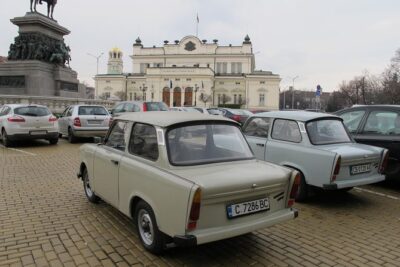
Sofia Communist History 2-Hour Tour in a Classic Trabant
Read our review →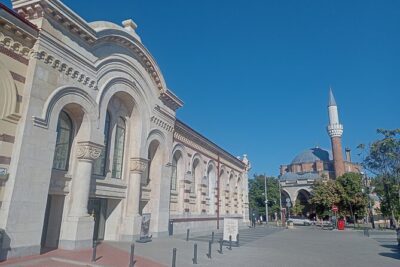
Sofia Food & Tasting Tour with Communist-Era Tram Ride
Read our review →Buzludzha Monument and the Museum of Socialist Art
Read our review →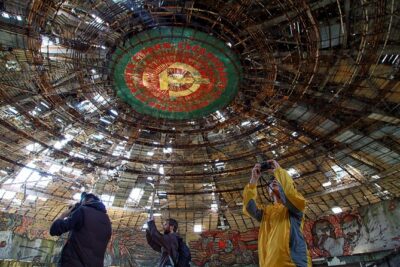
A Day trip to the Thracian Kings, The Valley of Roses & Buzludzha
Read our review →Communist Heritage Tour- Buzludzha and The Might of the East Block Aviation
Read our review →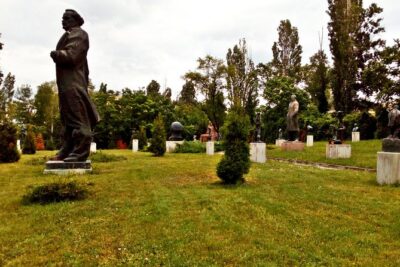
Symbol of the Communism Buzludzha monument and the Rose valley
Read our review →
Tour to Koprivshtitsa and the Buzludzha monument incl the Seuthes Thracian Tomb
Read our review →Browse the lists this tour appears in