
REVIEW · COMMUNIST HISTORY TOURS
Sofia Communist History 2-Hour Tour in a Classic Trabant
Sofia’s past comes with four wheels. This private two-hour tour pairs a carefully kept classic Trabant with Sofia’s communist-era landmarks, turning a history lesson into a lively drive through the city. I especially like the personal stories from guides such as Danny and Rado, and the chance to visit the Museum of Socialist Art rather than simply view former government buildings from the road. The main drawback is the price: $240.28 per group of up to three, which is fair for a full private car but costly for one person.
The Trabant is not just transport here. It is the main attraction, a conversation starter, and a small piece of Eastern Bloc history. I also like the hotel pickup and drop-off option, which saves time on a short visit. Just remember that pickup is limited to selected hotels, and the tour is offered only in English.
In This Review
- Key points to know before booking
- Why the Trabant changes the whole Sofia history tour
- Starting near Fridtjof Nansen Street
- National Palace of Culture and the 1300-year message
- Twenty minutes with socialist art
- The National Assembly and the reach of the secret police
- The former Communist Party headquarters and the fall of 1989
- What the guide adds to the experience
- Price, timing, and practical value
- Who will enjoy this Trabant tour most?
- Booking advice and cancellation terms
- FAQ
- How long is the Sofia Communist History Trabant Tour?
- How much does the tour cost?
- How many people can join one booking?
- Is hotel pickup included?
- Where does the tour meet?
- What language is the tour offered in?
- Which main places does the tour visit?
- Is admission to the Museum of Socialist Art included?
- Can I cancel for a full refund?
- Should you book the Sofia Trabant experience?
Key points to know before booking
- The Trabant is the star: You ride through Sofia in an authentic classic car that attracts plenty of attention.
- A private group of up to three: You get the guide’s full attention instead of sharing the car with a large group.
- The Museum of Socialist Art is included: The 20-minute visit adds sculptures and artwork to the political story.
- You see major communist-era sites: Stops include the National Palace of Culture, the National Assembly area, and the former Communist Party headquarters.
- Personal stories add meaning: Danny and Rado have been praised for explaining Bulgaria’s recent past through family experience and local memory.
- Best value comes with three people: At the full group rate, the cost works out to about $80 per person.
Why the Trabant changes the whole Sofia history tour
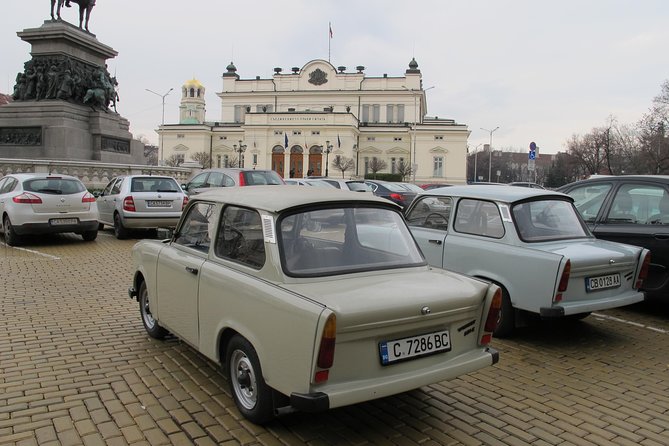
A standard walking tour can explain Sofia’s communist period. This one lets you experience a small part of the era through an object from it.
The Trabant was produced in the former German Democratic Republic and became one of the best-known cars associated with life behind the Iron Curtain. Its presence gives the tour a physical link to the period being discussed. You are not simply looking at a building and hearing a date. You are sitting in a car that belongs to the same political world.
That contrast creates much of the fun. Sofia has elegant churches, grand government buildings, and busy central streets, but the Trabant adds an unmistakable socialist-era note. One review described people walking past a Ferrari to photograph the Trabant. That tells you something about the car’s appeal. It is unusual, photogenic, and instantly recognizable to anyone familiar with former Eastern Bloc life.
The car also makes this more than a museum visit. You cover a good stretch of central Sofia without spending the entire two hours on foot. If your time in the city is short, the drive gives you a quick introduction to several important locations while keeping the experience light and entertaining.
Do not expect luxury or modern comfort. The Trabant is an old car, and one visitor specifically joked about its awkward seatbelt. That is part of the charm, but you should be ready for a modest, characterful ride rather than a polished sightseeing vehicle.
More History Tours in Sofia
- Full-day Nis and Serbian History Tour from Sofia
★ 4.5 · 90 reviews - Sofia: History and Heritage – Small Group City Tour
★ 5.0 · 84 reviews - Rila Monastery and St. Ivan Cave History & Nature Trip from Sofia
★ 4.5 · 25 reviews
Starting near Fridtjof Nansen Street
The listed meeting point is at ul. Fridtjof Nansen 27 in central Sofia. Hotel pickup and drop-off are available for selected hotels, so you should provide your accommodation details when booking and wait for confirmation.
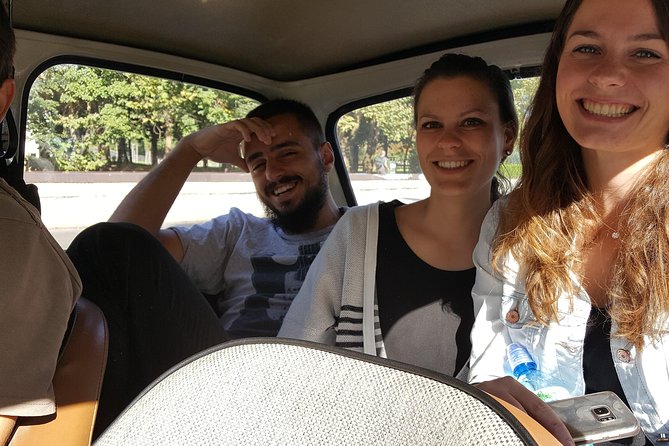
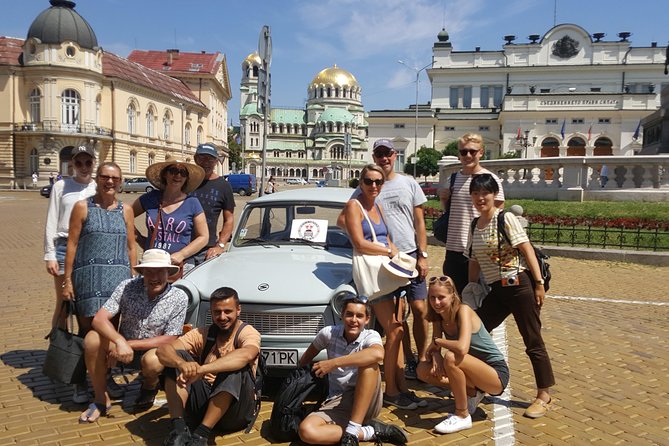
The tour is private, with no more than three people per booking. That limit matters in a Trabant, where space is naturally restricted. It also means you can ask questions freely and guide the conversation toward subjects that interest you, such as daily life, state control, political change, or the car’s own production history.
Danny is named frequently in the feedback, and Rado also receives praise for his guiding. Their approach appears to combine formal historical explanation with family memories and stories about life after the fall of communism. That personal angle is especially useful because Bulgaria’s recent past is not only a matter of monuments and dates. It affected where people worked, what they could buy, how they spoke in public, and how tightly the secret police watched society.
The tour is offered in English. Confirmation is sent within 48 hours of booking, subject to availability. Since the experience is often booked about 27 days ahead, I would reserve it early if you have a fixed Sofia schedule.
National Palace of Culture and the 1300-year message
The first listed stop is the National Palace of Culture, known locally as NDK. You spend about 10 minutes here, with no admission charge.
The guide explains the building’s significance and connects it with the 1300-year anniversary of the first Bulgarian state. That anniversary was marked during the communist period and provides a useful way to understand how the government used national history. Communist Bulgaria did not ignore older Bulgarian identity. Instead, it often presented the country’s long past in ways that supported the state’s political message.
This is a short stop, so do not expect a full architectural tour or extended time inside the building. Its value is the explanation. NDK works as a starting point because it places the communist period within a much older Bulgarian story, rather than treating 1944 to 1989 as an isolated chapter.
The car also helps here. You can arrive, hear the context, take in the scale of the site, and continue without losing much of your day. If you are interested in architecture, ask your guide how NDK reflected the ambitions of the period and how Sofia changed around it.
Twenty minutes with socialist art
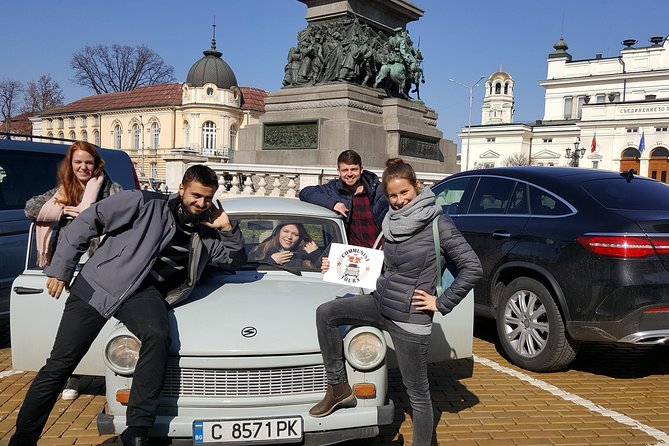
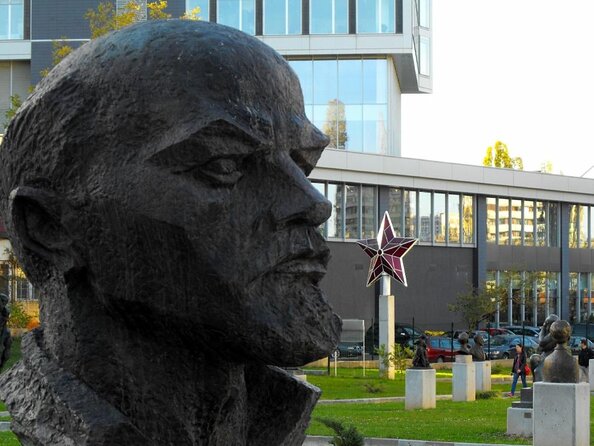
The Museum of Socialist Art is the most focused cultural stop on the tour. The guide accompanies you through the museum and explains the sculptures and artwork on display. Admission is included, and the scheduled visit lasts about 20 minutes.
I see this as an important part of the experience. Communist history can become a parade of institutional names and stern facades. The museum shows how the period represented leaders, workers, military power, national identity, and public duty through art.
The sculpture garden is also singled out as worth seeing. You may find the format more engaging than a conventional political lecture because the objects themselves prompt questions. What was celebrated? What was left out? How were ordinary people shown? What did official art ask the public to believe?
Twenty minutes is enough for an introduction, but not enough to study every work at length. If socialist art is your main interest, you may wish you had more time. Still, the guided visit gives the museum a clear place in the wider story and helps you understand why public sculpture mattered so much under the old system.
The guide’s explanation is particularly useful because the tour is not limited to official language. Personal accounts of communist life and the years after 1989 help connect the artwork to lived experience.
More communist-era history in Sofia:
- Communist Walking Tour of Sofia
★ 5.0 · 690 reviews - Sofia Food & Tasting Tour with Communist-Era Tram Ride
★ 5.0 · 35 reviews - Buzludzha Monument and the Museum of Socialist Art
★ 5.0 · 25 reviews - Self-guided Tour in the Museum of Socialist Art
★ 4.0 · 4 reviews
The National Assembly and the reach of the secret police
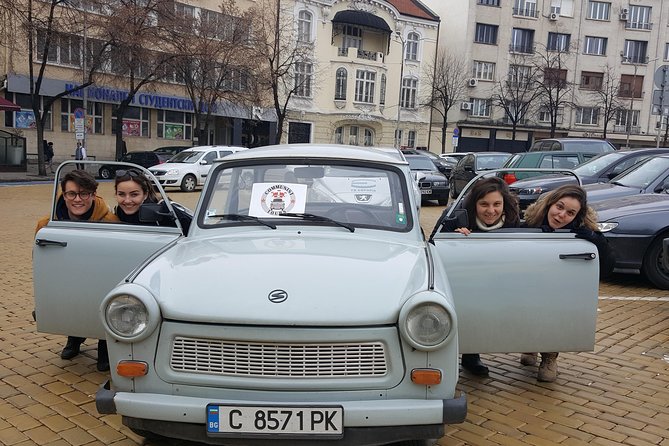
Another short stop brings you to the National Assembly of the Republic of Bulgaria. The guide walks you toward the National Archives and discusses how the secret police maintained a tight grip over the population.
This part shifts the focus from public image to private fear and state control. Government buildings can look formal and distant, but the story becomes more concrete when you consider surveillance, records, pressure, and the effect of the security services on daily life.
The stop is planned for about 10 minutes, with no admission fee. It is not a visit inside the National Assembly or a separate archive tour. Instead, you receive an explanation while walking around the area. That keeps the pace moving, though anyone hoping for an extended look at archival material should adjust expectations.
The smaller group makes a difference here. You can ask how the system affected families, workplaces, travel, or speech. Danny has been praised for sharing family experiences, which can give this section a human scale. Rado has also been described as an excellent guide, and one tour with him lasted over three hours, although the advertised duration is about two hours. Treat that longer timing as a possibility, not a guarantee.
The former Communist Party headquarters and the fall of 1989
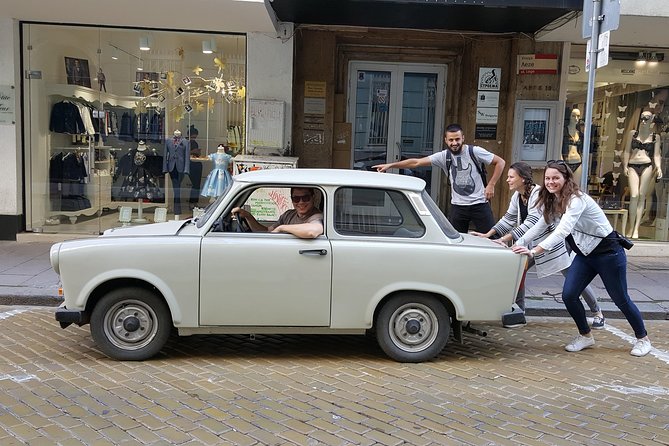
The route also includes the former Headquarters of the Communist Party and a discussion of the political changes that led to the fall of communism in 1989. The information provided does not assign a separate stop time to this portion, so it appears to be handled during the drive and the city sightseeing portions of the tour.
That format works well for a short experience. You see the places where power was concentrated, then hear how the system began to weaken. The guide can connect political developments with the visible city around you, rather than discussing 1989 as a distant event.
The fall of communism is an important turning point in Bulgaria’s modern story, but it is easy to reduce it to one date. A good guide gives you a sense of the changes before and after that year. The feedback points to guides who explain both the communist period and their own families’ experiences after the Wall came down.
You should ask questions if you want more detail about the transition. The private format allows the discussion to follow your interests, though the tour’s short length means it cannot cover every political or economic change in depth.
What the guide adds to the experience
The car gets attention, but the guide determines how useful the tour becomes. Danny receives repeated praise for his humor, friendliness, and ability to explain Bulgarian history in an accessible way. Rado is also praised for being professional and for extending the experience beyond the expected time on at least one occasion.
The strongest feature appears to be the blend of public history and family memory. You hear about important buildings and political developments, but you also get stories about what the period felt like for Bulgarian families. That is often the difference between memorizing a timeline and understanding how a system shaped ordinary life.
The guides also seem willing to adapt the conversation to your interests. If you care most about the Trabant, you can ask about its production in East Germany, the car’s development, and Bulgaria’s attempts to import it. If politics interests you more, you can focus on surveillance, party control, and the events of 1989.
The tone is not strictly academic. Humor is part of the appeal, and several descriptions point to a fun host as well as a strong history guide. That balance suits the subject. Communist history can be heavy, but the tour does not appear to treat it as a dry lecture.
Price, timing, and practical value
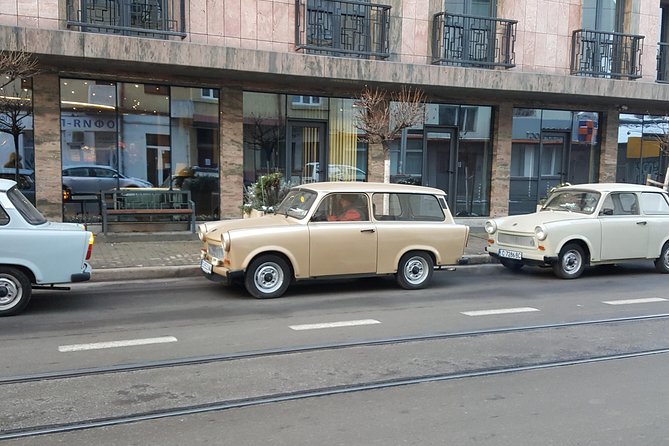
The listed price is $240.28 per group of up to three people. For one person, that is expensive for a two-hour activity. For two people, it works out to about $120 each. With three people, the cost is roughly $80 per person, which makes the private format much easier to justify.
The price includes fuel, the English-speaking driver and guide, the Trabant ride, and hotel pickup and drop-off when available. Food and drinks are not included, but that should not matter much for a two-hour city tour.
You are paying for several things at once:
- A private guide rather than a large group presentation
- A rare classic car experience
- Transport between several central Sofia sites
- Admission to the Museum of Socialist Art
- Pickup and drop-off at selected hotels
- A conversation shaped around your questions
The tour is most attractive for two or three people who want something distinctive. If you are already planning several museums and walking tours, this adds a different way to see Sofia. If you are focused only on getting from site to site at the lowest cost, public transport and free sightseeing will be cheaper.
The advertised duration is approximately two hours. Some experiences may run longer, but you should plan your day around the stated timing. The tour ends back at the meeting point unless hotel drop-off has been arranged.
Who will enjoy this Trabant tour most?
I would recommend it to anyone with an interest in communist-era Europe, modern Bulgarian history, unusual cars, or personal stories about political change.
It is especially useful for:
- First-time visitors with only a short stay in Sofia
- Couples or small families who want a private outing
- Car enthusiasts who appreciate historic vehicles
- People who prefer conversation to a large group lecture
- Visitors who want to see the Museum of Socialist Art
- Anyone curious about daily life during and after communism
It may be less suitable if you want a long museum visit, a detailed academic treatment, or a completely modern and comfortable vehicle. The tour gives you a broad introduction, not a full course in Bulgarian history.
The classic car also creates practical limits. With a maximum of three people, you cannot bring a larger group under one booking. The tour is offered in English, so it may not suit you if you need another language.
Booking advice and cancellation terms
This activity has a strong overall rating, with 100 percent of listed feedback recommending it and 45 five-star ratings. The positive pattern is clear: people praise the Trabant, the guides, the personal history, and the fun of driving around Sofia.
Free cancellation is available if you cancel at least 24 hours before the start time. Cancellations or changes made less than 24 hours ahead are not accepted for a refund. Cut-off times use Sofia’s local time.
Because hotel pickup is offered only at selected hotels, do not assume it applies automatically. The central meeting point is easy to identify in the booking details, and the activity is near public transportation.
FAQ
How long is the Sofia Communist History Trabant Tour?
The tour lasts approximately two hours.
How much does the tour cost?
The listed price is $240.28 per group of up to three people.
How many people can join one booking?
Each booking allows a maximum of three people.
Is hotel pickup included?
Hotel pickup and drop-off are included for selected hotels only. The tour begins and ends at the listed meeting point when hotel service is not arranged.
Where does the tour meet?
The meeting point is Sofia Center, ul. Fridtjof Nansen 27, 1142 Sofia, Bulgaria.
What language is the tour offered in?
The tour is offered in English.
Which main places does the tour visit?
The route includes the National Palace of Culture, the Museum of Socialist Art, the National Assembly area, and the former Headquarters of the Communist Party.
Is admission to the Museum of Socialist Art included?
Yes. Admission to the Museum of Socialist Art is included.
Can I cancel for a full refund?
Yes, if you cancel at least 24 hours before the experience begins. Cancellations made less than 24 hours in advance are not refunded.
Should you book the Sofia Trabant experience?
Book it if you want your Sofia sightseeing to feel personal, playful, and tied to the city’s recent past. The combination of an authentic Trabant, a private guide, socialist art, major political sites, and family stories gives the tour a clear identity.
I would book it for two or three people, especially on a short visit. The per-person value improves with a full group, and the private format lets you ask the questions that matter to you. For one person, the price is harder to defend unless the Trabant itself is a major reason for your visit.
This is not the right choice for a long museum study or a low-cost city tour. It is a memorable introduction to Sofia’s communist period, with the added pleasure of riding around town in the car that keeps stealing attention from the Ferraris.
Just added in Sofia
- Private Winter Day Trip to the Rila Mountain★ 4.5 · 3 reviews
- Wind Mills Hydropark Tours & Activities★ 5.0 · 1 review
- Weekend in Bulgaria★ 5.0 · 1 review
- Sofia Hidden Gems: Small-Group Walking Tour with Tram Ride★ 5.0 · 7 reviews
- Vratsa Karst and Caves★ 5.0 · 1 review
- Via Ferrata Adventure on Kuklata peak 2257 m in Rila Mountain★ 5.0 · 8 reviews
- Vitosha Trail Hunter Bike Tour from Sofia★ 5.0 · 9 reviews
- Vitosha Mountain- Heritage and Hiking- Private Day Trip★ 5.0 · 2 reviews
Communist History Tours, compared.
Sofia Food & Tasting Tour with Communist-Era Tram Ride
Read our review →Buzludzha Monument and the Museum of Socialist Art
Read our review →
A Day trip to the Thracian Kings, The Valley of Roses & Buzludzha
Read our review →Communist Heritage Tour- Buzludzha and The Might of the East Block Aviation
Read our review →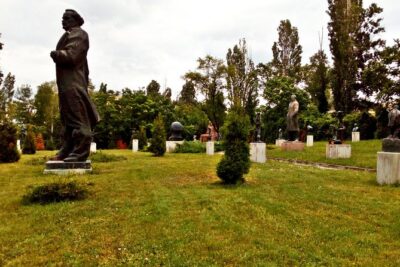
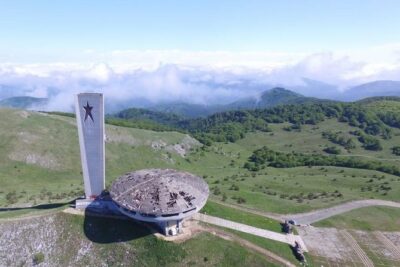
Symbol of the Communism Buzludzha monument and the Rose valley
Read our review →
Tour to Koprivshtitsa and the Buzludzha monument incl the Seuthes Thracian Tomb
Read our review →Browse the lists this tour appears in