
REVIEW · WALKING TOURS IN SOFIA
Sofia Highlights 2 Hour Sightseeing Walking Tour
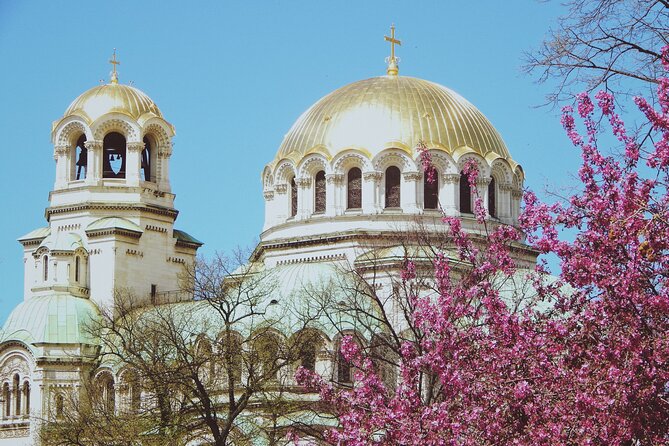
Sofia reveals its story on foot. This two-hour walk links Bulgaria’s grandest cathedral, Roman ruins, royal buildings, places of worship, and the city’s famous mineral springs in one compact route. I like the clear beginning and end: you meet at Alexander Nevsky Cathedral and finish beside Vitosha Boulevard, where lunch and more sightseeing are close at hand.
I also like the tour’s broad view of Sofia. You do not see only churches and monuments. You hear about Bulgaria’s Jewish, Muslim, Catholic, Orthodox, royal, communist, and Roman past. The main consideration is pace: with nearly 20 stops in two hours, several visits last just five minutes, so this works best as an orientation walk rather than a slow museum tour.
The price is $19.35 per person, a fair deal for an official local guide and a route that covers much of central Sofia. Guide Nikola receives especially warm praise for his friendly manner, detailed answers, and ability to make a solo booking feel personal. Groups can reach 30 people, though smaller departures may be possible.
In This Review
- Key Points to Know Before You Go
- Starting at Alexander Nevsky Cathedral
- Lions, Saints, and the City’s Name
- Royal Buildings and Sofia’s Yellow Cobblestones
- Ivan Vazov Theater and Sofia’s Roman Past
- The Presidency, Guards, and the Largo
- Mineral Baths and Sofia’s Public Springs
- Sofia Synagogue and Banya Bashi Mosque
- Ancient Serdika Beneath the Modern Center
- Catholic, Orthodox, and a Difficult Final Chapter
- What the Two-Hour Format Really Means
- Price, Guide Quality, and Practical Value
- Who Should Book This Sofia Walk?
- Should You Book the Sofia Highlights Tour?
- FAQ
- How long is the Sofia Highlights walking tour?
- Where does the tour begin?
- What time does the tour start?
- Where does the tour finish?
- Is entry to Alexander Nevsky Cathedral included?
- Is the tour offered in English?
- What happens if the tour is canceled because of weather?
Key Points to Know Before You Go
- Alexander Nevsky Cathedral is both meeting point and first major stop: You begin with Bulgaria’s national church and may enter the building as part of the tour.
- The route covers several faiths and communities: Orthodox, Catholic, Muslim, and Jewish landmarks all appear along the way.
- Ancient Serdika sits beneath modern Sofia: Roman remains turn an ordinary city-center walk into a lesson in how the capital grew.
- Mineral water is part of the experience: You can try water from Sofia’s public springs near the former Central Mineral Baths.
- The tour is designed for first-time orientation: It ends at Vitosha Boulevard, a useful base for lunch or further exploring.
- Nikola is a name worth noting: His warm, relaxed approach and willingness to answer questions are among the strongest points in the feedback.
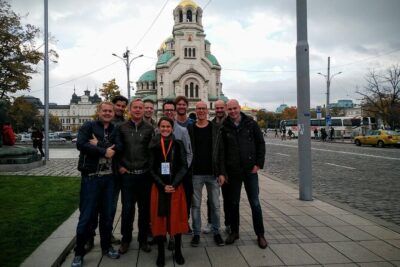
Starting at Alexander Nevsky Cathedral
The tour begins at 11:00 a.m. directly in front of the Patriarchal Cathedral of St. Alexander Nevsky. This is a sensible meeting point. The cathedral is easy to recognize, close to other major sights, and gives your guide a grand opening subject: the story of Sofia and Bulgaria.
Allow about 20 minutes here, the longest stop on the route. You learn why the cathedral was built and what it means to Bulgarian identity. The visit also includes entry into the building, which matters because the interior is part of the experience rather than something you only admire from the square.
The cathedral’s scale can make the rest of the city feel small at first. That is part of the fun. Your guide uses it to set up the larger story of Sofia, a city shaped by Roman rule, religious communities, monarchy, war, and communism.
More Walking Tours in Sofia
- Communist Walking Tour of Sofia
★ 5.0 · 690 reviews - Guided Walking Tour of Sofia
★ 5.0 · 143 reviews - Private city walking tour of Sofia
★ 5.0 · 141 reviews
Lions, Saints, and the City’s Name
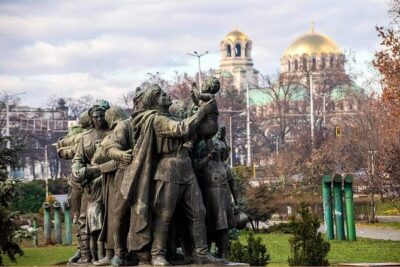
Just beside the cathedral, the Monument to the Unknown Warrior adds a more solemn note. The lion statue and memorial complex honor Bulgarian heroes, and the guide explains the meaning of the lion in Bulgarian public life. It is a short five-minute stop, but the symbolism gives the monument more weight than a quick photograph would.
Next comes the Basilica of Saint Sofia. This church is linked to the city’s name, so it helps explain why the capital is called Sofia rather than by one of its earlier names. Again, the stop is brief, but the point is not to tour every interior. You are collecting the key facts that make the city center easier to understand later.
At the Russian Church of St. Nicholas, the tone becomes lighter. This small church is associated with wishes coming true, and the guide explains the tradition behind that belief. It is a good example of how the tour mixes formal history with local customs.
Royal Buildings and Sofia’s Yellow Cobblestones
The National Art Gallery occupies Bulgaria’s former Royal Palace. The building itself is part of the story, even if the gallery interior is not included in the tour. You hear about the palace, the National Art Gallery, and the National Ethnographic Museum, along with the story of the yellow cobblestones around it.
That detail is useful because Sofia’s paving is not just decoration. The cobblestones help mark the central ceremonial district and give the area a distinctive appearance. You will not have time to visit the galleries during this walk, but the stop helps you decide if you want to return later.
The route also passes through a park popular with local people. The description points to its youthful atmosphere, which offers a welcome change after the formal cathedral and palace district. Since the park is not given a separate name, treat it as a passing stop rather than a planned park visit.
Ivan Vazov Theater and Sofia’s Roman Past
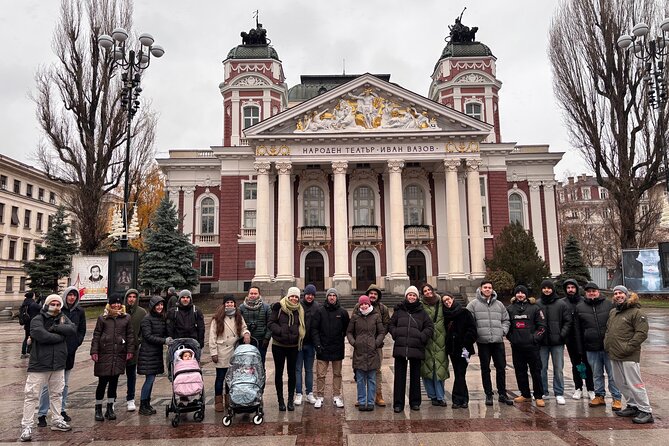
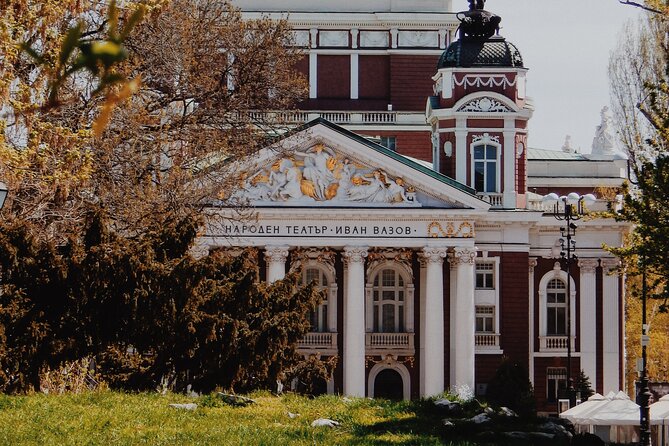
The Ivan Vazov National Theater is one of the city’s most handsome buildings. It honors Ivan Vazov, one of Bulgaria’s best-loved authors, and the guide connects the theater’s design and name to Bulgarian culture.
The five-minute stop is enough for an introduction and photographs. If you want to study the building at leisure, you will need to return after the tour. That is a recurring pattern here: the guide gives you the reason to care, then you choose which places deserve more of your time later.
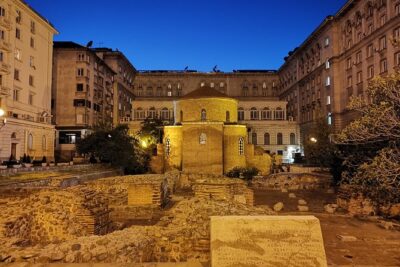
The Rotunda Church of St. George is more concealed than the city’s big landmarks. It is Sofia’s oldest building and a reminder of the city’s Roman period. The contrast is excellent. One moment you are beside a major public theater, and soon after you are looking at a much older structure tucked into the modern center.
The National Institute of Archaeology with Museum adds another layer. The building once served as a mosque and now houses Sofia’s oldest museum. Admission is not included, so this is an exterior stop during the walk. If ancient history interests you, note it as a possible return visit rather than expecting a museum tour on this booking.
A completely different kind of day:
- Rila Monastery and Boyana Church Full-Day Tour
★ 4.5 · 918 reviews - Sofia Escape Room – Teorema Rooms
★ 5.0 · 895 reviews - From Sofia: Rila Monastery & Boyana Church Day Tour
★ 4.5 · 866 reviews - Admission Ticket to the Museum of Illusions in Sofia
★ 5.0 · 659 reviews
The Presidency, Guards, and the Largo
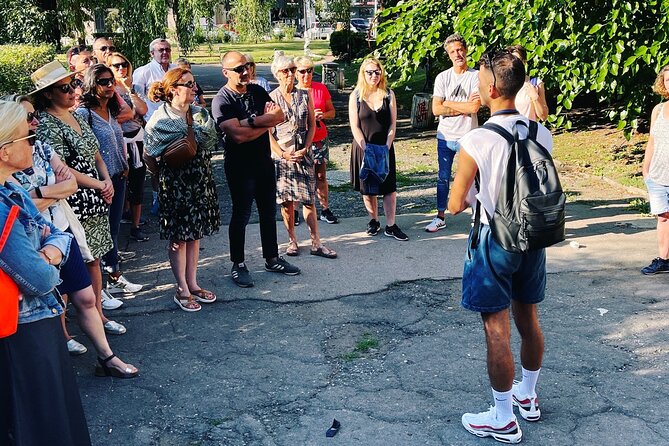
At the Presidency Building, you see Bulgarian National Guards stationed outside. The guide explains the symbolism of this unusual public duty, and you may take a picture with them. This is one of the more visual stops, especially if you have not seen a formal guard detail in Sofia before.
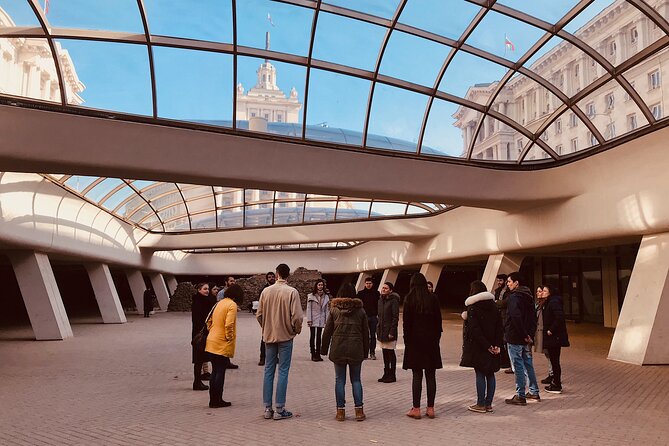
The route then moves into the Largo, the broad central area built from the ruins of World War II by Bulgaria’s new communist government. The Council of Ministers, the National Assembly, and the Presidency frame this part of the city.
This section is valuable because it shows how political power reshaped Sofia. The buildings are not simply government offices. Their placement and scale were meant to express the strength of the regime. A short explanation helps you read the architecture instead of seeing only large stone facades.
The National Assembly of the Republic of Bulgaria receives about 10 minutes, longer than most of the later stops. That gives the guide room to explain the Largo and its political setting without rushing quite so sharply.
Mineral Baths and Sofia’s Public Springs
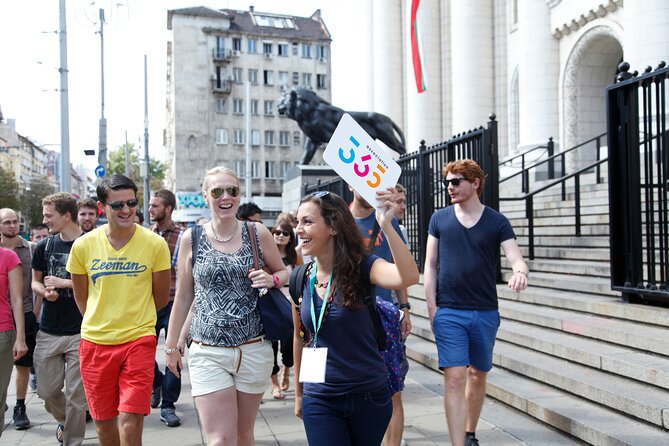
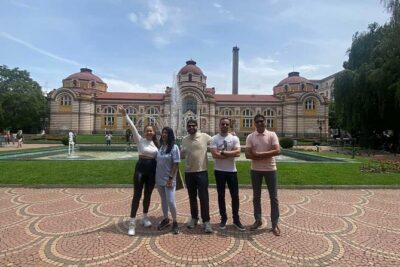
The Sofia History Museum occupies the former Central Mineral Baths. The building’s earlier purpose connects directly with one of the city’s oldest natural advantages: mineral water.
At the nearby mineral water springs, you can try the water yourself. Sofia’s mineral springs helped support settlement in the area from an early period, and the tour explains their importance. The water has a strong local identity, so this is not just another monument stop. It is a small chance to interact with the city rather than only look at it.
The tour presents the springs as having healing powers. You should treat that as local tradition rather than medical advice, but trying the water is part of the experience. If you prefer not to drink it, you can still appreciate why the baths and springs mattered to Sofia’s growth.
Sofia Synagogue and Banya Bashi Mosque
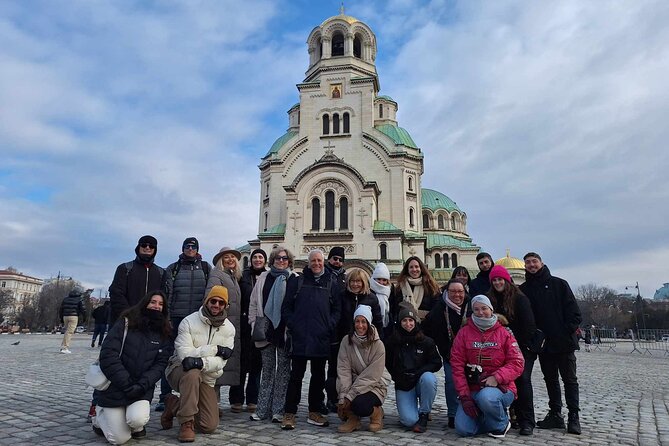
The Sofia Synagogue is described as the largest synagogue on the Balkan peninsula. The guide shares the story of Bulgaria’s Jewish community, giving you an important reminder that Sofia’s past cannot be understood through Orthodox Christianity alone.
Banya Bashi Mosque is Sofia’s only functioning mosque. Together, these two stops create one of the strongest sections of the route. You see neighboring religious traditions in the same central district and hear about both the Jewish and Muslim communities in Bulgaria.
The stops are short, so do not expect an interior visit to the synagogue. Admission is not included there, while entry to Banya Bashi Mosque is listed as free. The practical value lies in the context: your guide helps you notice the religious mix that could be easy to miss on an independent walk.
Ancient Serdika Beneath the Modern Center
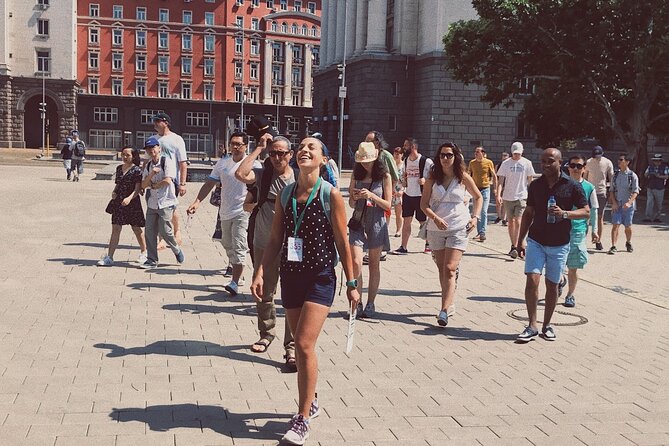
At the Ancient Serdika Archaeological Complex, modern Sofia gives way to Roman remains. Excavations below the city center show the ancient settlement of Serdika, the Roman predecessor of Sofia.
Five minutes is enough to introduce the site, but not enough for a detailed archaeological study. I would use the tour to learn the basic layout and then return if the ruins catch your interest. Their position beneath modern streets is the key fact. Sofia is not built beside its ancient past. In places, it is built directly over it.
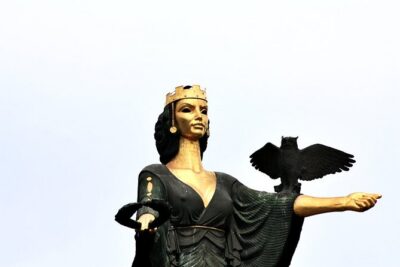
Nearby, the Monument of Saint Sofia honors the city’s patron. The statue has also caused controversy, which the guide explains. This is a useful reminder that public monuments make political and cultural choices visible. Even a symbol of the city can raise questions about how Sofia wants to represent itself.
Catholic, Orthodox, and a Difficult Final Chapter
The Catholic Cathedral of St. Joseph is Sofia’s largest Catholic church. The stop introduces Bulgaria’s small Catholic community and adds another religious tradition to the tour’s wide scope.
The final major landmark is Saint Nedelya Orthodox Cathedral. Here, the guide tells the tragic story of the largest terrorist attack ever to take place in Bulgaria. It is a serious ending, but an important one. Sofia’s central churches are not only beautiful buildings. They also carry painful memories.
The tour ends at the beginning of Vitosha Boulevard, Sofia’s main pedestrian street. This is a practical finish. You can stop for lunch, continue along the shopping street, or use the area as a starting point for more independent sightseeing.
What the Two-Hour Format Really Means
The route includes around 20 named and passing points, but only Alexander Nevsky Cathedral receives a substantial visit. Most stops last five minutes, with 10 minutes at the National Assembly area. The walking between sites fills out the rest of the two hours.
That format works well if you want a strong first look at central Sofia. You get a map in your head, a set of places to revisit, and enough background to make later wandering more rewarding.
It is less suitable if you want long interior visits, museum time, or detailed architectural study. Several attractions list admission as not included, and the tour does not build in time for exploring those collections. Think of it as a guided city introduction, not a replacement for a full day of independent sightseeing.
The maximum group size is 30 people. That is large enough to feel less personal if the tour fills, though the warm feedback about Nikola suggests that the guide can make a difference. One booking became a private-feeling walk because the participant was alone with the guide. You cannot count on that, but smaller departures may feel far more flexible.
Price, Guide Quality, and Practical Value
At $19.35, this is inexpensive for a licensed local guide covering so many central sights. You are paying mainly for organization, explanation, and local perspective rather than admissions. Tips are not included, so budget separately if you feel the guide has earned one.
The strongest praise centers on Nikola. His friendly manner, detailed answers, and ability to put people at ease are especially helpful on a history-heavy route. A good guide matters here because five minutes at a monument can feel thin without context, while a clear explanation can make the same stop memorable.
The tour is offered in English and uses a mobile ticket. It is near public transportation, service animals are allowed, and most people can participate. Wear comfortable shoes, arrive at the cathedral before 11:00 a.m., and keep your schedule flexible enough to continue along Vitosha Boulevard afterward.
Free cancellation is available until 24 hours before the start time. Changes or cancellations inside that window are not refunded. The activity requires good weather and a minimum number of participants, so a poor-weather or low-demand cancellation may result in a new date, another experience, or a full refund.
Who Should Book This Sofia Walk?
I would choose this tour for a first visit, a short stay, or a morning when you want a useful introduction before exploring alone. It suits anyone who likes history, public architecture, religious landmarks, and stories that connect different periods of a city.
It is also a good fit for solo visitors who want a friendly starting point. The experience can be social in a larger group, yet the guide may still have time for questions. Families and older visitors should note that it is a walking tour with frequent stops, so comfort and stamina matter.
I would look elsewhere if you want a small specialist group, museum entry, or a slow photographic walk. The tour covers a lot of ground in two hours, and its strength is breadth. You will see the major center, then decide what deserves more time.
Should You Book the Sofia Highlights Tour?
Yes, if you want a low-cost, well-organized introduction to Sofia’s central sights. The cathedral entry, Roman remains, mineral springs, Largo, and several faith communities give the route real range. Ending by Vitosha Boulevard makes it easy to turn the tour into a full day.
Book it with the right expectation: you are getting orientation and explanation, not extended visits. For $19.35, that is a sensible trade. If Nikola leads your walk, his calm style and readiness to answer questions may make the short stops feel far more substantial.
FAQ
How long is the Sofia Highlights walking tour?
The tour lasts approximately two hours.
Where does the tour begin?
It begins in front of the Patriarchal Cathedral of St. Alexander Nevsky in Sofia Center.
What time does the tour start?
The scheduled start time is 11:00 a.m.
Where does the tour finish?
It finishes at Sofia Center, at the beginning of Vitosha Boulevard.
Is entry to Alexander Nevsky Cathedral included?
Yes. The tour includes entry to the cathedral, and the admission ticket is listed as free.
Is the tour offered in English?
Yes. The experience is offered in English.
What happens if the tour is canceled because of weather?
You will be offered a different date or a full refund if poor weather causes the cancellation.
Just added in Sofia
- Private Winter Day Trip to the Rila Mountain★ 4.5 · 3 reviews
- Wind Mills Hydropark Tours & Activities★ 5.0 · 1 review
- Weekend in Bulgaria★ 5.0 · 1 review
- Sofia Hidden Gems: Small-Group Walking Tour with Tram Ride★ 5.0 · 7 reviews
- Vratsa Karst and Caves★ 5.0 · 1 review
- Via Ferrata Adventure on Kuklata peak 2257 m in Rila Mountain★ 5.0 · 8 reviews
- Vitosha Trail Hunter Bike Tour from Sofia★ 5.0 · 9 reviews
- Vitosha Mountain- Heritage and Hiking- Private Day Trip★ 5.0 · 2 reviews
Walking Tours in Sofia, compared.
Browse the lists this tour appears in