
REVIEW · COMMUNIST HISTORY TOURS
Self-guided Tour in the Museum of Socialist Art
A quiet corner of Sofia tells a loud political story. This self-guided visit to the Museum of Socialist Art gives you a flexible way to examine Bulgaria’s former socialist system through more than 70 sculptures, political artwork, archival footage, and a large outdoor display area. I like the freedom to visit during regular hours, and I like that you can load the e-guide on all your devices and explore without keeping up with a group.
The main drawback is value. The tour costs about $8.33 per person, but the museum entrance fee is not included. The guide may also be quite short: a description of it as a two-and-a-half-page PDF means you should not expect a full audio tour or a long, highly detailed museum program.
In This Review
- Key points to know before you go
- Why Sofia’s socialist art deserves your time
- Finding the Museum of Socialist Art in Iztok
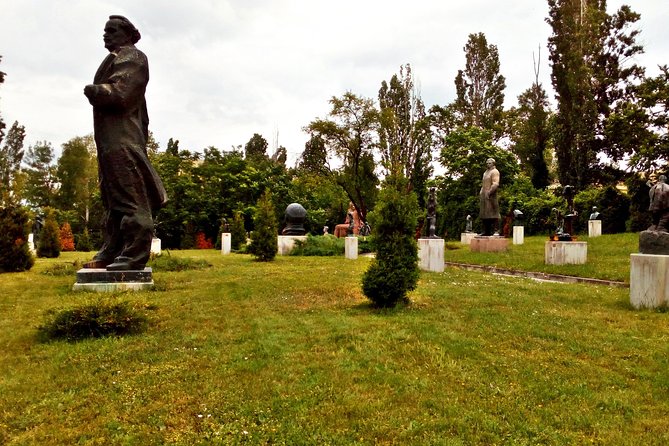
- Walking among more than 70 socialist sculptures
- Socialist realism, political symbols, and archival footage
- How the self-guided format works
- Is $8.33 a fair price?
- How long should you plan for the visit?
- Who will enjoy this experience most?
- Practical details that affect your decision
- Should you book the Museum of Socialist Art guide?
- FAQ
- Where does the self-guided tour begin?
- Where does the activity end?
- What are the museum’s opening hours?
- Is the entrance fee included?
- How much does the experience cost?
- How long does the visit take?
- What does the e-guide include?
- How many people can participate?
- Can I cancel for a full refund?
Key points to know before you go
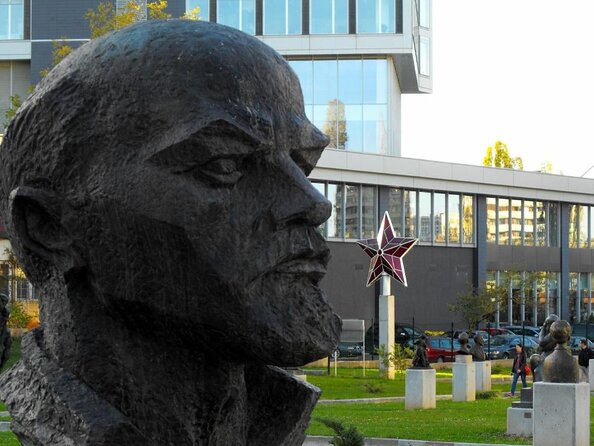
- More than 70 socialist sculptures provide the main reason to visit, with political figures, public art, and examples of socialist realism.
- The e-guide is self-paced, so you can set your own visiting time during the museum’s opening hours.
- Entrance costs extra, and the admission fee is paid directly at the museum.
- The grounds offer breathing room, with a large outdoor area away from Sofia’s busy central streets.
- The visit takes about one to three hours, depending on how closely you study the art and archival material.
- The group limit is 15 people, though the self-guided format means you are not tied to a guide’s pace.
Why Sofia’s socialist art deserves your time
Bulgaria’s socialist period is not always easy to understand from a standard city walk. Monuments have changed, political symbols have been removed or reinterpreted, and the period from the creation of the People’s Republic of Bulgaria to the end of communist rule can feel distant if you only see Sofia’s main sights.
This museum gives you a more direct look at how art served political ideas. Socialist realism was not simply art made during socialism. It was art shaped by a public purpose. Figures were often shown as strong, serious, heroic, and connected to labor, the state, the military, or national progress.
You may not agree with the messages these works carried, and that is part of the point. The sculptures allow you to ask who was honored, what kind of behavior was praised, and how public art helped create an official version of society.
I like this kind of museum because it does not require you to admire every object. You can study the scale, posture, facial expressions, and placement of the sculptures while thinking about the system that commissioned them. The art works as both cultural material and political evidence.
The museum also helps place Bulgaria within the larger story of Eastern Europe. You are not simply looking at old statues. You are seeing how a government used visual language to shape public memory.
More communist-era history in Sofia:
- Communist Walking Tour of Sofia
★ 5.0 · 690 reviews - Sofia Communist History 2-Hour Tour in a Classic Trabant
★ 5.0 · 45 reviews - Sofia Food & Tasting Tour with Communist-Era Tram Ride
★ 5.0 · 35 reviews
Finding the Museum of Socialist Art in Iztok
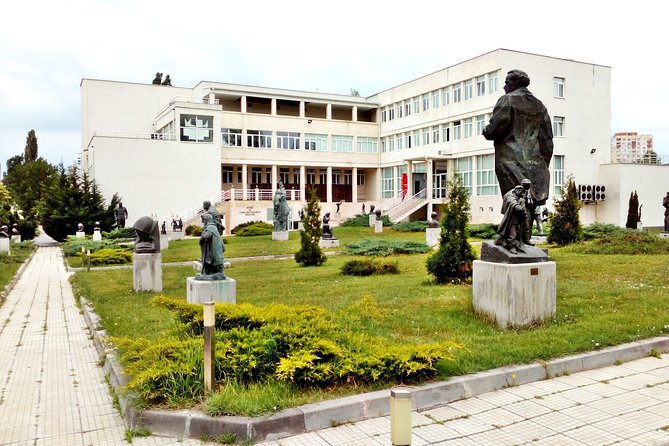
The museum is at g.k. Iztok, ul. Lachezar Stanchev 7, 1756 Sofia. That location matters because it is outside the most concentrated sightseeing zone, so you should allow time to reach it and to find the entrance without rushing.
The activity begins and ends at the museum itself. There is no listed city transfer, walking tour, or hotel pickup. You make your own way there, show up during opening hours, and use the e-guide independently.
The museum is open Tuesday through Sunday from 10:00 a.m. to 5:30 p.m. The listed schedule runs through June 17, 2026. Since the experience is not tied to one fixed departure, you have more control than you would with a scheduled guided tour.
I would avoid arriving close to closing time. The suggested visit lasts one to three hours, and the outdoor sculpture grounds deserve more than a quick glance. A late arrival could turn the visit into a hurried walk through the displays.
Walking among more than 70 socialist sculptures
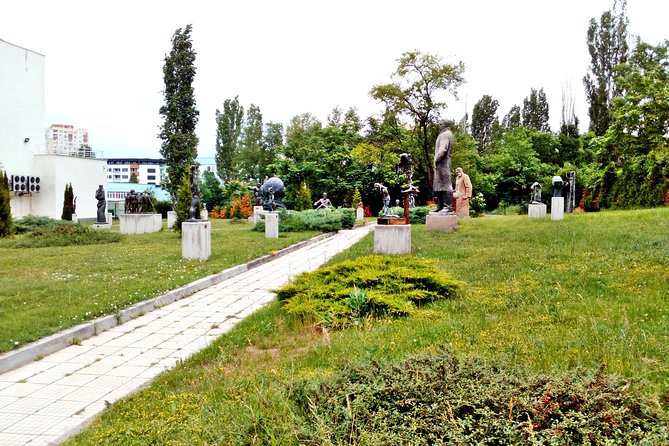
The outdoor grounds are the most distinctive part of the visit. More than 70 socialist sculptures are displayed across a large exhibition area, giving you room to look at the works individually rather than seeing them packed into a small gallery.
The size of the grounds also changes the mood. Sofia can feel busy and crowded, especially when you are moving between central sights. Here, you get a calmer setting for a break, with enough space to pause and think about what you are looking at.
The sculptures are the kind of objects that can seem plain or imposing at first glance. Take time to notice their physical choices. A raised arm, a firm stance, a uniform, a worker’s pose, or an idealized face can communicate a whole political message without a single written sentence.
I would use the e-guide as a prompt rather than expecting it to provide a complete lecture. Read the information before moving between the pieces, then look back at the sculpture with that context in mind. The value comes from connecting the formal details to the ideas behind them.
The outdoor section also makes this experience more appealing to people who do not usually spend hours in art museums. You can move at your own speed, take a break, and decide how closely you want to examine each work.
Socialist realism, political symbols, and archival footage
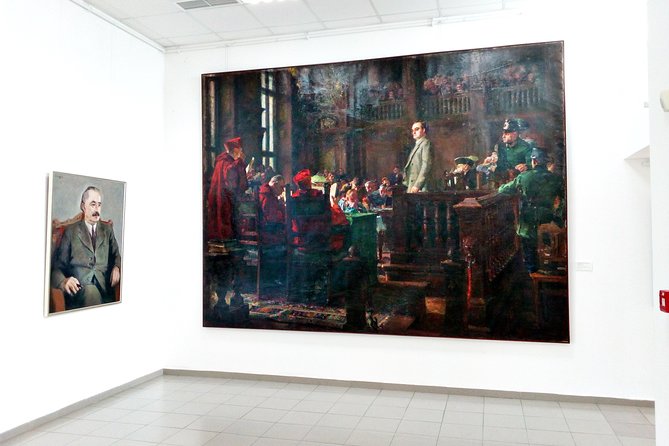
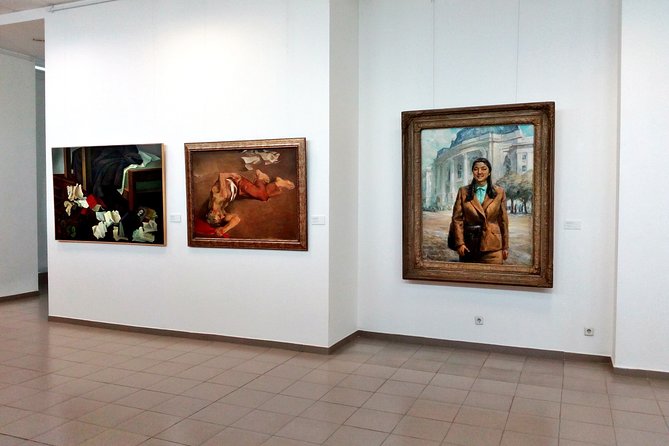
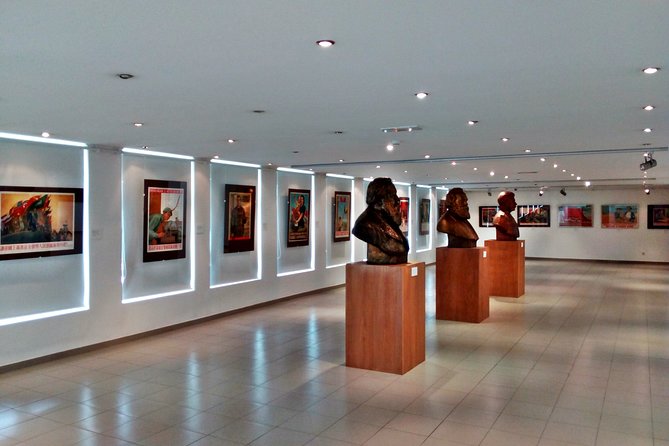
The collection is not limited to sculpture. You can also encounter examples of socialist realism, political works, and archival footage from the period.
The archival material is especially useful because sculpture alone can leave you guessing about its original role. Public art was made to be seen, and footage can help you think about the ceremonies, institutions, and official culture that gave these works meaning.
You should pay attention to the difference between art made to decorate a space and art made to promote a political message. The museum’s subject is not only style. It is the relationship between culture and authority.
Socialist realism often presents an ideal version of life. Workers appear productive, leaders appear confident, and the future appears orderly. That polished image can tell you as much about government priorities as a political speech.
The political sculptures also raise a useful question: what happens to public art after the political system changes? A statue can lose its official power while remaining historically important. The museum preserves these objects so you can examine them rather than letting them disappear from the record.
This is where the visit can become more than a collection of old monuments. You are given a chance to consider propaganda, memory, and the way governments use public spaces.
More museums and galleries in Sofia:
- Admission Ticket to the Museum of Illusions in Sofia
★ 5.0 · 659 reviews - Buzludzha Monument and the Museum of Socialist Art
★ 5.0 · 25 reviews - Art Gallery Sightseeing Tour in Sofia
★ 5.0 · 15 reviews - Private Sofia Half Day Tour with Boyana Church and National History Museum
★ 5.0 · 12 reviews
How the self-guided format works
The experience includes a personalized e-guide with information for exploring at your own pace. You can load it on all your devices, which is convenient if you are traveling with a companion and want to follow along separately.
There is no guide leading you through the museum. That is good news if you prefer quiet visits or dislike being pushed from one object to the next. You can spend several minutes on one sculpture, skip material that does not interest you, or pause before continuing.
The trade-off is that you are responsible for creating your own structure. A live guide might explain why one piece matters, answer questions, or point out details you would miss. With this format, you need to read the information and decide how much context you want.
The guide also appears to be fairly brief. A two-and-a-half-page PDF has been described in connection with this experience. That makes the price harder to justify if you are expecting a full digital tour with extensive commentary.
I would think of the e-guide as an orientation tool. It may help you understand what you are seeing, but the museum collection and grounds are the real attraction. If you want a long, expert-led discussion of Bulgarian politics and art, this is probably not the right product.
Is $8.33 a fair price?
The advertised cost is about $8.33 per person, and admission is separate. The entrance fee must be paid on the spot, so your final cost is higher than the headline price.
One price comparison is important. A published assessment describes museum admission as about €3, while the guide itself cost about €7.20 at that time. Currency conversions and ticket prices can change, but the basic point remains: the digital guide can cost more than entry to the museum.
That makes the experience good value only for a particular type of visitor. If you want help finding the museum, a small amount of background information, and the freedom to visit independently, the guide may be useful.
If you are comfortable reading about the museum on your own and paying admission directly, you may find the extra fee hard to defend. The museum itself is the main attraction, and the ticket is not included in this purchase.
I would compare the cost with your own travel habits. Some people gladly pay for a ready-made explanation so they do not have to prepare. Others would rather spend the money on another Sofia sight and read a short introduction before arriving.
How long should you plan for the visit?
The stated duration is one to three hours. That wide range is reasonable for a self-guided museum because your pace will shape the visit.
You can make it a short stop if you mainly want to see the outdoor sculptures and get a basic feel for the collection. Plan closer to three hours if you want to read the guide carefully, watch the archival footage, and consider the political meaning of the works.
The museum’s regular hours give you useful flexibility. You do not need to fit a fixed departure into your day, and you can choose a time between 10:00 a.m. and 5:30 p.m., Tuesday through Sunday.
I would schedule it when you still have enough energy to think. The subject is serious, and the sculptures reward attention. A rushed visit near closing time will give you the least value.
Who will enjoy this experience most?
This visit suits you if you are interested in Bulgarian history, Cold War Europe, political art, architecture, monuments, or the way governments shape public memory.
It also works well if you prefer independent sightseeing. You can move without a group, set your own pace, and use the information on your own devices. The maximum group size is 15, but the format remains self-guided rather than a standard group tour.
Families with older children may find the sculptures useful for discussing propaganda and public art, though the experience is not described as a children’s program. The political subject matter may be more rewarding for people who already have some interest in twentieth-century history.
I would be less likely to recommend it if your main goal is a polished, highly produced audio tour. The guide appears limited, and there is no included admission or live explanation.
Practical details that affect your decision
You receive confirmation at the time of booking. Most people can take part, and no special participation requirements are listed.
Bring a charged phone or other device for the e-guide. Since the information can be loaded on all your devices, you have the option of sharing it with companions, but you should make sure you can access it before you begin.
Remember that the entrance fee is paid separately at the museum. This is the detail most likely to surprise you, especially if you are comparing the experience price with the low cost of museum admission.
Free cancellation is available if you cancel at least 24 hours before the scheduled start time. Cancellations within 24 hours are not refunded, and late changes are not accepted. The cut-off uses Sofia local time.
Should you book the Museum of Socialist Art guide?
I would book this if you want a flexible visit and appreciate having a little context while you examine Bulgaria’s socialist-era sculpture. The large grounds, more than 70 works, political themes, and archival material give the museum a clear purpose beyond simply displaying old statues.
I would not book it automatically just because the guide is inexpensive. At $8.33 plus admission, the value depends on how much you want the supplied information. If a short PDF is enough for you, it can make the visit easier. If you expect a detailed digital tour, you may be disappointed.
My practical advice is simple: book it for convenience, not for luxury. Go with enough time to explore the outdoor grounds, keep your expectations modest about the guide, and remember that the museum ticket is extra. For an independent visitor curious about Bulgaria’s socialist past, that can still add up to a worthwhile Sofia stop.
FAQ
Where does the self-guided tour begin?
It begins at the Museum of Socialist Art at g.k. Iztok, ul. Lachezar Stanchev 7, 1756 Sofia, Bulgaria.
Where does the activity end?
The activity ends back at the meeting point, the Museum of Socialist Art.
What are the museum’s opening hours?
The museum is open Tuesday through Sunday from 10:00 a.m. to 5:30 p.m.
Is the entrance fee included?
No. The entrance fee is not included and must be paid at the museum.
How much does the experience cost?
The listed price is $8.33 per person. You also need to pay the separate museum admission fee.
How long does the visit take?
The visit takes approximately one to three hours, depending on how quickly you explore.
What does the e-guide include?
The experience includes a personalized e-guide with information you can use at your own pace and visiting time. It can be loaded on all your devices.
How many people can participate?
The activity has a maximum group size of 15 people.
Can I cancel for a full refund?
Yes. You can cancel at least 24 hours before the experience start time for a full refund. Cancellations made within 24 hours are not refunded.
More Self-guided Routes in Sofia
- Rila Monastery and 7 Rila Lakes Self-Guided Shared Trip from Sofia
★ 5.0 · 280 reviews - Rila Monastery and Boyana Church Self-Guided Day Trip from Sofia
★ 5.0 · 41 reviews - Self Guided Tour Experience in Rila Monastery
★ 3.0 · 15 reviews - Sofia Under Communism: Self-Guided Puzzle Quest
★ 5.0 · 9 reviews
Just added in Sofia
- Private Winter Day Trip to the Rila Mountain★ 4.5 · 3 reviews
- Wind Mills Hydropark Tours & Activities★ 5.0 · 1 review
- Weekend in Bulgaria★ 5.0 · 1 review
- Sofia Hidden Gems: Small-Group Walking Tour with Tram Ride★ 5.0 · 7 reviews
- Vratsa Karst and Caves★ 5.0 · 1 review
- Via Ferrata Adventure on Kuklata peak 2257 m in Rila Mountain★ 5.0 · 8 reviews
- Vitosha Trail Hunter Bike Tour from Sofia★ 5.0 · 9 reviews
- Vitosha Mountain- Heritage and Hiking- Private Day Trip★ 5.0 · 2 reviews
Communist History Tours, compared.
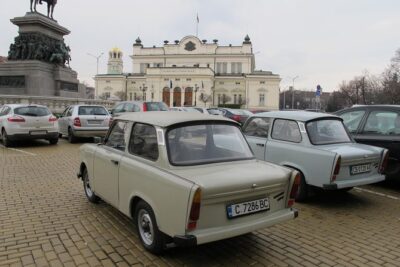
Sofia Communist History 2-Hour Tour in a Classic Trabant
Read our review →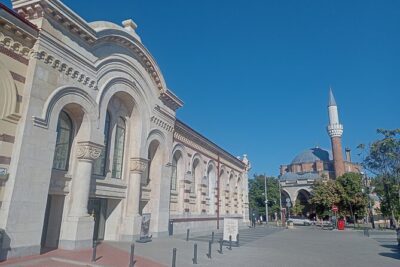
Sofia Food & Tasting Tour with Communist-Era Tram Ride
Read our review →Buzludzha Monument and the Museum of Socialist Art
Read our review →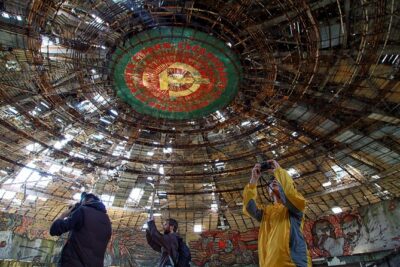
A Day trip to the Thracian Kings, The Valley of Roses & Buzludzha
Read our review →Communist Heritage Tour- Buzludzha and The Might of the East Block Aviation
Read our review →
Symbol of the Communism Buzludzha monument and the Rose valley
Read our review →
Tour to Koprivshtitsa and the Buzludzha monument incl the Seuthes Thracian Tomb
Read our review →Browse the lists this tour appears in