
REVIEW · BULGARIAN WINE TASTINGS
Valley of the Thracian Kings, Hidden Treasures
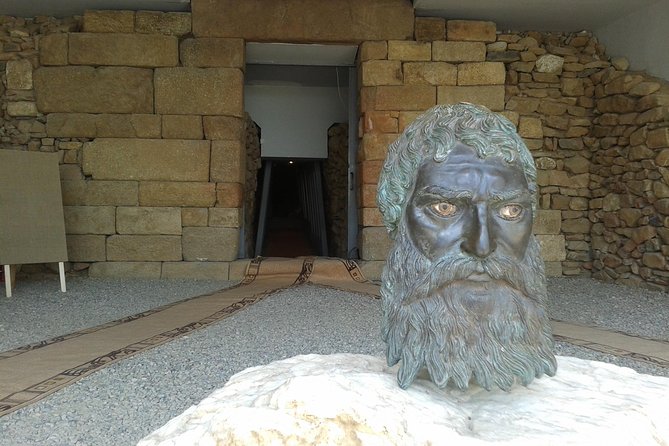
Ancient tombs wait beyond Sofia. This full-day trip takes you into Bulgaria’s Valley of the Thracian Kings, where burial mounds, painted chambers, and museum artifacts reveal a civilization often overlooked by first-time visitors. I like the small-group format and the fact that hotel pickup, transport, guides, and entrance fees are covered. I also like the mix of countryside views and serious archaeology, from the Kazanlak tomb to the unusual Ostrusha ceiling.
The main caution is the long road time. The journey can take nearly three hours each way, so your guide matters greatly. Guides such as Ivan, Krassimir, Lyubo, Adrian, Daniel, and Mikla have been praised for strong historical explanations, but one poor guide can leave you with a very quiet van and little context. Ask who will lead your tour if the provider can confirm it.
In This Review
- Five things to know before you go
- Why the Thracian Kings are worth a day from Sofia
- Leaving Sofia at 8:00 am
- Kazanlak and the art of the burial chamber
- Grifoni Tomb and the wealth of Thracian burials
- Ostrusha Tomb and its remarkable ceiling
- Iskra Historical Museum puts the objects back in context
- What the $119.27 price really buys
- The guide can make or break the experience
- Comfort, group size, and practical limits
- Who should book this day trip?
- Should you book the Valley of the Thracian Kings tour?
- FAQ
- Where does the tour begin?
- How long does the tour last?
- Is transportation included?
- What language is the tour offered in?
- Which tombs are visited?
- Is the Thracian Tomb of Kazanlak a UNESCO World Heritage site?
- Is admission included?
- Are food and drinks included?
- Can I cancel the tour for a full refund?
Five things to know before you go
- The drive takes much of the day: Expect roughly 10 hours overall, with close to six hours on the road in some conditions.
- You see several Thracian tombs: The route includes the Kazanlak tomb, Grifoni, Ostrusha, and additional burial sites, each with its own design and story.
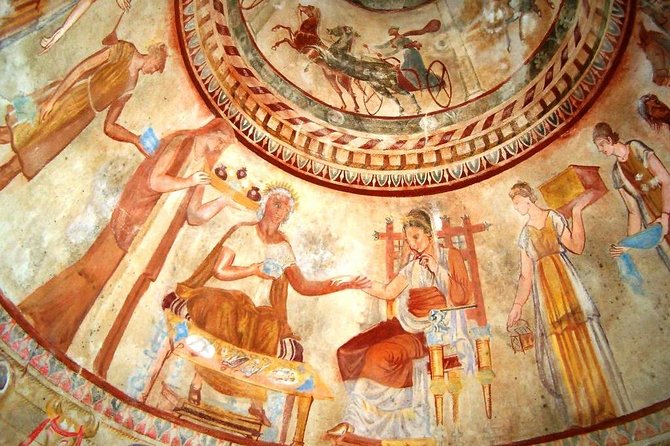
- Kazanlak is a UNESCO site: Its original late-fourth-century BC frescoes are among the finest surviving examples of Thracian art.
- The museum completes the picture: Iskra Historical Museum displays objects from the tombs, helping you understand what small underground chambers cannot show.
- The price covers the costly basics: At $119.27 per person, you get pickup, a private vehicle, a professional guide, and admission fees, but not lunch or drinks.
Why the Thracian Kings are worth a day from Sofia
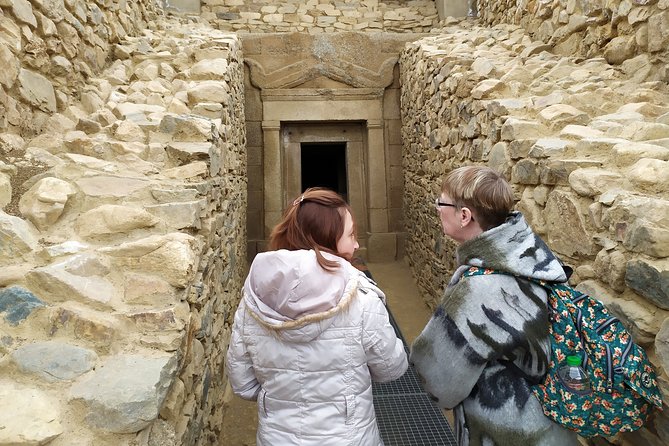
Bulgaria’s Thracians left no surviving written history of their own in the way the Romans or Greeks did. Much of what you see comes from tombs, objects, decoration, and outside accounts. That makes the guide more than a driver. You need someone who can explain what archaeologists know, what remains uncertain, and how these discoveries fit into Bulgarian history.
The Valley of the Thracian Kings is also called the Valley of the Roses. It is a major center for rose-oil production, so the area offers more than archaeology. On the road, you may pass fields, villages, agricultural land, and distant mountain views. One guide pointed out Shipka and Buzludzha from the tomb area, while another highlighted the geographical center of Bulgaria during the return journey.
I like this combination. You are not simply shuttled between museum rooms. You spend part of the day seeing rural Bulgaria, then stop at places where the burial mounds sit in the countryside itself.
The region contains about 1,300 burial mounds, with roughly 300 excavated. That number explains both the importance of the area and the limits of a one-day tour. You get a carefully chosen sample, not every major site.
More wine tastings in Sofia:
- Wine Tasting in Heart of Sofia
★ 5.0 · 545 reviews - Wine and Tapas Boutique Bulgarian Wine Tasting
★ 5.0 · 25 reviews - Special Selection Bulgarian Wine Tasting
★ 5.0 · 20 reviews
Leaving Sofia at 8:00 am
Pickup is offered from any point in Sofia, with an advertised start time of 8:00 am. That is useful if you are staying in different parts of the city and do not want to find a distant meeting point. Confirmation is provided when you book, and the tour is offered in English.
The vehicle is a practical part of the experience. Round-trip transport by private vehicle saves you from arranging a rental car, navigating Bulgarian roads, or working out connections to Kazanlak. Groups are organized on a small scale, with arrangements described as up to seven people in some cases and a maximum of 15 overall. A private tour option is also available.
Still, be realistic about the distance. The drive is long. One favorable account specifically praised guide Mikla for keeping the conversation lively during the nearly three-hour ride in each direction. Another account described six hours of driving with almost no commentary. That contrast tells you exactly what to clarify before booking: who is guiding, how much historical explanation is included during the drive, and whether the vehicle is being used for a shared or private departure.
The road time is not automatically a flaw. For someone interested in Bulgarian geography and rural life, the sunflower fields, small towns, mountains, and agricultural plains add useful context. If you dislike long day trips, however, this excursion may feel tiring.
Kazanlak and the art of the burial chamber
The first major stop is the Thracian Tomb of Kazanlak, dating from the end of the fourth century BC. It is famous for its original frescoes, which are preserved well enough to earn UNESCO World Heritage recognition.
The paintings are the heart of the site. Their value is not just age. They offer a rare look at Thracian artistic skill and funerary customs, at a time when much of the civilization’s story must be reconstructed from material remains.
The chamber is small, and that affects the visit. You should not expect a huge monument with broad halls or grand outdoor ruins. The impact comes from the detail and condition of the decoration, not from scale. One of the tombs on the route is a reconstruction, and the tour’s value partly comes from comparing protected spaces with accessible versions of the ancient structures.
The description also notes that the famous original tomb’s frescoes are preserved. That means the guide’s explanation is important. You will get more from the stop if your guide discusses why the paintings matter, how the tombs were used, and what can be learned from the scenes and decoration.
This is one of the places where Ivan, described as articulate and full of anecdotes, would make a real difference. Other guides, including Lyubo and an archaeologist who was actively pursuing the subject, were also praised for putting Thracian culture into a wider Bulgarian setting. The quality of the commentary can change this from a quick look at painted walls into a memorable history lesson.
Grifoni Tomb and the wealth of Thracian burials
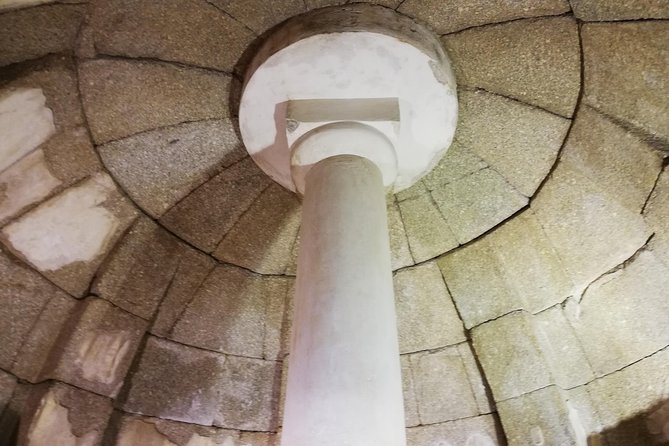
Grifoni Tomb dates from the fifth century BC. It has three chambers and a corridor, giving it a different layout from the Kazanlak tomb.
Many valuable artistic objects were found here, and it is described as one of the richest Thracian burials discovered so far. That phrase should not lead you to expect that every original object remains inside. Some artifacts have been moved to museums for protection and study, which is why the later museum visit matters.
I find the contrast between tombs especially useful. Instead of seeing one ancient structure and assuming it represents all Thracian burial customs, you can compare the number of chambers, corridors, decoration, and overall design. The differences help show that the Valley was not one single royal project built to the same plan.
The sites are also physically modest. You should be prepared for compact spaces and a moderate level of walking. The tour asks for a moderate physical fitness level, and children must be accompanied by an adult.
More things to do in Sofia:
- Rila Monastery and Boyana Church Full-Day Tour
★ 4.5 · 918 reviews - Sofia Escape Room – Teorema Rooms
★ 5.0 · 895 reviews - From Sofia: Rila Monastery & Boyana Church Day Tour
★ 4.5 · 866 reviews - Communist Walking Tour of Sofia
★ 5.0 · 690 reviews
Ostrusha Tomb and its remarkable ceiling
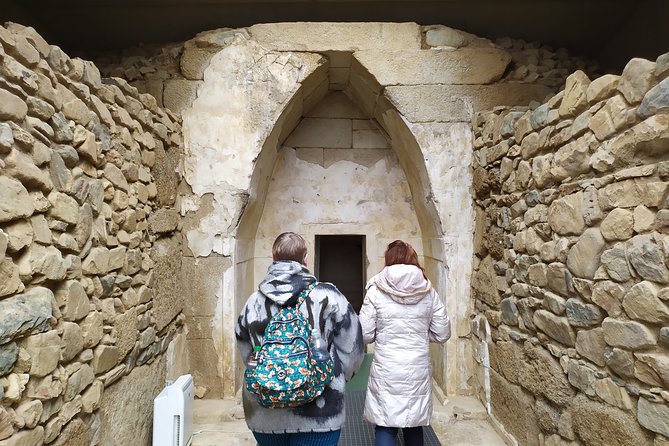
Ostrusha Tomb dates from the fourth century BC and is best known for its ceiling. The decoration combines relief work with fine painted detail, including portraits, colorful figures, and floral ornaments.
This is a strong stop for anyone who responds to visual detail. The ceiling is not simply a flat painted surface. Its mixture of relief and decoration gives the chamber a special character, and it helps explain why Thracian art deserves attention beyond the usual stories of Greece and Rome.
The countryside setting adds to the experience. From some of the tomb areas, you may see Shipka and Buzludzha in the distance. That gives you a sense of how the ancient burial grounds sit within the wider Bulgarian setting, rather than existing as isolated archaeological displays.
The route includes four tombs in total, with the named stops forming part of that group. The supplied details do not give the names and descriptions of every site, so the exact sequence may vary. That is another reason to treat the guide as central to the day.
Iskra Historical Museum puts the objects back in context
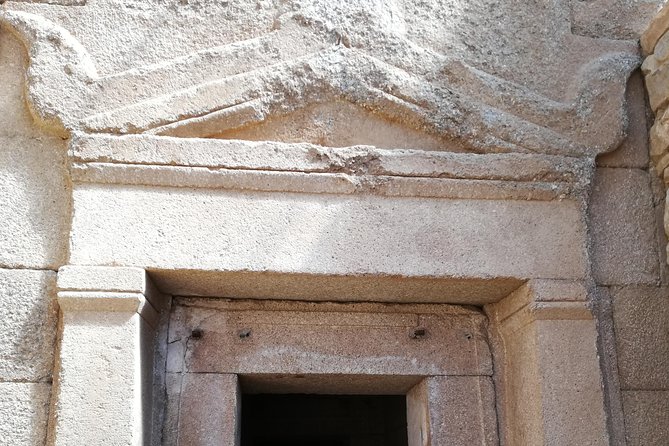
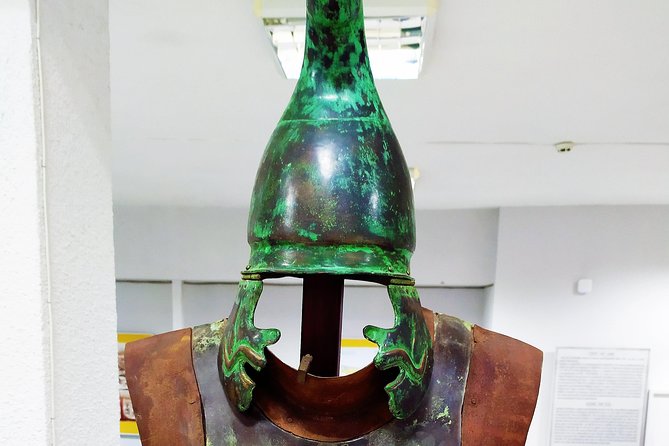
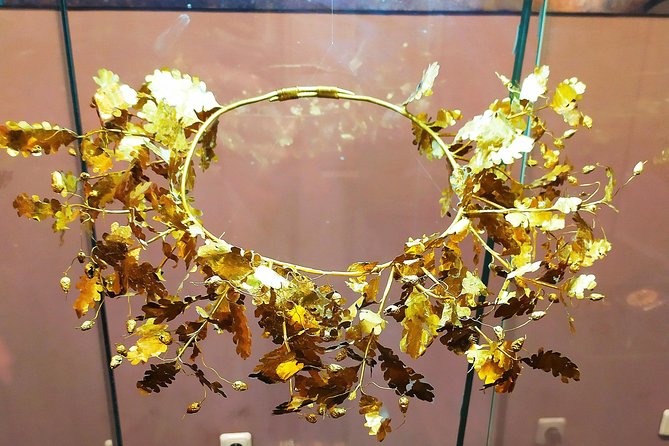
After the tombs, you spend about an hour at Iskra Historical Museum, the regional archaeological museum. It holds artifacts from the burial sites, along with examples of Thracian art and material culture.
This visit solves a common problem with ancient tomb tours. Underground chambers can be small, dark, and stripped of their original contents. A museum lets you see the objects that help explain how the tombs were made, used, and understood.
I would not rush this stop. Ask your guide to connect the displayed pieces with the tombs you have just visited. An informed guide can explain which objects came from which site and why they matter. Without that connection, the museum risks feeling like a separate collection of cases.
Guides with academic or archaeological backgrounds have received the strongest praise. One was described as an expert archaeologist, while another had a master’s degree in history. Those qualifications are valuable here because the museum requires interpretation, not just directions from one room to the next.
The museum is also a good place to ask about famous figures linked with Thracian culture, such as Orpheus and Spartacus. The tour promises a mythical side of Bulgarian history, but the amount of discussion depends heavily on the guide. Do not assume every guide will give the same depth of explanation.
What the $119.27 price really buys
At $119.27 per person, the cost is not just an admission ticket. It includes hotel pickup and drop-off, round-trip transport, a professional English-speaking guide, entrance fees, and a full day away from Sofia.
That is a fair value if you want the convenience of a planned archaeological excursion. The distance makes a rental car, fuel, navigation, and separate admissions less attractive, especially if you are visiting Bulgaria without much time.
The weak point is food. Lunch and drinks are not included, so bring money and plan to ask the guide about the meal break. Daniel was praised for taking one person to a pleasant restaurant, but that is not listed as a guaranteed part of the program.
The tour is also priced for convenience rather than budget travel. If you are comfortable with public transport, independent research, and a slower visit, you may spend less on your own. You would also need to arrange transport between scattered sites and understand the opening arrangements yourself.
The guide can make or break the experience
The feedback is unusually clear on this point. Strong guides transformed the long drive into part of the tour. Ivan was praised for his stories and clear explanations. Krassimir was described as dedicated and willing to add an extra stop. Lyubo combined a history background with an entertaining style. Adrian received praise for patience and detailed knowledge, while Daniel was helpful with both history and lunch arrangements.
Mikla was especially valued during the long road sections because conversation made the journey pass more easily. That is not a minor benefit. With six hours of driving, silence can become the main memory of the day.
There is also a serious warning. One poor experience involved a driver who offered very little commentary, gave vague answers, and seemed unhappy to be working on a Sunday and public holiday. The guest felt that the tour delivered only a few minutes of Thracian explanation in total.
I would not ignore that criticism. Since the tombs are small and many artifacts are in the museum, the guide supplies much of the meaning. Contact BulTrips before booking and ask who is assigned, especially if your main goal is history rather than simply seeing the sites.
Comfort, group size, and practical limits
The tour offers pickup throughout Sofia and uses a private vehicle for transport. Small groups are encouraged, with measures described for groups of up to seven, while the stated maximum is 15 people. A private departure may suit you if you want more control over questions and pacing.
You should have moderate physical fitness. Children need adult supervision. The tour is near public transportation, though the included pickup makes that less important for most people.
The operator also describes health measures including regular medical checks for guides and drivers, masks during tours, and disinfectant spray in each vehicle. These details may matter to you depending on current health concerns.
Free cancellation is available until 24 hours before the start time. If you cancel later, the payment is not refunded, and changes made inside that period are not accepted.
Who should book this day trip?
I would choose this tour if you care about archaeology, ancient religion, mythology, and the less familiar chapters of Bulgarian history. It is also a good fit if you want to see rural Bulgaria without renting a car.
You should be comfortable with a long day and several hours in a vehicle. The tour is not ideal if you want a relaxed outing with lots of free time, a short transfer, or a polished museum experience without uncertainty about the guide.
The strongest version of this trip includes an active historian or archaeologist who talks through the tombs, links them to the museum objects, and makes the road journey useful. The weakest version is simply transport to small archaeological sites. Ask about the guide before you pay, and consider the private option if the subject is a major reason for your Sofia visit.
Should you book the Valley of the Thracian Kings tour?
Yes, if ancient history is high on your list and you want the practical ease of pickup, transport, and included admissions. The tombs are unusual, the Kazanlak frescoes are important, and the Ostrusha ceiling gives the day a memorable visual focus.
Book with care if you need guaranteed depth. The tour earns its strongest praise from guides with history or archaeology backgrounds, and it suffers when the assigned driver cannot explain the sites. At $119.27, the package is worthwhile when the guiding is good. Before booking, confirm the guide, ask about the group size, and pack for a long road day with lunch and drinks purchased separately.
FAQ
Where does the tour begin?
The tour begins with pickup at 8:00 am from any point in Sofia.
How long does the tour last?
The experience lasts approximately 10 hours.
Is transportation included?
Yes. Hotel pickup and drop-off and transport by private vehicle are included.
What language is the tour offered in?
The tour is offered in English.
Which tombs are visited?
The route includes the Thracian Tomb of Kazanlak, Grifoni Tomb, Ostrusha Tomb, and additional Thracian burial sites. Four tombs are included in the overall visit.
Is the Thracian Tomb of Kazanlak a UNESCO World Heritage site?
Yes. The tomb is recognized for its well-preserved original frescoes and is listed as a UNESCO World Heritage site.
Is admission included?
Yes. Entrance fees for the attractions are included in the price.
Are food and drinks included?
No. Food and drinks are not included.
Can I cancel the tour for a full refund?
Yes, if you cancel at least 24 hours before the experience start time. Cancellations made less than 24 hours in advance are not refunded.
Just added in Sofia
- Private Winter Day Trip to the Rila Mountain★ 4.5 · 3 reviews
- Wind Mills Hydropark Tours & Activities★ 5.0 · 1 review
- Weekend in Bulgaria★ 5.0 · 1 review
- Sofia Hidden Gems: Small-Group Walking Tour with Tram Ride★ 5.0 · 7 reviews
- Vratsa Karst and Caves★ 5.0 · 1 review
- Via Ferrata Adventure on Kuklata peak 2257 m in Rila Mountain★ 5.0 · 8 reviews
- Vitosha Trail Hunter Bike Tour from Sofia★ 5.0 · 9 reviews
- Vitosha Mountain- Heritage and Hiking- Private Day Trip★ 5.0 · 2 reviews
Bulgarian Wine Tastings, compared.
Special History And Wine Tour including Wine Tasting
Read our review →
Private Wine Tasting in the UNESCO town of Nessebar
Read our review →

Kazanlak-Rose Valley-Valley of the Thracian Kings – private tour from Plovdiv
Read our review →
Browse the lists this tour appears in