
REVIEW · SOFIA TOURS
4 Balkan Capitals in 9 Days: Bulgaria, Romania, Serbia and North Macedonia
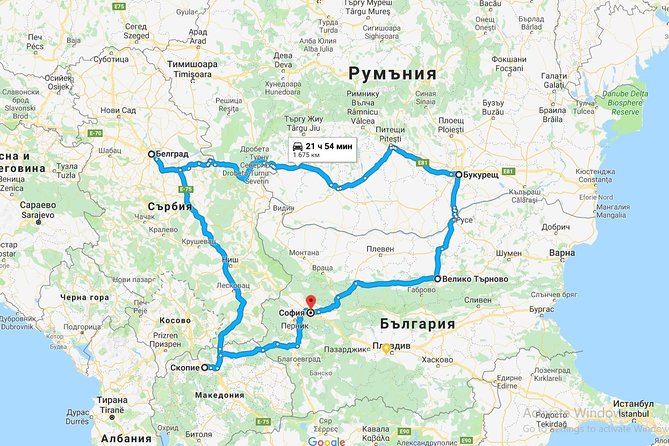
Four capitals, nine days, one busy ride. This experience connects Sofia, Bucharest, Belgrade, and Skopje with medieval towns, Roman remains, Ottoman monuments, and a UNESCO-listed monastery. I like the small group of up to eight, which should make border crossings, questions, and daily sightseeing easier. I also like that hotels, breakfasts, entrance fees, local guides, and transfers are included.
The main caution is the pace. You cover four countries in just over a week, with several long driving days and a new hotel almost every night. That makes this a useful introduction to the Balkans, but not a slow, linger-over-lunch journey. The price, $3,838.60 per person, also needs a close look because lunches, dinners, and personal spending are extra.
In This Review
- Four countries, eight travelers, and one fast-moving route
- What this Balkan route does well
- Day 1: Veliko Tarnovo and Bulgaria’s medieval heart
- Day 2: Ruse, the Danube, and first impressions of Bucharest
- Day 3: Bucharest’s parliament, village museum, and old center
- Day 4: Craiova and a quieter Romanian stop
- Day 5: Trajan’s Bridge and the road to Belgrade
- Day 6: Belgrade’s fortress and two rivers
- Day 7: Nis, Roman beginnings, and difficult Serbian history
- Day 8: Skopje between Ottoman streets and modern monuments
- Day 9: St Joakim Osogovski and the return to Sofia
- What the $3,838.60 price includes
- Pace, comfort, and who should book
- FAQ
- Where does the tour start and finish?
- How many countries do you visit?
- What hotels are included?
- Are meals included?
- Are entrance fees included?
- How large is the group?
- Is the tour suitable for most people?
- Should you book this four-capital journey?
Four countries, eight travelers, and one fast-moving route
- Veliko Tarnovo opens the trip with Bulgaria’s medieval capital, including views shaped by the winding Yantra River.
- Bucharest combines grand communist-era ambition with village architecture, old Wallachian remains, and a lively central district.
- Belgrade and Nis bring Serbia’s Roman, Ottoman, military, and 20th-century stories into the same journey.
- Skopje offers a sharp contrast between its Ottoman old quarter and heavily rebuilt modern center.
- Matka Canyon and St Joakim Osogovski Monastery add scenery and spiritual sites beyond the four capitals.
- Eight breakfasts, three-star hotels, entrance fees, guides, and hotel transfers are included, while meals beyond breakfast are not.
What this Balkan route does well
I like the way the route deals with a region that can be awkward to organize independently. Bulgaria, Romania, Serbia, and North Macedonia each have different historical experiences and border crossings, yet the tour places them in a logical westward arc before returning to Sofia.
The guide provides continuity, while local guides are scheduled in Bucharest, Belgrade, and Skopje. That division matters. A guide traveling with you can explain the links between places, while city specialists can handle the details of their own capitals.
The group limit of eight is another real advantage. You are not being herded through four countries in a large coach. A small party can usually move more quickly, and you have a better chance to ask about the buildings, political history, and food you see along the way.
The operator, Adrian, is also specifically praised in the available account of the trip. An 80-year-old mother and daughter completed the journey as part of a longer Balkan holiday, and the account highlights Adrian’s generosity and the number of sights covered. That is useful evidence of a flexible, attentive style, though one account cannot guarantee that every departure will feel identical.
More things to do in Sofia:
- Rila Monastery and Boyana Church Full-Day Tour
★ 4.5 · 918 reviews - Sofia Escape Room – Teorema Rooms
★ 5.0 · 895 reviews - From Sofia: Rila Monastery & Boyana Church Day Tour
★ 4.5 · 866 reviews
Day 1: Veliko Tarnovo and Bulgaria’s medieval heart
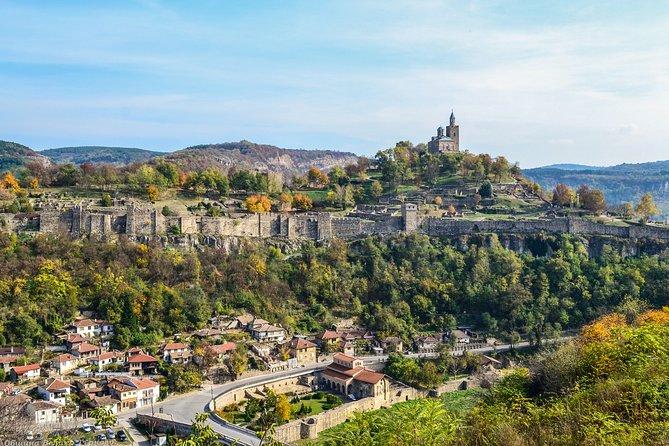
The trip begins in Sofia at 9:00 a.m., but the first full stop is Veliko Tarnovo, Bulgaria’s former medieval capital. The city lies among the bends of the Yantra River, with steep slopes and layered neighborhoods giving it a setting quite different from modern Sofia.
Your three-hour visit focuses on a city inhabited since the 5th millennium BC. Thracian, Roman, Byzantine, and medieval Bulgarian influences all appear in its story, but the Second Bulgarian Empire left the clearest mark. Veliko Tarnovo served as its capital from 1185 to 1396.
I would treat this as an important orientation day. You begin with Bulgaria’s political past before moving into the Danube plain and then across national borders. The drawback is that the first day is already a travel day, so the schedule may feel full after an early start.
Day 2: Ruse, the Danube, and first impressions of Bucharest
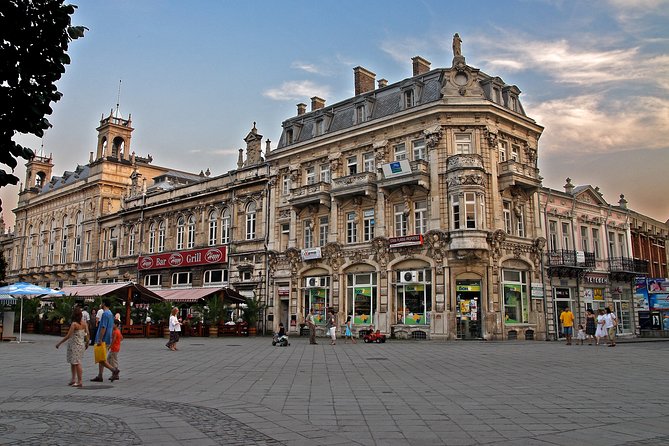
After breakfast, you head north to Ruse, a Bulgarian city on the Danube. The walking visit lasts about two hours and centers on architecture that earned Ruse the nickname Little Vienna in the 19th century.
This is a pleasant change of pace after Veliko Tarnovo. Instead of fortress-era Bulgaria, you see a city shaped by trade, river traffic, and Central European influence. The visit also gives you a final look at Bulgaria before crossing the Danube into Romania.
Bucharest follows after the border crossing and roughly an hour of driving. You stay in the city center, with an evening available for restaurants and nightlife. That central location is practical because it lets you step out for a walk rather than spending the evening in a distant hotel.
Still, border traffic and crossing procedures can affect the day. The stated schedule is useful for planning, but road trips in this part of Europe do not always run like a railway timetable.
Day 3: Bucharest’s parliament, village museum, and old center
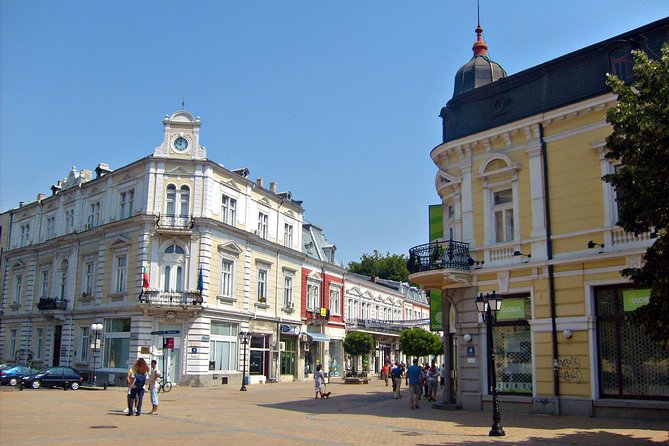
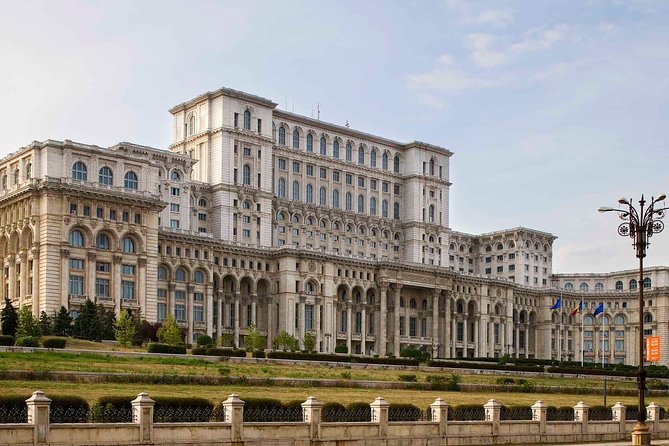
The longest sightseeing day is devoted to Bucharest, with about seven hours in the city. The centerpiece is the Romanian Parliament, the enormous building commissioned by Nicolae Ceaușescu, Romania’s last communist leader.
The building is not just a large photo stop. It opens a discussion about Ceaușescu’s rule, the forced reshaping of Bucharest, and the violent events of 1989. Entrance fees to scheduled sights are included, which helps with a visit to a major attraction such as this.
The Village Museum offers a different view of Romania. Its displays reproduce architectural styles from around the country, including wooden churches. After the scale and political weight of the parliament, the museum gives you a more domestic picture of rural life and regional building traditions.
The day ends in Bucharest’s historic center. You see remains linked with Vlad the Impaler, then walk along a pedestrian street lined with shops, restaurants, and older buildings. This combination works well: government power, rural traditions, medieval references, and present-day city life all appear in one day.
Seven hours is enough for a strong first look, but Bucharest deserves more time if you want museums, cafés, or a closer look at its architectural contrasts. You should think of this stop as a survey, not a complete city visit.
A completely different kind of day:
- Communist Walking Tour of Sofia
★ 5.0 · 690 reviews - Admission Ticket to the Museum of Illusions in Sofia
★ 5.0 · 659 reviews - Wine Tasting in Heart of Sofia
★ 5.0 · 545 reviews - Sofia Highlights 2 Hour Sightseeing Walking Tour
★ 5.0 · 442 reviews
Day 4: Craiova and a quieter Romanian stop
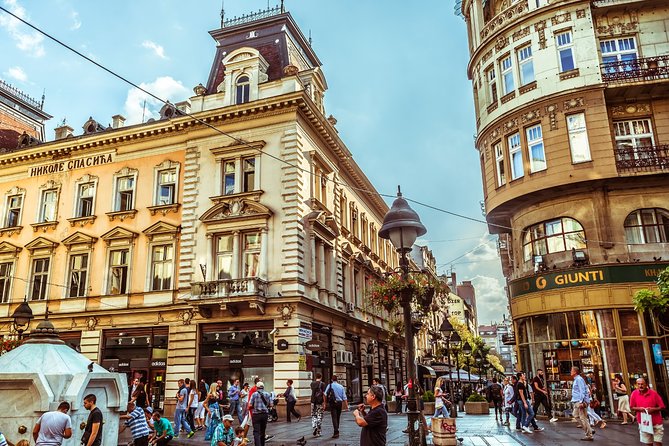
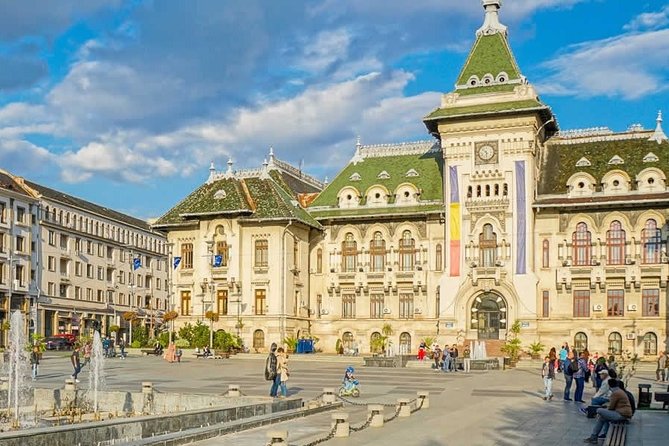
The journey heads west to Craiova, with roughly five hours devoted to the city and its surroundings. Craiova offers another side of Romania, with Austrian-Hungarian influence and a handsome central area.
The city also served as the capital of Wallachia, giving the guide another chance to connect local places with the wider political story of the region. Compared with Bucharest, Craiova is a quieter overnight stop and breaks up the longer capital-city sequence.
This is one of the route’s less famous stops, which can be a virtue. You are not spending every night in a headline attraction. The trade-off is simple: people seeking only the major capitals may consider the Craiova stay less essential, while anyone interested in regional architecture will appreciate the pause.
Day 5: Trajan’s Bridge and the road to Belgrade
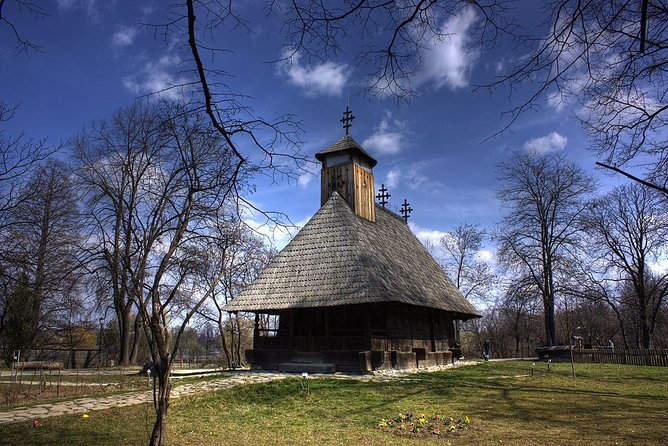
The route continues toward Serbia with a stop connected to Trajan’s Bridge. The remains are associated with Emperor Trajan’s campaign against the Dacians in 106 AD, when the bridge helped move Roman legions across the Danube.
The visit lasts about an hour and has an entrance fee included. It is a compact stop, but it gives the day a clear historical purpose rather than making the drive simply a transfer from Romania to Serbia.
After crossing the modern bridge and entering Serbia, you continue to Belgrade. The listed drive after the crossing is about an hour and a half, followed by hotel check-in and a relaxed evening.
This is a road-heavy day. You should welcome the Roman site as a chance to stretch your legs, but do not expect a full day of sightseeing. The value here is in linking ancient Roman logistics with the modern movement between two countries.
Day 6: Belgrade’s fortress and two rivers
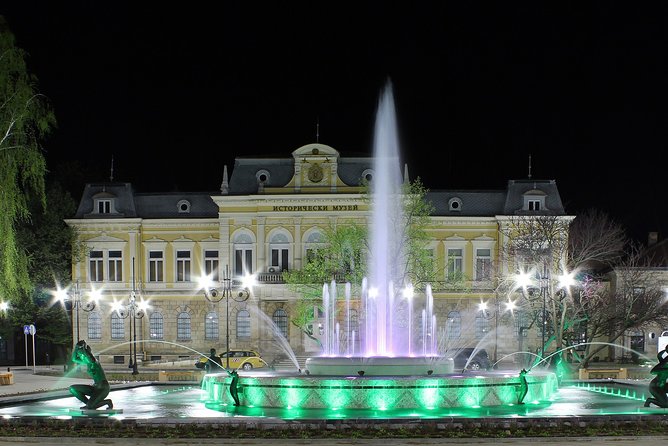
Belgrade receives a full seven-hour sightseeing day. The fortress sits above the meeting point of the Danube and Sava, a strategic position that explains why the city has seen so much conflict.
Inside the fortress, the National Military Museum presents major episodes of Balkan history from a Serbian viewpoint. That perspective is worth remembering. The region’s past is often contested, and a local interpretation can add useful context while also requiring you to compare viewpoints rather than accept one version as the whole story.
The walking tour continues along Belgrade’s main boulevards and shopping streets. In the evening, you can visit the street known for traditional Serbian restaurants, some with live Balkan music. Dinner is not included, but this is one of the evenings when paying for your own meal is part of the experience rather than a nuisance.
Belgrade is one of the trip’s strongest city stops because the day combines geography, military history, public spaces, shopping, and food. You get more than a quick photo at the fortress.
Day 7: Nis, Roman beginnings, and difficult Serbian history
The morning drive takes you to Nis, Serbia’s third-largest city. A three-hour guided visit covers several heavy but important sites.
You see the Roman villa associated with Constantine the Great, who was born in the area. The Skull Tower recalls the 1809 uprising against Ottoman rule and the brutal warning its builders intended to send. It is a disturbing site, and the best approach is to allow the guide’s explanation to provide context rather than treating it as a quick curiosity.
The visit also includes a Nazi concentration camp with preserved buildings and museums. This part of the day asks for attention and respect. It is not light sightseeing, but it helps explain the layers of suffering that shaped modern Serbia.
The Nis Fortress and main pedestrian street provide a more ordinary closing note, with time for lunch before the drive to Skopje. Again, lunch is your own responsibility. The transfer into North Macedonia follows, with an overnight in Skopje.
Day 8: Skopje between Ottoman streets and modern monuments
Skopje gets a full seven-hour day, plus an afternoon visit to Matka Canyon. The city is presented as a meeting point of Ottoman and modern influences, separated by the Vardar River.
In the old quarter, you walk through the bazaar area, among Ottoman buildings, mosques, and hammams. This is likely to be the city’s most atmospheric section, with a street pattern and architectural character different from the monumental center.
Across the river, the modern center presents another message. Statues and neoclassical buildings reflect the political choices that have reshaped Skopje’s appearance. The contrast is striking, but it can also feel confusing. The guide’s explanation is especially useful here because the city’s public design is tied to questions of national identity and historical memory.
The visit to Mother Teresa’s house adds a personal and religious note. In the afternoon, Matka Canyon brings a change from urban history. A boat trip may be available if you choose to hire one, but it is optional and not included in the stated package.
This is a packed day, yet the contrast works. You move from Ottoman streets to modern political symbolism, then out to a natural gorge. If you prefer slow museum visits, Skopje will feel rushed. If you like variety, it may be the most memorable day.
Day 9: St Joakim Osogovski and the return to Sofia
The final morning heads back toward Bulgaria with a stop at St Joakim Osogovski Monastery, described as the largest monastery in North Macedonia and part of the UNESCO World Heritage list.
Built in the Middle Ages and still active, the monastery offers a quieter finish after the crowded sequence of capitals and border crossings. Its continued religious use matters. You are not only looking at an old building; you are visiting a living place of worship that retains the atmosphere of its earlier purpose.
About two hours are allocated here, followed by the return to Sofia in the afternoon. The guide can show you Sofia’s center if you have not already had time there and will take you to your hotel. If you leave the following day, an airport transfer is included.
The return day is another long transfer with one major stop. It works best if you treat Sofia as the end point of the route, not as a city you expect to explore fully at the last minute.
What the $3,838.60 price includes
At $3,838.60 per person, the tour is not a bargain package. The approximate cost is $426 per day, before your lunches, dinners, and personal expenses.
You are paying for more than hotel rooms. The package includes three-star accommodation, eight breakfasts, scheduled entrance fees, hotel transfers, a main guide, local guides in Bucharest, Belgrade, and Skopje, and transport across four countries. The group cap of eight also has value, especially on a route where border crossings and city drop-offs could become awkward with a larger party.
The price makes more sense if you would otherwise need to arrange multiple hotels, cross-border transport, guides, and admission tickets yourself. It makes less sense if you are comfortable planning road travel and prefer budget hotels or public transport.
Ask yourself how much you value having the route handled for you. The tour is designed for convenience and context, not for the lowest possible daily cost. Since lunches and dinners are excluded, budget separately for meals and evening activities.
Pace, comfort, and who should book
This is a good match for you if you want a broad first look at the Balkans, prefer a small group, and value historical explanation over long free periods. It also suits people who want hotel transfers and a guide handling the cross-border route.
The trip can work for older adults, but the pace deserves honest thought. The available account includes an 80-year-old mother completing the journey, which suggests that age alone is not a barrier. Still, you should be comfortable with repeated road journeys, walking tours, historic sites, and changing hotels.
You should skip it if you want several nights in each capital, long independent afternoons, or a food-focused holiday. Four countries in nine days means you will see many places, but you will not know every city in depth.
The tour requires good weather. If poor weather forces cancellation, you are offered another date or a full refund. You can cancel for a full refund at least six full days before the start time, with smaller refunds available closer to departure.
FAQ
Where does the tour start and finish?
The experience starts in Sofia, Bulgaria, at 9:00 a.m. It returns to Sofia on Day 9, with hotel drop-off included. An airport transfer is also included if you depart the following day.
How many countries do you visit?
You visit Bulgaria, Romania, Serbia, and North Macedonia. The route includes Sofia, Bucharest, Belgrade, and Skopje, along with several other cities and historic sites.
What hotels are included?
The package includes stays in three-star hotels. Breakfast is provided for eight mornings.
Are meals included?
Breakfast is included, but lunches and dinners are not. Personal expenses are also excluded.
Are entrance fees included?
Entrance fees for scheduled sights are included. The optional boat trip at Matka Canyon is not stated as included and may require a separate payment.
How large is the group?
The tour has a maximum of eight people. This is intended to keep the experience small and allow more interaction with the guide.
Is the tour suitable for most people?
Most people can participate, and service animals are allowed. You should still be prepared for driving between countries, walking tours, historic sites, and a quick pace.
Should you book this four-capital journey?
Book it if you want the Balkans explained as a connected region rather than as four separate holidays. The strongest features are the small group, the mix of famous capitals and less obvious stops, the local guides in three cities, and the practical inclusion of hotels, breakfasts, entrances, and transfers.
Go in with realistic expectations. This is a fast, road-based introduction, not a restful vacation. At $3,838.60, it is best value for someone who would rather pay for organization and guidance than spend weeks arranging the same route alone. If that sounds like your style, this compact journey gives you an impressive amount of southeastern Europe in nine demanding but rewarding days.
Just added in Sofia
- Private Winter Day Trip to the Rila Mountain★ 4.5 · 3 reviews
- Wind Mills Hydropark Tours & Activities★ 5.0 · 1 review
- Weekend in Bulgaria★ 5.0 · 1 review
- Sofia Hidden Gems: Small-Group Walking Tour with Tram Ride★ 5.0 · 7 reviews
- Vratsa Karst and Caves★ 5.0 · 1 review
- Via Ferrata Adventure on Kuklata peak 2257 m in Rila Mountain★ 5.0 · 8 reviews
- Vitosha Trail Hunter Bike Tour from Sofia★ 5.0 · 9 reviews
- Private Day Trip to the Vitosha Mountain and Pancharevo Lake★ 4.5 · 13 reviews
Sofia Tours, compared.

Admission Ticket to the Museum of Illusions in Sofia
Read our review →
Sofia Highlights 2 Hour Sightseeing Walking Tour
Read our review →
Browse the lists this tour appears in