
REVIEW · WALKING TOURS IN SOFIA
Private Sofia Guided Walking City Tour with Traditional Breakfast
Sofia rewards a slow first look. This three-hour walking tour gives you a useful introduction to Bulgaria’s capital, linking Roman ruins, Orthodox churches, Ottoman traces, royal buildings, and Soviet-era reminders in the city center. I especially like the central route and the chance to sample banitsa with ayran, two simple foods that say a lot about everyday Bulgarian life.
I also like that the tour begins at the easy-to-find Alexander Nevsky Cathedral and ends on Vitosha Boulevard, a handy place to continue exploring. The main consideration is consistency: most experiences appear to last about three hours, but one booking lasted only two hours and did not include the promised breakfast, so it is sensible to confirm these details at the start.
In This Review
- Key points to know before booking
- Why this is a smart first morning in Sofia
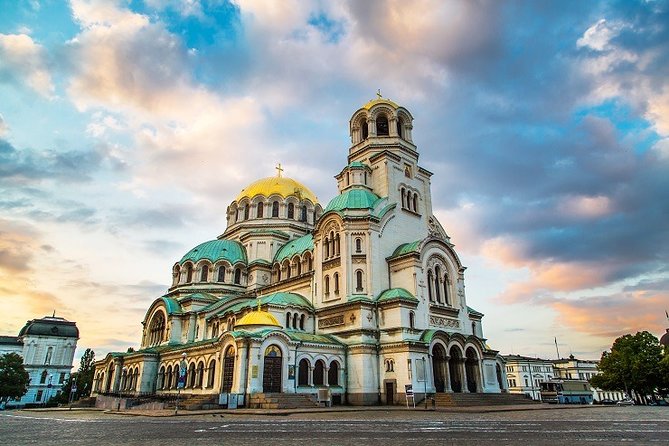
- Starting at Alexander Nevsky Cathedral
- St. Sofia Basilica and the layers beneath the city
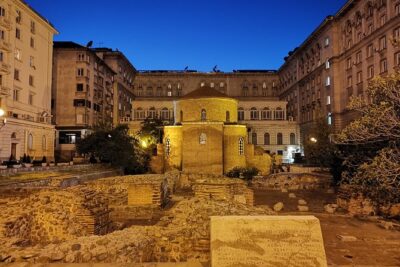
- The fourth-century St. George Rotunda
- Government buildings, royal Sofia, and mineral springs
- The Bulgarian breakfast stop
- The guide makes the difference
- Timing, group size, and value
- Who will enjoy this Sofia walk most
- Booking, cancellation, and practical advice
- Should you book this Sofia tour?
- FAQ
- How long is the Sofia walking tour?
- Where does the tour begin?
- Where does the tour end?
- Is the tour offered in English?
- Is breakfast included?
- What landmarks are included?
- Is this a private tour?
- What should you wear?
- Can I cancel for a full refund?
Key points to know before booking

- A compact history lesson: You move from fourth-century Roman Sofia to medieval, Ottoman, royal, and Soviet-era landmarks.
- Three major churches: The route includes Alexander Nevsky Cathedral, St. George Rotunda, and St. Sofia Basilica.
- A genuinely local breakfast: Banitsa, ayran, kozunak, and mekitsa introduce you to both savory and sweet Bulgarian staples.
- A guide-led morning: Diana, Ivan, Piotr, and Chimmy have each received praise for their personal approach and knowledge of Sofia.
- An easy city-center route: The meeting point is Alexander Nevsky Cathedral, with the walk finishing on Vitosha Boulevard.
- Some uncertainty to watch: The tour is described as private, but groups may be combined if another booking is made for the same time.
Why this is a smart first morning in Sofia
Sofia can feel confusing at first because its history is spread across several periods and architectural styles. A Roman rotunda may sit beside a modern government building, while a grand Orthodox cathedral rises only a short walk from archaeological remains.
I like this tour because it gives you a framework before you explore the city on your own. Instead of seeing isolated buildings, you learn how Sofia changed from Serdica, the Roman settlement, into the capital of modern Bulgaria.
The pace also suits a first morning. Three hours is long enough to cover the main center without turning the outing into an exhausting march. You get a guided walk, time for photographs, and a food stop, but you still have much of the day left for museums, shopping, or a second look at the sites that catch your interest.
The experience is offered in English and includes a live professional guide. The 4.6 rating from nine posted ratings suggests a strong overall experience, but the small number of ratings means I would treat it as a useful guide rather than a guarantee of exactly the same day for every group.
More Walking Tours in Sofia
- Communist Walking Tour of Sofia
★ 5.0 · 690 reviews - Sofia Highlights 2 Hour Sightseeing Walking Tour
★ 5.0 · 442 reviews - Guided Walking Tour of Sofia
★ 5.0 · 143 reviews
Starting at Alexander Nevsky Cathedral
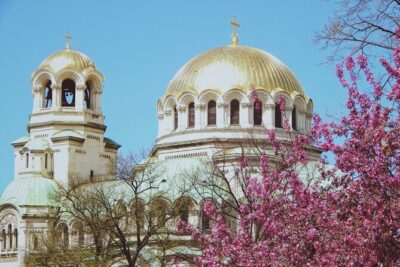
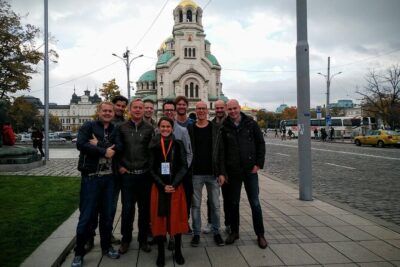
The tour begins at the Patriarchal Cathedral of St. Alexander Nevsky, at pl. Sveti Aleksandar Nevski. This is a practical meeting point because the cathedral is one of Sofia’s most recognizable buildings and easier to locate than a small café or street corner.
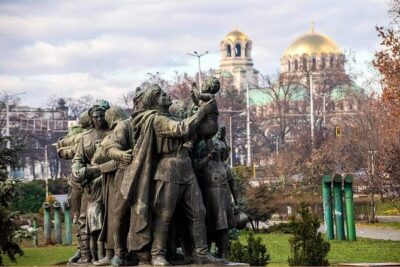
Alexander Nevsky Cathedral is one of the largest churches in the Balkans, described here as the second biggest. Its scale gives the tour an impressive opening. The building helps explain Bulgaria’s Orthodox tradition and offers a strong introduction to the national identity tied to Sofia’s monuments.
You should arrive in comfortable walking shoes. The route stays in the city center, but three hours on paved streets can still be tiring, especially if you are visiting with children or arriving after a long journey.
One useful detail is that the experience is labeled private, meaning only your group is intended to participate. At the same time, the conditions say you may be placed with another group if another booking is made for the same date and time. If personal attention is important to you, ask at the beginning how your group is arranged.
St. Sofia Basilica and the layers beneath the city
St. Sofia Basilica is one of the important stops, and it gives the tour its medieval anchor. The church dates to the sixth century and is described as the medieval symbol of Serdica.
This is a good place to listen closely to your guide because the value lies less in simply looking at the building and more in understanding its place in Sofia’s story. The church represents the early Christian period, one of several historical chapters packed into a small part of the center.
I like the way this stop helps you see Sofia as an old city rather than only a modern capital. The route is not limited to grand monuments. It connects religious buildings with the political and archaeological story around them.
The tour’s strength depends heavily on the guide here. Diana received praise for taking time with the group and sharing Bulgarian history carefully. Ivan was also praised for explaining each place while talking about present-day Bulgaria. Those details matter because a city walk is only as useful as the person connecting the sights.
The fourth-century St. George Rotunda
The St. George Rotunda is the oldest church in the city, dating to the fourth century. Its age gives you one of the clearest links to Roman Sofia.
This stop is especially useful for understanding how different eras overlap in central Sofia. You are not being taken far outside the city to find ancient remains. The Roman period is part of the everyday center, mixed with later Christian, Ottoman, Bulgarian, and modern buildings.
A good guide can make the Rotunda more than an old circular structure. Piotr was praised for his strong knowledge and relaxed manner, while another guide was described as accommodating and able to show areas the group had not seen before. That suggests the experience can have a personal feel rather than a fixed list of facts.
Still, you should not expect a full archaeological tour. The experience covers many landmarks in three hours, so the explanations will likely be broad rather than museum-level detailed. If Roman archaeology is your main interest, you may want extra time elsewhere in Sofia after the walk.
More city sightseeing in Sofia:
- Private city walking tour of Sofia
★ 5.0 · 141 reviews - Sofia Walking Private City Tour
★ 5.0 · 127 reviews - Sofia: History and Heritage – Small Group City Tour
★ 5.0 · 84 reviews - Private City Tour of Sofia
★ 4.5 · 34 reviews
Government buildings, royal Sofia, and mineral springs
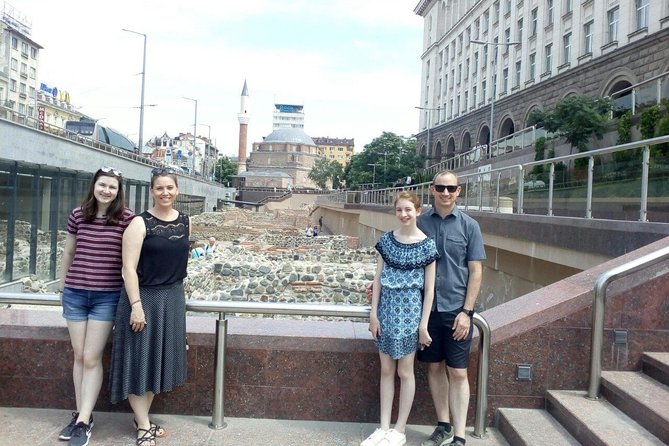
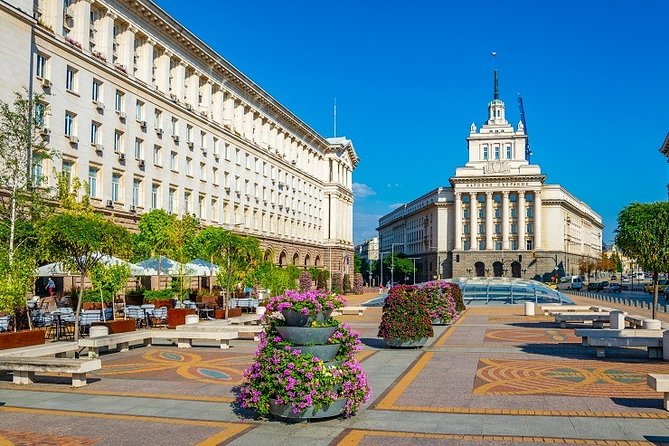
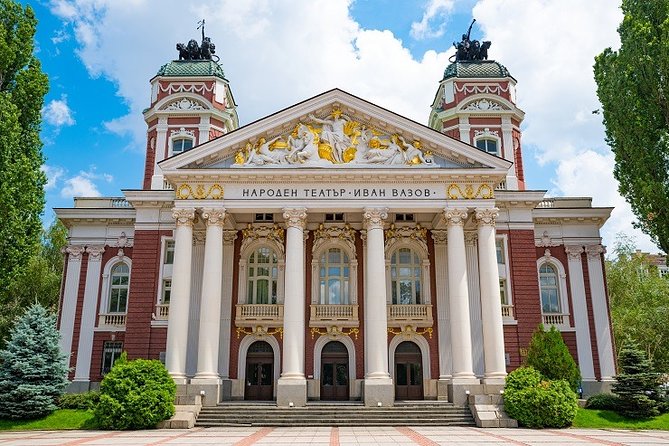
The walk also passes the Parliament, the former Royal Palace, the administration of the President, and the National Theater Ivan Vazov. These stops shift the focus from ancient and religious Sofia to the city’s political and cultural life.
The National Theater is noted as one of the most beautiful buildings in town. Even if you do not enter, it adds variety to the route and shows a more decorative side of Sofia. The former Royal Palace helps place Bulgaria’s monarchy within the capital’s development, while the Parliament and presidential administration bring you into the country’s modern public life.
You will also see Sofia’s mineral springs. These are a useful reminder that the city’s identity is not only about churches and government buildings. The springs connect the capital to its long-standing water and Roman associations, giving the walk another layer without requiring a separate excursion.
This broad selection is one of the best reasons to book the tour early in your stay. You get a quick map of the center and can decide which buildings deserve a longer return visit. The tradeoff is that no single landmark receives the attention it would on a dedicated museum or cathedral tour.
The Bulgarian breakfast stop
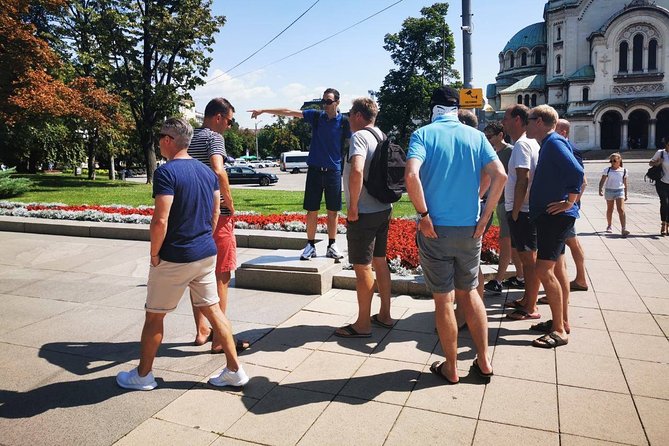
The food stop is meant to be part of the experience, not a decorative extra. You are offered banitsa, ayran, and a dessert, with kozunak and mekitsa also mentioned as foods you may try.
Banitsa is a pastry made with dough and cheese. It is a classic Bulgarian breakfast, usually savory and filling. Ayran is a salty yogurt drink, a natural match for the pastry if you enjoy tangy, dairy-based drinks.
Kozunak is a sweet bread, while mekitsa is a fried dough food somewhat similar to a churro. Together, these foods give you a wider taste of Bulgarian breakfast traditions than a single pastry would.
One of the strongest food experiences came through a pastry shop stop with several choices available. That format is useful because you can see the food before choosing, and it makes the meal feel like part of local life rather than a formal restaurant sitting.
I would treat the breakfast as a welcome cultural sample, not a full meal with extensive service. If you have dietary restrictions, the available information does not specify alternatives, so ask before booking or tell the provider in advance.
There is also an important practical warning. One booking included no food or drinks and lasted only two hours. The guide reportedly did not know the breakfast was expected, so this seems to have been a coordination problem rather than a deliberate change. Confirming the food stop when you meet your guide is a simple way to avoid disappointment.
The guide makes the difference
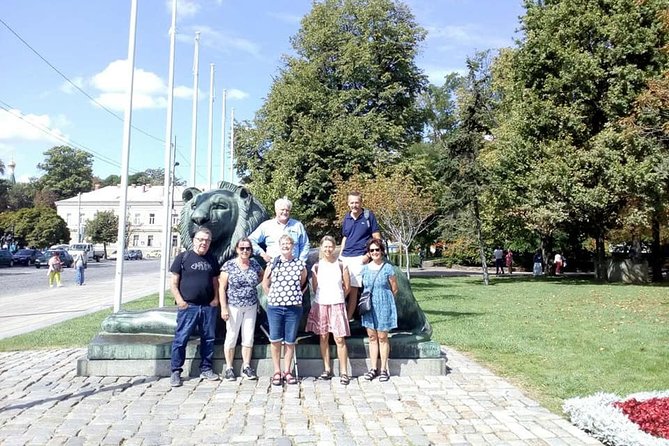
The strongest part of this experience is the human element. Diana was praised for being attentive, taking time with the group, and allowing relaxed photo stops. Ivan was described as informative and easy to talk with, including conversation about contemporary Bulgaria.
Piotr received especially warm praise for his knowledge and laid-back manner. Chimmy was described as a wonderful host who showed the group parts of Sofia they had not seen before. One guide was quieter but still covered the main sights, even after delays caused by a public transit strike and traffic involving children.
That mix tells you what to expect: the guide’s personality may vary. Some guides may give a lively stream of context, while others may use a quieter, more restrained style. If you prefer a guide who talks constantly, make that clear early. If you like a relaxed walk with room for questions, the format may suit you well.
The tour also leaves room for unexpected city life. One group happened to see a local wedding party during the walk. That kind of moment cannot be scheduled, but it is one reason a walking tour can feel more connected to the city than a drive-by sightseeing circuit.
Timing, group size, and value
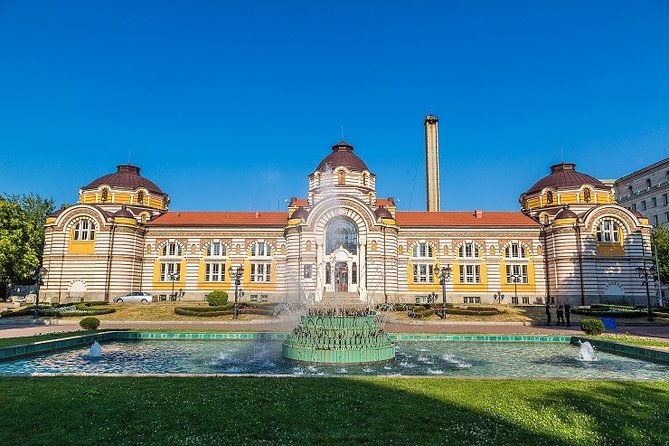
The advertised duration is about three hours, and that is a fair length for a first look at central Sofia. You cover many of the capital’s headline sights without giving up a whole day.
The value depends on what you want from a guide. If you only need a map and a list of buildings, you can walk the center yourself at no cost. The fee becomes easier to justify if you want historical context, a planned route, help connecting different eras, and a traditional breakfast built into the morning.
The private format can also improve value for families or small groups because the guide can respond to your pace and questions. However, the possibility of combining groups means you should not assume complete exclusivity in every case.
No price is provided here, so I cannot judge the exact cost against similar tours. The most useful question is whether the fee includes the guide, food, and the time saved planning your first route. It is also worth remembering that one Spanish-language comment considered the tour expensive for Bulgaria, even while recommending it. Sofia is relatively affordable in many daily situations, so guided activities can feel costly beside local food and transport prices.
The tour is near public transportation, which helps with arrival and departure. It ends on Vitosha Boulevard, one of the city center’s main pedestrian areas, so you can continue with lunch, shopping, or an independent walk.
Who will enjoy this Sofia walk most
I would recommend this tour to first-time visitors who want the main city-center landmarks explained in one organized morning. It is also a good fit if you enjoy food as part of sightseeing and prefer a guide who can discuss both historical Bulgaria and life in the country today.
Families may appreciate the short route and the breakfast break, though walking delays and children can affect the schedule. The feedback shows that the guide can be accommodating, but you should arrive on time and allow enough energy for the full walk.
History fans will like the range of periods, from Roman and early Christian Sofia to Ottoman, Bulgarian, royal, and Soviet chapters. You should choose a more specialized experience if you want long interior visits or detailed archaeological study.
This is less suitable if you dislike walking, need a highly predictable schedule, or expect a large breakfast. It is also not the best choice if poor weather is likely, since the experience requires good conditions.
Booking, cancellation, and practical advice
Confirmation is provided when you book. Free cancellation is available if you cancel at least 24 hours before the start time, based on Sofia’s local time. Changes or cancellations within 24 hours are not accepted for a refund.
If poor weather causes the tour to be canceled, you are offered another date or a full refund. Since the route is outdoors, check the forecast and dress for walking.
I would arrive at Alexander Nevsky Cathedral a little early, wear comfortable shoes, and have a light snack only if you are unsure how the breakfast arrangements will work. Most people can participate, and public transportation is nearby.
At the meeting point, confirm three things politely: that the tour will last about three hours, that the food stop is included, and whether your group is private or combined. That takes less than a minute and directly addresses the only notable problems reported.
Should you book this Sofia tour?
Book it if you want a friendly, efficient introduction to Sofia with the city’s major landmarks and a taste of banitsa and ayran included. The route covers an unusually broad sweep of history, and guides such as Diana, Ivan, Piotr, and Chimmy have been praised for their personal care, clear explanations, or relaxed style.
I would be more cautious if you need strict timing or guaranteed food service without confirming it. The one shortened tour is a real concern, even though it appears to have been an exception.
For most first visits, this is a useful morning investment. You leave with a better sense of Sofia’s center, a short list of places to revisit, and a better idea of what Bulgarians eat for breakfast. Just confirm the details at the start, then enjoy the walk.
FAQ
How long is the Sofia walking tour?
The tour is advertised as approximately three hours. One booking lasted two hours, so you may wish to confirm the expected duration with your guide at the start.
Where does the tour begin?
The meeting point is Patriarchal Cathedral St. Alexander Nevsky at pl. Sveti Aleksandar Nevski, Sofia Center.
Where does the tour end?
The tour ends on Vitosha Boulevard in Sofia Center.
Is the tour offered in English?
Yes. The experience is offered in English with a professional live guide.
Is breakfast included?
Yes. The included traditional breakfast consists of banitsa, ayran, and a dessert. Kozunak and mekitsa are also mentioned as foods you may try.
What landmarks are included?
The route includes Alexander Nevsky Cathedral, St. George Rotunda, St. Sofia Basilica, Parliament, the National Theater Ivan Vazov, the former Royal Palace, the presidential administration, and Sofia’s mineral springs.
Is this a private tour?
It is described as a private tour, with only your group participating. The conditions also say your group may be combined with another group if there is another booking at the same time.
What should you wear?
Comfortable walking shoes are recommended because the experience takes place on foot in the city center.
Can I cancel for a full refund?
Yes, if you cancel at least 24 hours before the experience begins. Cancellations or changes made within 24 hours are not refunded. If poor weather causes the provider to cancel, you are offered another date or a full refund.
Just added in Sofia
- Private Winter Day Trip to the Rila Mountain★ 4.5 · 3 reviews
- Weekend in Bulgaria★ 5.0 · 1 review
- Wind Mills Hydropark Tours & Activities★ 5.0 · 1 review
- Sofia Hidden Gems: Small-Group Walking Tour with Tram Ride★ 5.0 · 7 reviews
- Vratsa Karst and Caves★ 5.0 · 1 review
- Via Ferrata Adventure on Kuklata peak 2257 m in Rila Mountain★ 5.0 · 8 reviews
- Vitosha Trail Hunter Bike Tour from Sofia★ 5.0 · 9 reviews
- Vitosha Mountain- Heritage and Hiking- Private Day Trip★ 5.0 · 2 reviews
Walking Tours in Sofia, compared.
Sofia Highlights 2 Hour Sightseeing Walking Tour
Read our review →
Browse the lists this tour appears in