
REVIEW · WALKING TOURS
Walking tour of Plovdiv’s top attractions
Plovdiv rewards curious walkers. This private tour ties Roman ruins, Bulgarian Revival houses, and modern Kapana into a clear two to three-hour introduction to Bulgaria’s oldest major city. I like the personal format and the way the route moves from Tsar Simeon Garden through the Old Town to Nebet Tepe and the art district. My main caution is cost: at $86.90 per person, it is far dearer than a standard free walking tour, and several historic houses charge admission separately.
I also like that the guide does more than point at monuments. Adi, the guide praised in the available feedback, was noted for handling questions well while balancing humor and useful facts. The route covers a lot in a short time, but the short stops can feel brisk if you want time inside every museum and house.
In This Review
- Key points to know before booking
- Why this private Plovdiv walk works well
- Tsar Simeon Garden starts the city story
- The Ancient Stadium hides beneath modern Plovdiv
- The Ancient Theatre is Plovdiv’s essential stop
- St. Konstantin and Elena Church anchors the Old Town
- Hisar Kapia leads into Revival-era Plovdiv
- The Ethnographic Museum shows everyday life
- Nebet Tepe delivers history and a wide view
- Balabanov House reveals merchant wealth
- Hindliyan’s House is the most decorated interior
- Kapana ends the route with art and food
- What the $86.90 price really buys
- Who should choose this walking tour
- Should you book it?
- FAQ
- How long does the Plovdiv walking tour last?
- Is this a private tour?
- What is the price?
- Are hotel pickup and drop-off offered?
- What sights are visited?
- Are entrance fees included?
- Is lunch included?
- Where does the tour end?
- What start times are available?
- Can I cancel for a refund?
Key points to know before booking
- Roman Plovdiv in one compact route: See the Ancient Stadium and Ancient Theatre of Philippopolis, two major reminders that today’s city grew over a Roman one.
- A private guide keeps the pace personal: Only your group participates, so you can ask questions and adjust the conversation more easily than on a large group walk.
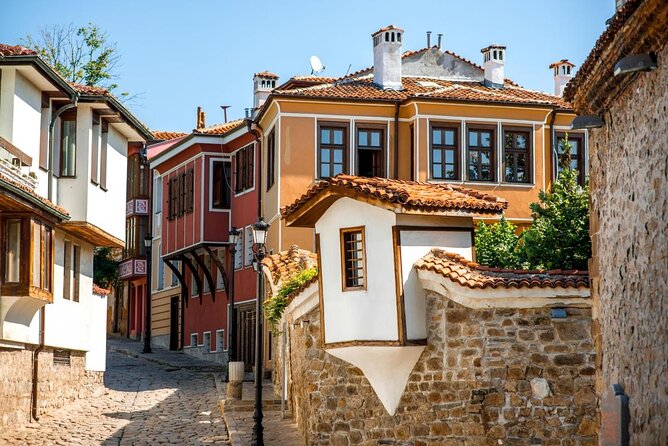
- The Old Town is the main event: St. Konstantin and Elena Church, Hisar Kapia, Balabanov House, and Hindliyan’s House show off Plovdiv’s Bulgarian Revival architecture.
- Nebet Tepe adds the best broad view: The hill contains early settlement and fortress remains, along with views over the eastern, northern, and western parts of the city.
- Kapana supplies a modern finish: Cobblestone lanes, workshops, cafés, restaurants, art shops, and painted facades make this a useful place to continue exploring afterward.
- Budget for entrance fees: Admission to the Roman Theatre, Ethnographic Museum, Balabanov House, and Hindliyan’s House is not included.
Why this private Plovdiv walk works well
Plovdiv can seem confusing at first. Roman remains sit below modern streets, the Old Town climbs over three hills, and Bulgarian Revival houses appear beside ancient walls. A guide helps you connect those layers instead of treating each sight as a separate photo stop.
The private format is the strongest feature. You are not simply following a flag through the city. You can ask why the Roman Stadium is mostly buried, how a church survived repeated destruction, or why wealthy merchants built such ornate homes in the nineteenth century.
The tour lasts about two to three hours. That is enough for a strong orientation, but not enough for slow museum visits or long meals. I would treat it as a first look at Plovdiv, then return to the places that interest you most.
Hotel pickup and drop-off are offered, and the activity ends back at the meeting point. The available details also list mobile tickets, group discounts, and service animals as accepted. Most people can participate, but the tour is not recommended for people with mobility issues. That matters here because the Old Town includes cobblestones, hills, and historic areas with uneven footing.
More Walking Tours in Plovdiv:
- Private city walking tour of Plovdiv
★ 5.0 · 65 reviews - Food Walk: Bulgarian Food and Culture Tour in Plovdiv
★ 5.0 · 35 reviews - Plovdiv guided walking tour
★ 5.0 · 31 reviews
Tsar Simeon Garden starts the city story
The walk begins at Park Tsar Simeon, a green break in central Plovdiv. You will see fountains, statues, memorials, carefully shaped plantings, paths leading toward the Main Street, and a children’s playground.
The garden is a sensible opening stop. It gives you a calm place to learn the city’s layout before the route reaches the crowded commercial center and steep Old Town lanes. The scheduled visit is about 10 minutes, with no admission fee.
Do not expect a long garden tour. This is an orientation stop, not the main attraction. Its value comes from showing how close Plovdiv’s public spaces, shopping streets, and historic sights are to one another.
The Ancient Stadium hides beneath modern Plovdiv
A few minutes at the Ancient Stadium of Philippopolis reveals one of the city’s most striking oddities: most of the Roman structure is still underground. Only the northern section has been excavated and opened to view.
The stadium was about 240 meters long and 50 meters wide, with room for up to 30,000 spectators. It was built in the early second century during the reign of Emperor Hadrian. A scale model beside the exposed section helps you picture the full building, which otherwise can be hard to understand from the surviving stones alone.
The stadium hosted games similar to the Pythian Games of Greece. Some seats carry Greek inscriptions showing that certain places were reserved for high-status people. The province of Thrace’s General Assembly organized the contests, giving the site a political role as well as a sporting one.
The planned stop is only about five minutes, and entry is free. That is enough for an explanation and a look at the model, but you may want to return later if Roman architecture is a priority.
The Ancient Theatre is Plovdiv’s essential stop
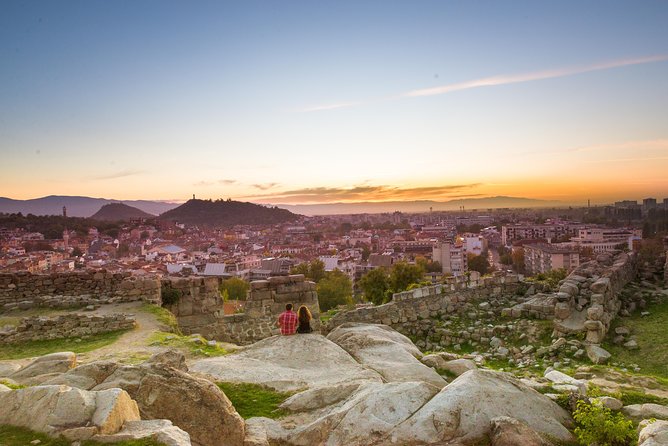
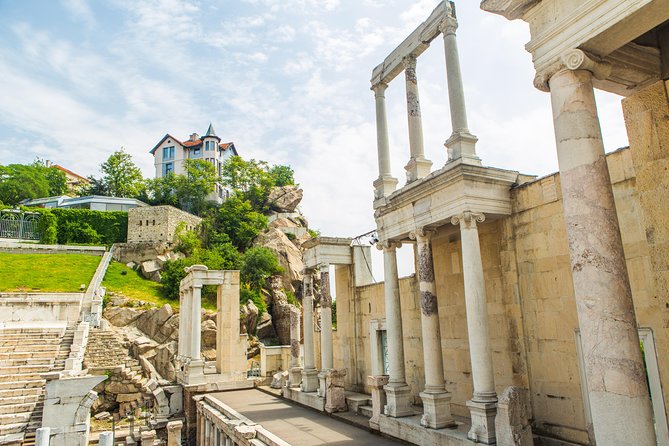
The Ancient Theatre of Philippopolis is the visual high point of the walk. Built in the first century AD, it sits between Dzhambaz Tepe and Taksim Tepe, two of the hills that shape the Old Town.
The surviving rows curve around the stage and look across the southern side of the city. The theatre hosted performances, gladiator contests, and hunting spectacles. Inscriptions on the seats identify places reserved for important members of Roman society, and they suggest the building also served as a meeting place for the Thracian Provincial Assembly.
The theatre can hold between 5,000 and 7,000 people. The supplied details give a range rather than one exact capacity, so your guide’s explanation is useful here. The stop lasts about 10 minutes, but admission is extra.
That fee is worth factoring into the price. The tour visits the theatre from outside or as a brief stop, rather than giving you an extended independent visit. If you want time for photographs, architectural details, and a full look at the seating, you may need to return on your own.
More things to do in Plovdiv:
- Wonderful Bridges-Bachkovo Monastery-Assen’s Fortress – day tour from Plovdiv
★ 5.0 · 32 reviews - Bachkovo Monastery & Asen’s Fortress – day tour from Plovdiv
★ 5.0 · 28 reviews - Private trip to Bachkovo Monastery and Assen’s Fortress
★ 5.0 · 22 reviews - E-Motorcycle Tour in Rhodope Mountains to a Beautiful Canyon View
★ 5.0 · 18 reviews
St. Konstantin and Elena Church anchors the Old Town
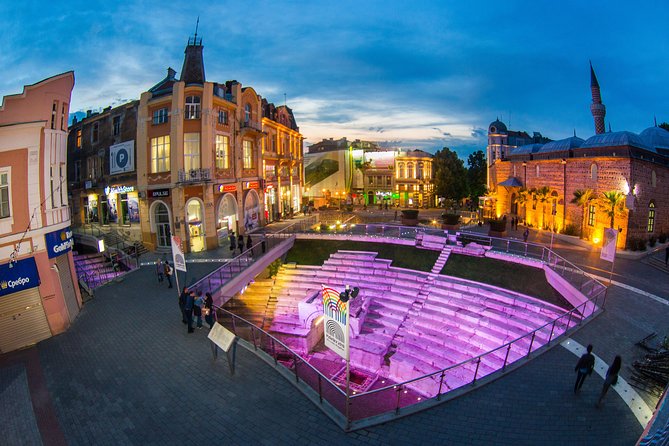
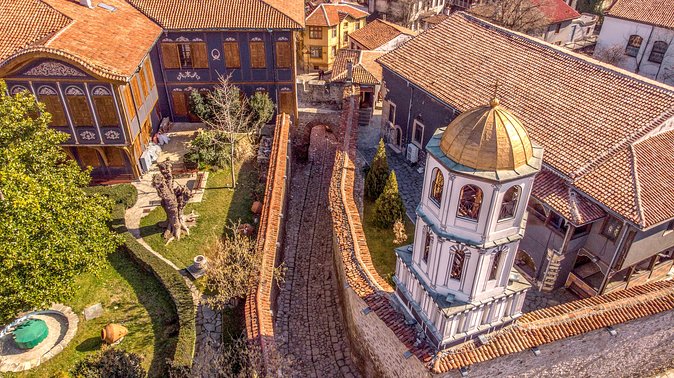
St. Konstantin and Elena Church introduces another layer of Plovdiv’s past. The first church on this site was built in 337, over an older pagan temple. It was destroyed and rebuilt several times, and the present building dates from 1832.
The church is named for Emperor Constantine the Great and his mother Helena. Inside are icons by Zahari Zograf, one of Bulgaria’s best-known painters and iconographers.
The visit is scheduled for about five minutes and is free. That makes it a quick but worthwhile pause between the Roman theatre and the Old Town houses. You should not expect a long religious-art visit at this pace. The main benefit is hearing how one sacred site changed across centuries while keeping its place in the city.
Hisar Kapia leads into Revival-era Plovdiv
The medieval Hisar Kapia gate was built in the eleventh century on the foundations of an older Roman gate. It once marked the eastern entrance to the acropolis of ancient Plovdiv.
Today, Revival-era houses are built into the walls around it. This is one of the places where Plovdiv’s history is easiest to read at a glance: Roman foundations, medieval defenses, and nineteenth-century homes occupy the same compact corner.
The gate itself is an exterior sight, so the guide’s explanation carries much of the experience. It also makes a useful transition into the architectural museum area, where the old houses become the focus.
The Ethnographic Museum shows everyday life
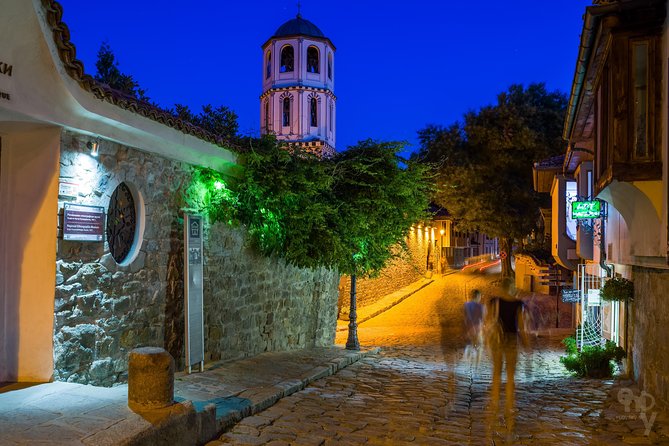
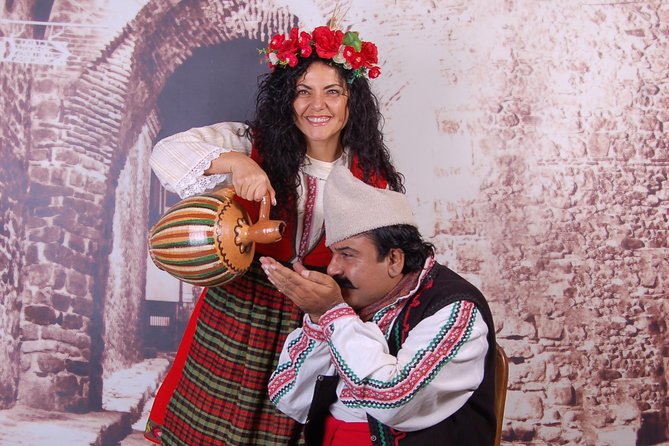
The Plovdiv Regional Ethnographic Museum occupies an elaborately decorated Bulgarian Revival house with strong Baroque features. Its collection contains about 40,000 cultural objects, including furniture, clothing, pottery, tools, musical instruments, and household items.
This is where the tour moves beyond grand monuments. The objects help you picture how people in the region worked, dressed, furnished their homes, and spent their free time. I find that kind of context particularly useful after seeing grand Roman buildings and wealthy merchant houses.
The planned stop lasts 15 minutes, and admission is not included. Fifteen minutes is enough for an introduction and a quick look, but not a full museum visit. If you enjoy folk culture, allow extra time after the tour.
Nebet Tepe delivers history and a wide view
Nebet Tepe is the northernmost of the three syenite hills beneath Plovdiv’s Old Town. The earliest settlement here dates to the Copper Age and later grew into the Thracian city of Eumolpia.
Ruined fortress walls remain on the hill. The site is open to visitors without an admission fee, and it offers views toward the eastern, northern, and western parts of Plovdiv.
The scheduled stop is about five minutes. That is enough to take in the basic story and enjoy the view, but not enough for a slow examination of every ruin. The hill is one reason sturdy shoes make sense. The route is a walking tour through an old district, not a flat promenade.
Nebet Tepe also gives the tour a useful change of mood. After the close streets and decorated houses, you get open space and a better sense of how Plovdiv’s hills shaped its growth.
Balabanov House reveals merchant wealth
Balabanov House is one of the clearest examples of Bulgarian Revival architecture on the route. Its rooms feature carved wooden ceilings, wall paintings, period furniture, and artwork. Each room has its own ceiling design, making the interior more than a single grand display.
The ground floor functions as a gallery for modern Bulgarian art. Upstairs, late Baroque furniture fills the rooms. This contrast lets you see both the house as a historic home and its role as a cultural space today.
The stop lasts about 10 minutes, with admission extra. That is a tight schedule for a house filled with details. If carved wood, furniture, and domestic architecture interest you, note the entrance fee and plan to revisit it with more time.
Hindliyan’s House is the most decorated interior
Built between 1835 and 1840 for merchant Stepan Hindliyan, this house is a fine example of symmetrical Plovdiv architecture. Its Neo-Baroque design includes detailed ceilings and hand-painted wall scenes.
The murals depict places such as Stockholm, Lisbon, Saint Petersburg, Athens, Istanbul, and Venice. They were likely copied from postcards and engravings brought home by the owner. That small detail makes the house especially interesting: it shows how international travel and commercial connections reached a prosperous Plovdiv household in the nineteenth century.
The house is described as the most richly ornamented preserved home in the Old Town. A large living room includes a fountain, adding another layer of luxury to the interior.
The visit is about 10 minutes, and admission is not included. Again, the timing gives you a sample rather than a complete museum experience. You will get the best value if you listen closely to the guide, then decide if the house deserves a longer return visit.
Kapana ends the route with art and food
Kapana means the Trap, a fitting name for its maze of narrow cobblestone streets. The district began as a craftsmen’s quarter in the fifteenth century and later became a center for artists.
Today, you will find workshops, modern art shops, cafés, restaurants, and painted building fronts. The art changes over time, so the district feels less fixed than the Roman sites and house museums earlier in the walk.
The tour allows about 15 minutes here, with no admission charge. That is enough to get your bearings and hear how the area changed, but not enough for a meal or serious shopping. Since lunch is not included, Kapana is the natural place to continue after the official route ends.
I like this ending because it brings the tour into present-day Plovdiv. You finish with a practical choice: stay for food, browse the shops, or use the district as a starting point for more independent walking.
What the $86.90 price really buys
At $86.90 per person, this is not a bargain if you only want to see Plovdiv’s main sights from the street. Several stops are brief, lunch is excluded, and admission fees for the Ancient Theatre, Ethnographic Museum, Balabanov House, and Hindliyan’s House are extra.
The value comes from the private guide. You pay for a tailored explanation, a route that links distant periods, and the chance to ask questions without waiting behind a large group. If you are in Plovdiv for one day, that can be useful. A good orientation tour helps you choose where to spend your remaining hours.
The available feedback gives the guide Adi special praise for humor, charm, and a good balance of subject matter. It also notes tour start times of 11 a.m. and 2 p.m. Those details make the experience easier to fit around a morning arrival or an afternoon departure, though you should confirm the exact time when booking.
Group discounts may improve the calculation for families or friends. Hotel pickup and drop-off are also offered, which may add convenience, but the listed inclusions name only a local guide, so check precisely what transport is included for your booking.
Who should choose this walking tour
I would recommend this experience to you if:
- You have only a few hours in Plovdiv.
- You want a private introduction rather than a large group walk.
- You care about the connection between Roman, medieval, Revival, and modern Plovdiv.
- You like asking questions as you go.
- You want help deciding which museums and houses deserve a second visit.
It is less suitable if you want a slow museum day. The Roman Theatre, Ethnographic Museum, Balabanov House, and Hindliyan’s House each deserve more than the short scheduled visits allow.
It is also a poor fit if hills and uneven streets are difficult for you. The tour is not recommended for people with mobility issues, and the Old Town’s cobblestones and slopes are part of the route.
Free cancellation is available if you cancel at least 24 hours before the start time. Changes or cancellations made later are not accepted for a refund. Confirmation usually arrives at booking, though bookings made within 16 hours of departure are subject to availability.
Should you book it?
Book this tour if you want a fast, private orientation to Plovdiv and value a guide who can connect ancient ruins with Bulgarian Revival culture. The route is broad, the private setting is convenient, and Adi’s praised balance of humor and useful detail is a strong reason to request that guide if available.
Skip it if your main goal is low-cost sightseeing or long museum visits. At $86.90 per person, you should use the private attention and historical context to justify the price. For a first visit with limited time, that trade can make sense. For a slower, budget-focused day, explore the free outdoor sights first and pay separately only for the interiors you most want to see.
FAQ
How long does the Plovdiv walking tour last?
The tour lasts approximately two to three hours.
Is this a private tour?
Yes. Only your group participates in the activity.
What is the price?
The listed price is $86.90 per person.
Are hotel pickup and drop-off offered?
Yes. Complimentary hotel pickup and drop-off are listed as features of the experience.
What sights are visited?
The route includes Tsar Simeon Garden, the Ancient Stadium of Philippopolis, the Ancient Theatre of Philippopolis, St. Konstantin and Elena Church, Hisar Kapia, the Ethnographic Museum, Nebet Tepe, Balabanov House, Hindliyan’s House, and Kapana.
Are entrance fees included?
No. Admission fees and taxes are not included. The Ancient Theatre, Ethnographic Museum, Balabanov House, and Hindliyan’s House list admission as extra.
Is lunch included?
No. Lunch is not included.
Where does the tour end?
The activity ends back at the meeting point.
What start times are available?
The available information notes tour starts at 11 a.m. and 2 p.m. The listed operating hours are Monday through Sunday from 9 a.m. to 6 p.m.
Can I cancel for a refund?
Yes. You can cancel at least 24 hours before the start time for a full refund. Cancellations or changes made less than 24 hours before the start time are not accepted.
Just added in Plovdiv
- Unlock Six Starosel Treasures: A Delicious Tasting Experience★ 5.0 · 1 review
- Veliko Tarnovo – Arbanassi – Shipka Memorial Church – private tour from Plovdiv★ 4.5 · 6 reviews
- Transfer from Plovdiv to Stara Zagora★ 5.0 · 1 review
- Transfer from Plovdiv to Pamporovo★ 5.0 · 1 review
- Transfer Plovdiv to Sofia airport/city with a car 3+1★ 5.0 · 3 reviews
- Private Buggy Experience All Seasons in Pamporovo★ 5.0 · 3 reviews
- Starosel Thracian Temple and Hisarya spa resort – private day tour from Plovdiv★ 5.0 · 1 review
- 1 Hour Waterfalls Canyon Private Horse Riding in Smolyan★ 5.0 · 2 reviews
Walking Tours, compared.
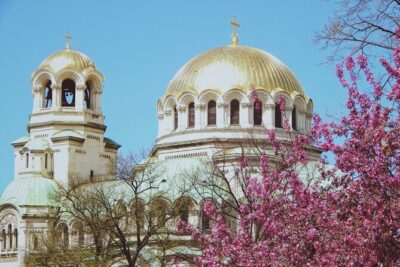
Sofia Highlights 2 Hour Sightseeing Walking Tour
Read our review →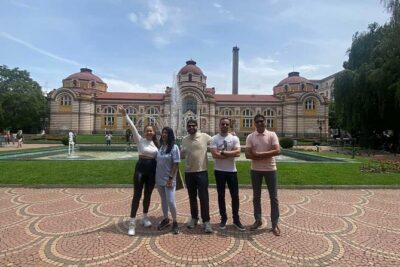
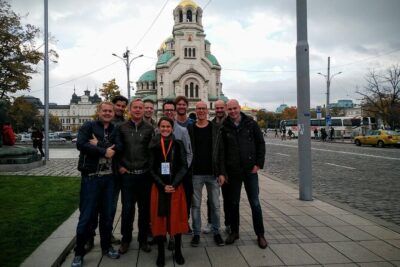
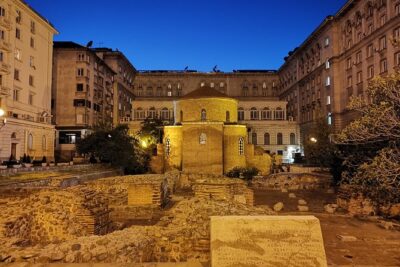
Food Walk: Bulgarian Food and Culture Tour in Plovdiv
Read our review →
Browse the lists this tour appears in