
REVIEW · MUSEUMS
Self-guided tour in Varna Archaeological Museum + ticket
Ancient gold waits beyond the beach crowds. This self-guided museum visit gives you a quiet, family-friendly break in central Varna, with exhibits covering Hellenistic, Roman, and medieval Bulgaria. I like the freedom to move at your own pace, and I like the chance to see everything from surgical tools to jewelry and ancient tombstones in one historic building.
The main drawback is value. At $22.48 per person, the experience may feel expensive for a museum visit without a live guide, especially since one dissatisfied purchaser compared the cost with the museum’s much lower local admission price. You also need to read your email carefully, since the first confirmation is not the entry ticket itself.
In This Review
- Key points to know before booking
- Why this museum makes a good break from Varna’s beaches
- The building is part of the attraction
- The story begins with Varna’s archaeologists
- What you can expect to see inside
- The Hellenistic and Roman sections reward patient looking
- Medieval objects complete the timeline
- Is $22.48 a fair price?
- Timing, opening days, and holiday risks
- Who will enjoy this self-guided visit most?
- Cancellation and booking tips
- Should you book the Varna Archaeological Museum tour?
- FAQ
- Where is the experience located?
- How long does the museum visit take?
- Is the tour offered in English?
- Is this a guided tour?
- What can I see at the museum?
- What are the museum’s stated opening hours?
- Is the museum ticket included?
- Can I cancel for a full refund?
Key points to know before booking
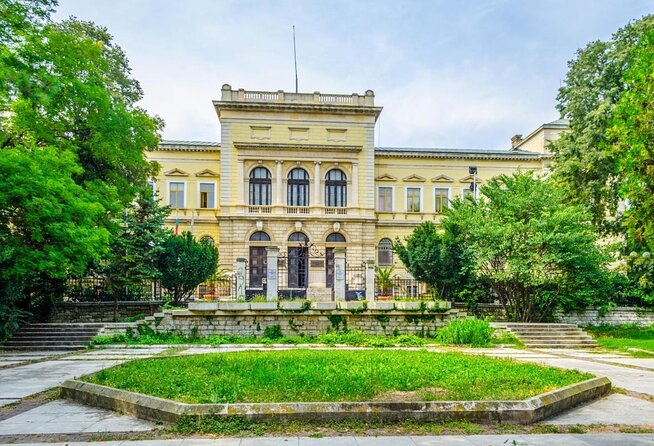
- A former girls’ high school houses the museum: Petko Momchilov designed the building in the new Renaissance style between 1892 and 1898.
- The collection covers several major periods: You can see objects connected with Hellenistic, Roman, and medieval life in Varna and northeastern Bulgaria.
- The famous Varna Gold is part of the wider archaeological story: The museum offers an important setting for understanding the region’s long human past.
- This is self-guided and offered in English: You explore the galleries independently rather than following a live guide.
- The visit takes about two to three hours: That gives you time to read displays without turning the museum into an all-day commitment.
- The booking process has one important catch: You receive a second voucher for museum access, so check your email and spam folder before arriving.
Why this museum makes a good break from Varna’s beaches
Varna is best known as a seaside city, but its archaeological museum gives you a different view of the place. Instead of sun, sand, and beach traffic, you get stone, metal, glass cases, and the long story of settlement around the Black Sea.
I especially like this as a family stop. Children can spot jewelry, weapons, medical instruments, and carved stones more easily than they might follow a long lecture about political history. The museum also offers a useful change of pace on a hot day, since you can spend two or three hours indoors without needing to organize a full excursion.
The self-guided format helps if your group has mixed interests. You can pause at objects that catch your eye, move quickly through sections that feel less engaging, or let older children read parts of the display on their own. The tradeoff is that you do not have a guide explaining the objects in real time.
The English option is useful, but the available information does not promise an audio guide, printed guidebook, or personal commentary. You should expect to learn from the museum’s written displays and the objects themselves. One poor experience came from a visitor who was told to read the English text on the walls, so this visit suits you best if you are comfortable exploring independently.
More museums and galleries in Varna:
- Admission Ticket to the Museum of Illusions in Sofia
★ 5.0 · 659 reviews - Admission Ticket to Illusions in Museum in Veliko Turnovo
★ 5.0 · 35 reviews - Buzludzha Monument and the Museum of Socialist Art
★ 5.0 · 25 reviews
The building is part of the attraction
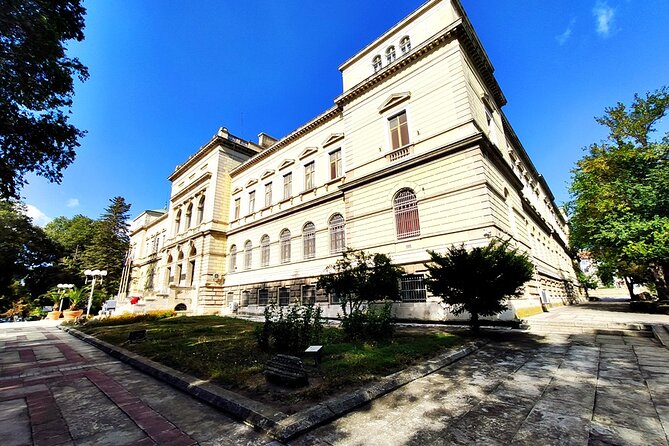
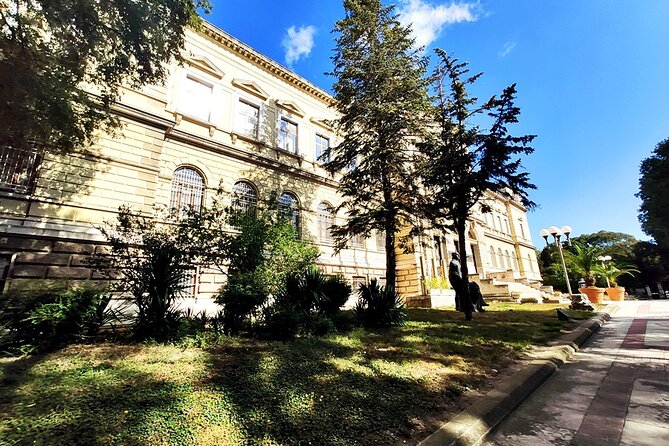
Before you even focus on the exhibits, take a good look at the museum itself. The building was designed as a girls’ high school by Bulgarian architect Petko Momchilov and built between 1892 and 1898.
Its style is described as new Renaissance. The structure forms nearly a complete square around a spacious inner yard, with a basement and two upper floors. A continuous corridor runs through the building and leads to the exhibition rooms.
That layout gives the museum a sense of order. You move from room to room along the corridor rather than wandering through a modern gallery with no clear shape. Some rooms and corridors have wall paintings, adding another layer to the visit.
For me, this is an important reason not to rush in, take a few photographs, and leave. The museum’s setting helps connect modern Varna with the city’s institutional and cultural development. The building later became the home of a museum shaped by local historians and teachers, so the architecture and the collections belong to the same civic story.
You should allow a little time for the building itself, even if ancient objects are your main reason for coming. It is not simply a container for artifacts.
The story begins with Varna’s archaeologists
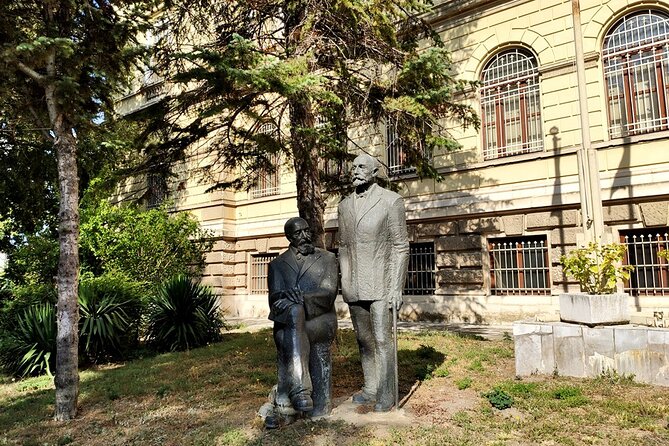
The museum’s growth is closely linked with Herman and Karel Škorpil, two brothers of Czech origin who came to Bulgaria after the country’s liberation from Ottoman rule. They settled permanently in Varna in 1894 and helped support education and cultural work.
On December 12, 1901, socially active citizens and teachers founded the Varna Archaeological Society. For decades, the society encouraged the study of Varna, the surrounding region, and northeastern Bulgaria.
That background matters because the museum was not created as a random display of old objects. It grew from local interest in preserving and studying the area’s past. As you move through the galleries, you are seeing the result of a long effort to collect, protect, and explain the material remains of the region.
You may not receive a detailed lecture about the Škorpil brothers during the self-guided visit. Still, knowing their role gives the museum a stronger sense of purpose. It also explains why the collection reaches beyond one narrow period or one famous discovery.
What you can expect to see inside
The visit brings together objects from several periods, so the experience works best when you look for changes in daily life rather than trying to memorize every date.
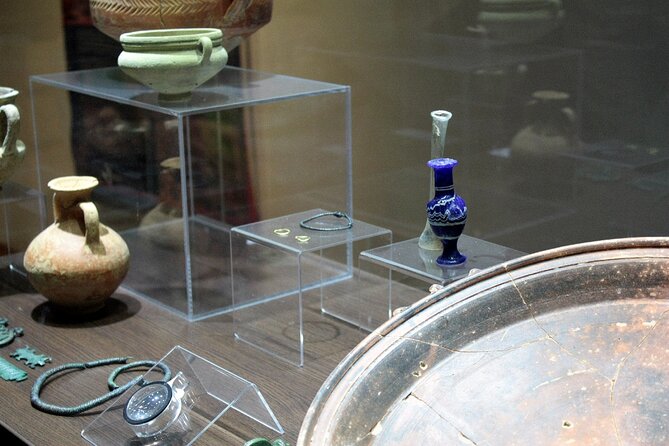
The collection includes ancient tombstones, which can help you think about burial customs, identity, and the way people recorded names or social status. Tombstones are often less flashy than gold, but they can reveal how people understood family, death, and public memory.
You can also see surgical tools. These are among the most useful objects for making the past feel real. A tool used to treat an injury or perform a procedure shows that ancient communities had practical medical knowledge, even when their methods were very different from ours.
Jewelry provides the visual lift. Small pieces can show craft skill, taste, wealth, and social standing. If you are visiting with children, jewelry is often easier to appreciate at a glance than a long inscription or a fragment of pottery.
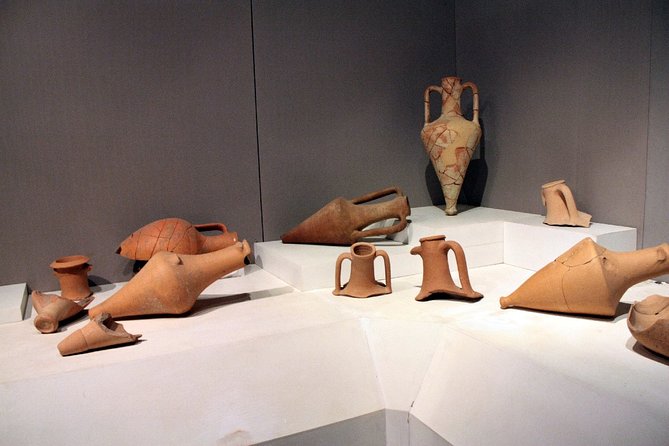
The museum’s historical range includes Hellenistic, Roman, and medieval material. That broad span lets you compare changing styles, technologies, and customs over time. You are not looking at one frozen moment. You are following the region through several important stages.
The available details do not provide a complete room-by-room list, so I would not promise a specific display order. The safest expectation is a broad archaeological collection presented through written information and physical objects. Plan to choose your own highlights rather than waiting for a fixed guided narrative.
More self-guided routes in Varna:
- Cathedral of the Assumption of the Virgin Self-Guided
★ 5.0 · 2 reviews - Road Trip Bulgaria™: Self-Drive Audio Guided Tour to the North Coast of BG
★ 5.0 · 1 review - Rila Monastery and 7 Rila Lakes Self-Guided Shared Trip from Sofia
★ 5.0 · 280 reviews - Rila Monastery and Boyana Church Self-Guided Day Trip from Sofia
★ 5.0 · 41 reviews
The Hellenistic and Roman sections reward patient looking
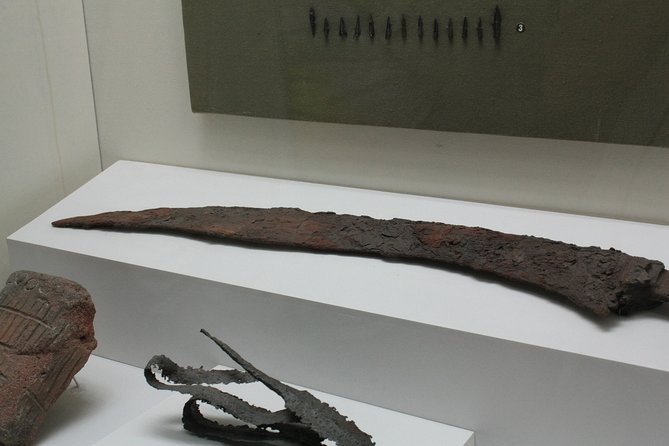
The Hellenistic and Roman periods are especially useful for understanding Varna’s place in the wider Black Sea world. Objects from these eras can show links between local communities and larger Mediterranean cultural systems.
Look closely at details rather than judging an object only by size. A carved stone, a tool, or a piece of jewelry may say more about ordinary life than a large display label. Surgical equipment, for example, brings questions about health and treatment into a collection that could otherwise feel focused only on rulers and monuments.
The Roman material also gives you a chance to think about organization, trade, and urban life. The supplied information does not identify every artifact or explain its original location, so avoid expecting a full reconstruction of Roman Varna. Instead, use the collection as a set of clues about how the region changed.
A self-guided visit gives you time for this kind of close attention. You do not need to keep up with a guide or wait for a group to move on. The downside is that if a display raises a question, you may not have an expert beside you to answer it.
Medieval objects complete the timeline
The medieval section helps carry the story forward after the ancient world. It gives you a chance to see how local life continued and changed rather than treating antiquity as the end of the story.
This broad time range is one of the museum’s strengths. You can compare objects made for burial, medicine, adornment, and daily use across different centuries. The result is more useful than a collection made up of impressive objects with no sense of sequence.
For younger visitors, the medieval material may need a little framing from an adult. Ask them to compare the objects with the Hellenistic or Roman examples. Which items seem practical? Which seem decorative? Which objects tell us about a person’s place in society?
The self-guided format works well for families that enjoy this sort of informal questioning. It works less well if you want a polished story delivered in a set order.
Is $22.48 a fair price?
The listed price is $22.48 per person, and that requires a careful value check. You are paying for admission arranged in advance, access to one of Bulgaria’s major archaeological museums, and the convenience of having entry planned before you arrive.
That convenience may matter during a busy visit to Varna. A pre-booked place can reduce the risk of arriving without a usable ticket, and the experience is capped at 15 participants. Since this is self-guided, the group limit may not change your museum experience much, but it can help keep the booking small.
Still, the price is high if you see this only as a standard museum admission. One unhappy purchaser reported paying far more than the local admission cost and felt that no extra service justified the difference. I think that criticism is worth taking seriously.
The booking is easier to justify if you value advance planning, English-language arrangements, and guaranteed entry. It is harder to justify if you are already in Varna, can buy admission directly, and do not need help arranging access.
Read the terms carefully before paying. The confirmation you first receive is not the actual museum ticket. A second voucher is sent for entry. One failed visit resulted from a purchaser saying the ticket never arrived, while the provider replied that it had been sent and advised checking email and spam. Do not leave this until the museum door.
Timing, opening days, and holiday risks
The stated opening schedule is Tuesday through Saturday, from 10:00 a.m. to 5:00 p.m. The experience is estimated to take two to three hours, so a late afternoon arrival would leave little room for a relaxed visit.
I would aim for an arrival earlier in the day. That gives you time to read the English text, look carefully at the displays, and deal with any ticket question without feeling rushed.
Public holidays require extra care. A visit planned for September 6 failed because the museum was closed for three days around the Bulgarian National Holiday. The practical lesson is simple: check the museum’s holiday schedule before booking a fixed date, even when your voucher appears valid.
The stated operating period runs through December 7, 2026, with the Tuesday to Saturday schedule shown for that period. Opening information can change, so use the booking details you receive and confirm any unusual date before setting out.
Who will enjoy this self-guided visit most?
I would recommend the museum to you if you enjoy archaeology but prefer freedom over a formal tour. It is also a sensible choice for families needing an indoor activity away from the beach.
This visit suits:
- Families with school-age children who enjoy objects and visual details
- History fans interested in Hellenistic, Roman, and medieval periods
- Visitors who want a cultural stop lasting two to three hours
- People comfortable reading English displays without a live guide
- Anyone who likes historic architecture as much as museum collections
It may disappoint you if you expect a personal guide, a detailed spoken explanation, or a package of activities beyond museum access. The supplied information does not promise transportation, an audio tour, or special demonstrations.
Most people can participate, and children must be accompanied by an adult. The museum is near public transportation, which makes it practical to reach within a Varna sightseeing day.
Cancellation and booking tips
Free cancellation is available if you cancel at least 24 hours before the experience begins. Canceling within 24 hours, or changing the booking during that period, does not qualify for a refund.
The cutoff uses local Varna time. That detail matters if you are booking from another country or changing plans across time zones.
Before the date, check three things:
- Your booking confirmation
- The separate access voucher
- The museum’s opening date, especially around a Bulgarian public holiday
If the voucher does not appear, check your spam folder. The provider’s response to one ticket complaint was signed Hristo, who said the ticket had been sent after booking. I would contact the provider before traveling rather than waiting until you reach the entrance.
Should you book the Varna Archaeological Museum tour?
Book it if you want a calm, independent museum visit and value having entry arranged ahead of time. The former school building, the range of Hellenistic, Roman, and medieval material, and the mix of tombstones, surgical tools, and jewelry make this a worthwhile cultural pause from Varna’s beaches.
Think twice if price is your main concern. At $22.48, the ticket can cost much more than buying basic admission locally, and there is no live guide included in the experience as described. If you do book, check the second voucher, avoid public holidays, and arrive with enough time for a two to three hour visit.
For families and self-directed history fans, I see a good reason to go. For budget-minded visitors already in Varna, direct museum admission may offer better value.
FAQ
Where is the experience located?
The experience takes place at the Varna Archaeological Museum in Varna, Bulgaria.
How long does the museum visit take?
The visit takes approximately two to three hours.
Is the tour offered in English?
Yes. The experience is offered in English.
Is this a guided tour?
No. It is a self-guided museum visit, so you explore the exhibits independently.
What can I see at the museum?
The museum includes ancient tombstones, surgical tools, jewelry, and material connected with Hellenistic, Roman, and medieval history.
What are the museum’s stated opening hours?
The stated hours are Tuesday through Saturday, from 10:00 a.m. to 5:00 p.m.
Is the museum ticket included?
Admission is included, but the first confirmation is not the actual entry ticket. A second voucher is sent for access to the museum.
Can I cancel for a full refund?
Yes, if you cancel at least 24 hours before the experience start time. Cancellations or changes made within 24 hours are not refunded.
Just added in Varna
- The Ultimate Private Communist Tour of Varna★ 5.0 · 2 reviews
- Varna Exquisite Wine Tasting★ 5.0 · 5 reviews
- The best of Balchik walking tour★ 5.0 · 1 review
- Sailing Yacht Queen Eliza for Charters and Entertainment in Varna★ 5.0 · 2 reviews
- Full-Day Private Sightseeing Tour to the North of Varna★ 5.0 · 4 reviews
- Private Transfer from Varna (VAR) Airport to Albena★ 5.0 · 1 review
- Guided Nessebar Sightseeing Tour with Pick Up★ 5.0 · 6 reviews
- Private One-way Transfer Varna Airport to Hotel or vice versa★ 5.0 · 1 review
Museums, compared.

Admission Ticket to the Museum of Illusions in Sofia
Read our review →
Admission Ticket to Illusions in Museum in Veliko Turnovo
Read our review →Buzludzha Monument and the Museum of Socialist Art
Read our review →
Private Sofia Half Day Tour with Boyana Church and National History Museum
Read our review →

Private Tour in Museum of Glass and Museum Submarine Glory near Varna
Read our review →
Zemen Monastery, Boyana Church and National History Museum Tour
Read our review →Browse the lists this tour appears in