
REVIEW · BULGARIAN FORTRESSES AND CASTLES
Skip the Line: Medieval Tuida Fortress tours
History gets more fun with a bow in hand. Tuida Fortress gives you a low-cost way to explore Sliven’s ancient hilltop ruins while adding English guidance and hands-on options such as archery, medieval games, and period dress. I especially like the layered story, from Roman defenses and an Early Christian basilica to a Bulgarian settlement linked with Knyaz Boris I. I also like that the visit can be more than a walk among stones, particularly if you book the activity option.
The main caution is simple: the ruins need interpretation. Without a guide, the site may feel like scattered walls, scrub, and worn signs. The fortress is rewarding for history-minded visitors, families, and anyone seeking something beyond Bulgaria’s better-known sights, but it may disappoint you if you expect a fully reconstructed castle.
In This Review
- Key Points Before You Go
- Why Tuida Matters in Sliven
- From Goths to Avars: The Fortress Story
- What You See Inside the Fortress
- The Basilica and Baptistery
- Why a Guide Makes Such a Difference
- The View and the Setting
- Is $8.16 Good Value?
- Who Will Enjoy Tuida Most?
- Practical Details Before Arrival
- Final Verdict: Should You Book It?
- FAQ
- Where is the Medieval Tuida Fortress tour located?
- How much does the experience cost?
- Is admission to the fortress included?
- Is the tour offered in English?
- Is the ticket mobile?
- Are archery and medieval clothes included?
- Is guiding included?
- What should I wear?
- Can service animals participate?
- Can I cancel for a full refund?
Key Points Before You Go
- Roman, Byzantine, and Bulgarian layers: Tuida changed hands and purpose across several centuries, giving the site more depth than its modest remains first suggest.
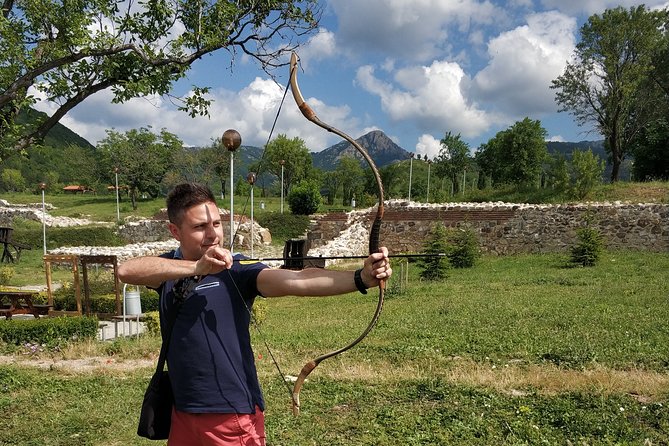
- Archery and medieval clothing: These activities are available if you book the relevant option, making the visit especially appealing for families and children.
- A significant Christian complex: Inside the fortress are remains of a three-nave basilica and an unusual baptistery decorated with murals and mosaics.
- A lead seal linked to Knyaz Boris I: This small find connects the site to the First Bulgarian Empire and gives the Bulgarian period a very tangible presence.
- Low price, but check what you select: The listed cost is $8.16 per person, while admission itself is shown as free. Guiding and activities depend on the option booked.
- Comfortable shoes matter: You will be walking across an archaeological site, where the ground and paths may not always be smooth.
Why Tuida Matters in Sliven
Tuida Fortress sits near Sliven, in an area shaped by centuries of movement across the Balkan Mountains. The fortification was not just a military post. Archaeological finds point to a market settlement, a religious center, and a place where people lived and worked outside the walls as well as within them.
The site covers about 40 decares, roughly 10 acres. That is large enough to show that Tuida was more than a compact stone stronghold. A larger basilica outside the fortified area suggests that the settlement continued beyond the defensive walls.
I find this useful context before you arrive. You are not visiting a single building with a neat beginning and end. You are walking through the remains of a settlement that served different communities over a long period. Some parts are easy to identify, such as walls, towers, and gates. Other parts need a guide or e-guide to explain what you are seeing.
That difference shapes the whole experience. With no explanation, Tuida can look sparse. With the story in place, each fragment becomes part of a larger picture.
More fortresses and castles in Bulgaria:
- Small group tour to Plovdiv, Asen’s Fortress and Bachkovo Monastery
★ 5.0 · 164 reviews - Full-Day Belogradchik Rocks and Belogradchik Fortress from Sofia
★ 5.0 · 75 reviews - Full-Day Plovdiv and Asen’s Fortress Tour from Sofia
★ 4.5 · 36 reviews
From Goths to Avars: The Fortress Story
The first major chapter begins in late Roman times. Tuida avoided destruction during the Gothic invasion of 378 AD, but the Huns destroyed it in the fifth century. The fortress was rebuilt during the reign of Roman Emperor Anastasius I, who ruled from 491 to 518 AD.
That rebuilding preserved older elements while improving the defenses. The site later met another violent end around 598 or 599 AD, probably during an invasion by Avars and Slavs. These repeated destructions and rebuildings are common in Balkan history, where strongholds often sat along routes used by armies, traders, and officials.
You can read the fortification as a record of changing military needs. The walls, towers, and gates reveal the defensive side of Tuida, while the religious remains and domestic objects show that people did not live there only during wartime.
The story continues after the ancient fortress fell. Around 705 AD, the area became part of the First Bulgarian Empire. Bulgarian Khan Tervel received the Zagore region south of the Balkan Mountains after helping Byzantine Emperor Justinian II regain his throne in Constantinople.
A Bulgarian settlement was then built on the site, though its name is unknown. The settlement reused and improved the fortress walls and aqueduct. New buildings inside the fortification were faced with marble slabs made by stone cutters in Veliki Preslav, the Bulgarian capital of the period.
Several bricks carry an Ancient Bulgar sign resembling the form |Y|. A lead seal belonging to Knyaz Boris I Mihail, who ruled from 852 to 889 AD, adds another direct link to Bulgaria’s medieval past.
This is one of the best reasons to take the guided option. A guide can connect the physical remains to the political changes behind them. Otherwise, the Bulgarian period may be easy to miss.
What You See Inside the Fortress
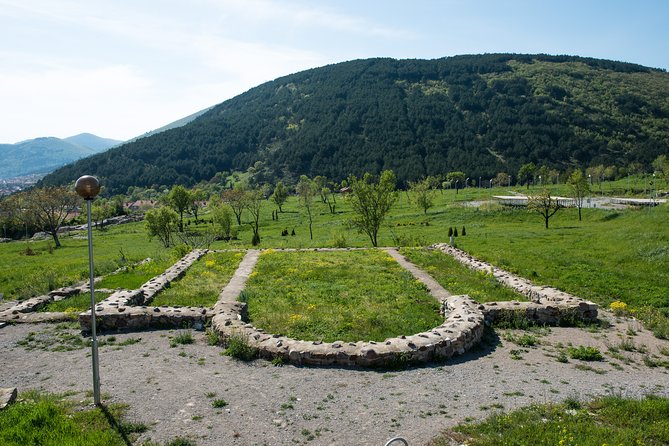
The visible remains include sections of the fortress walls, towers, and gates. You can also see traces of buildings within the enclosure. These remains are not reconstructed into a postcard-perfect castle, so set your expectations accordingly.
Tuida is better understood as an archaeological site than as a complete medieval monument. You will need to use your imagination. The reward comes from recognizing how the pieces fit together, especially when the guide points out the location and purpose of specific structures.
The site also produced iron tools, ceramic vessels, ornaments, coins, and animal bones. The bones include 14 species of wild and domesticated birds, among them Bonelli’s eagle, western capercaillie, great bustard, and common pheasant.
Those finds add small, human details to the grand military story. Tools suggest daily work. Pottery and ornaments hint at ordinary life. Coins show contact with wider economies. Bird remains offer clues about food, hunting, and the natural setting around the settlement.
There are also two marble pedestals dedicated to Apollo and Zeus. Their inscriptions preserve the name Tuida, also recorded in forms such as Suida and Tsoida. A third-century inscription describes the settlement as a market place.
I like this combination of evidence. You are not relying only on walls and legends. The site has inscriptions, objects, religious remains, and animal bones, each offering a different view of life here.
The Basilica and Baptistery

The religious complex is one of Tuida’s most important features. Excavations uncovered a three-nave, one-apse Early Christian basilica and a baptistery used from the fourth through the thirteenth century.
The baptistery is especially unusual because it had murals and mosaics. That makes it more than a basic architectural footprint. Even if only portions survive, the remains point to a serious Christian center with the resources and purpose to create a formal place for baptism and worship.
Written sources indicate that Tuida was the seat of a bishop from the fourth century onward. The basilica and baptistery fit that role, giving the site a religious importance that lasted well beyond the original Roman period.
A larger basilica outside the walls adds another layer. It suggests that the population and religious life of Tuida spread beyond the fortified enclosure. The fortress was the protected core, not the entire settlement.
If you have limited time, make sure the religious remains are part of your explanation. They are easy to undervalue if you see only low walls without knowing what they represent.
More things to do around Sliven:
- Non Touristic Half Day Camel Safari Thar Desert Sunset
★ 5.0 · 14 reviews - Private Access Rose Festival Kazanlak 05-07.06.2025
★ 4.5 · 6 reviews - Private Action Day Karting & Paintball & Buggies
★ 5.0 · 2 reviews - Private Sliven Walking Tour
★ 5.0 · 1 review
Why a Guide Makes Such a Difference
The strongest practical lesson from this experience is that Tuida works best with guidance. One visit can feel like a meaningful journey through Roman, Byzantine, Early Christian, and Bulgarian periods. Another can feel like a walk beside old walls and overgrown ground.
The English guide option is valuable because the story is not obvious from the ruins alone. You can learn why the fortress was rebuilt, how the Bulgarian settlement used the site, and what the basilica and baptistery meant.
An e-guide is included. That gives you a way to add context even if you prefer exploring at your own pace. Still, a live guide has an advantage at a site like this. You can ask about confusing remains, compare periods, and get help identifying the most important features.
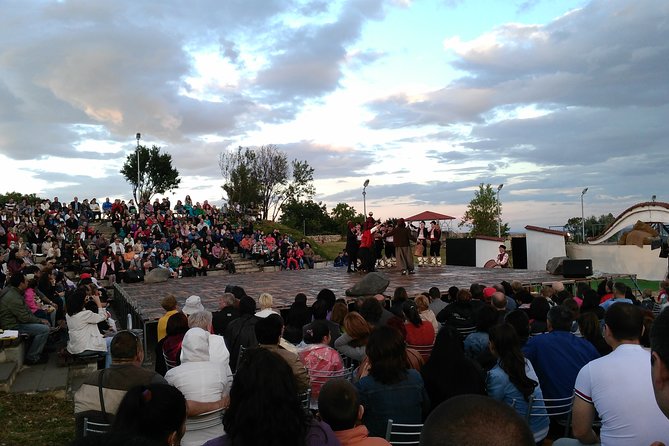
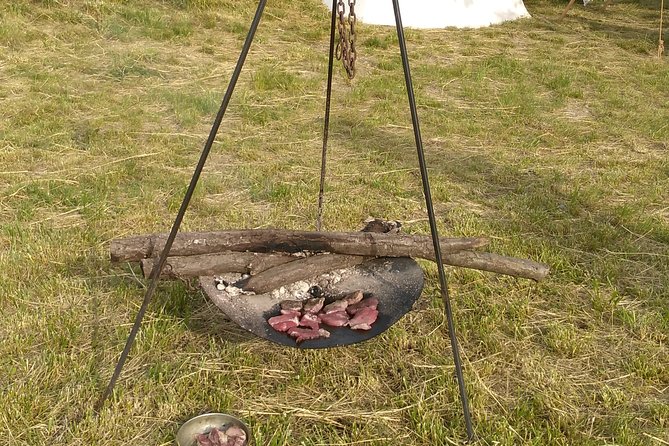
The activity options also add life to the visit. Archery and medieval clothing are available if you book that option. Medieval games are another attraction at the fortress, particularly for children.
I would not treat these activities as decoration. They help you understand the physical world of the site. Trying archery gives a small sense of the skill and equipment associated with a fortified settlement. Wearing period clothing can make the setting easier for children to imagine. The activities also give families a reason to slow down instead of racing through the archaeology.
Do not assume these extras are part of every booking. The included features depend on the option you choose, so check the details before paying.
The View and the Setting
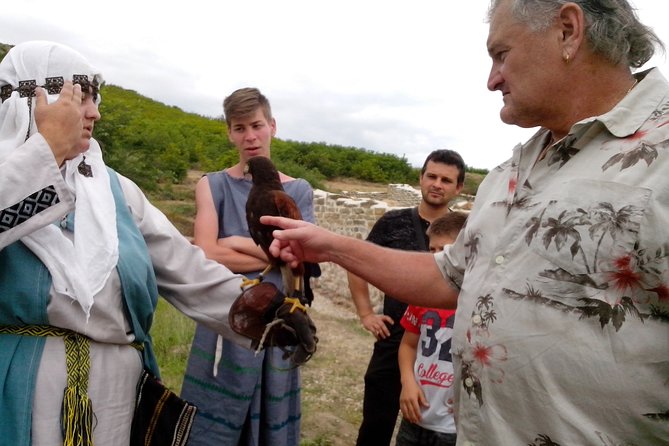
Tuida offers views from its elevated position near Sliven. The setting helps explain why the fortress was built here, even though the information provided does not specify a particular viewing platform or exact panorama.
The natural setting is part of the appeal, but it can also affect the walk. One account describes vegetation growing into the visitor areas and paths that were not always easy to follow. That criticism should not be ignored.
You should wear comfortable shoes. The advice is practical, not cosmetic. Archaeological ground can be uneven, and the condition of signs or paths may vary. If you need a polished museum-style environment, Tuida may feel rough around the edges.
I see that as part of the trade-off. The site has not been turned into a fully manufactured attraction. You get a more open archaeological setting, but you also need patience and a willingness to look closely.
Is $8.16 Good Value?
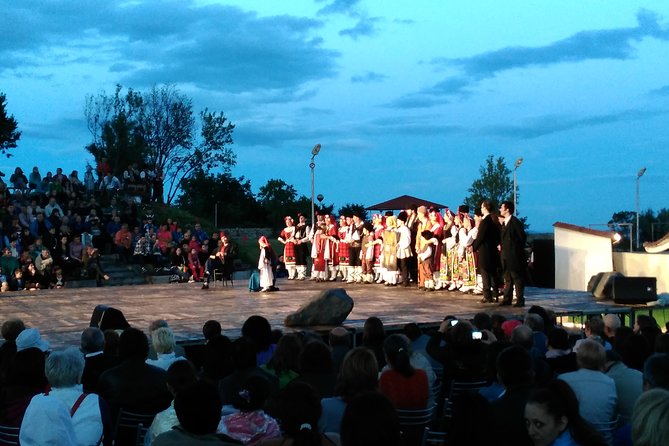
At $8.16 per person, this is an inexpensive cultural activity in Sliven. The price becomes especially attractive if your booking includes the English guide or the archery and costume option.
Admission is listed as free, so you should pay attention to what the $8.16 package covers. The information identifies guiding, archery, and medieval dress as features included only if that option is booked. The paid experience appears most useful when you want structure and activities rather than simple entry.
For a family, the value can be strong. Children have something to do, while adults receive the historical setting needed to understand the ruins. For an adult with a serious interest in archaeology, the guide may be the main reason to pay.
The value is weaker if you plan to walk in, read a few signs, and leave quickly. Since some signs may be difficult to read and the remains are not spectacular in a conventional castle sense, independent entry may feel thin.
At this price, I would choose the guided or activity option if available and suitable for your plans. The small extra cost can make the difference between seeing a pile of stones and understanding a former market, fortress, and religious center.
Who Will Enjoy Tuida Most?
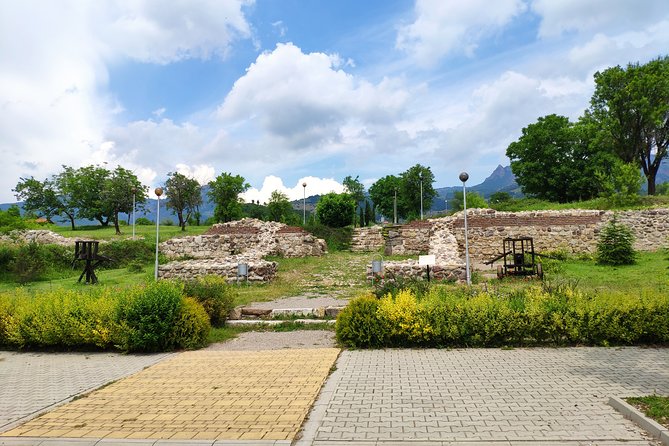
I would recommend Tuida to you if you like layered history, modest archaeological remains, and places that are less polished than Bulgaria’s major headline sights.
It suits:
- Families looking for history with archery and medieval games.
- Visitors staying in Sliven who want a local cultural stop.
- Anyone interested in Roman and Early Christian archaeology.
- People curious about the First Bulgarian Empire.
- Visitors who prefer a guided story to silent ruins.
- History fans who enjoy inscriptions, artifacts, and changing settlement patterns.
You may want to skip it if you need a complete castle, extensive indoor displays, or perfectly maintained paths. The fortress does not offer that kind of experience.
The site is also a good fit for a flexible day in Sliven. The activity is listed as approximately one day, but no exact visit length is provided. Plan around the selected option and allow enough time to hear the explanation rather than treating Tuida as a rushed photo stop.
Practical Details Before Arrival
Your ticket is mobile, and the experience is offered in English. Confirmation is provided when you book. The group size can reach 50 people, so the feel of the visit may depend on the date and the number of bookings.
A larger group can make a guided explanation less intimate. If you want to ask many questions, listen carefully, or take your time with the archaeological details, arrive ready to stay close to the guide.
Food, drinks, and personal expenses are not included. Bring what you need for the visit, since the booking does not cover refreshments.
Service animals are allowed, and most people can participate. Comfortable shoes are specifically recommended. No transport service is listed, so you should not assume that pickup or drop-off is part of the experience.
Free cancellation is available if you cancel at least 24 hours before the local start time. Cancellations inside that period are not refunded, and changes made less than 24 hours before the start are not accepted.
Final Verdict: Should You Book It?
I would book Tuida Fortress if you are visiting Sliven and want a reasonably priced site with a real sense of place. The best parts are the unusual mixture of Roman defenses, Early Christian worship, Bulgarian medieval occupation, and hands-on activities.
Choose the guided option if possible. Tuida’s main weakness is also its clearest lesson: the remains do not always explain themselves. With a guide, the walls, basilica, baptistery, inscriptions, and artifacts form a coherent story. Without one, the site may seem bare and poorly marked.
Families should consider the archery and medieval dress option. History fans should focus on the guide, basilica, baptistery, inscriptions, and the seal of Knyaz Boris I. If you only want a quick, fully restored castle visit, spend your time elsewhere.
For $8.16, Tuida is a sensible choice when you value explanation and local character over grand architecture. It is not a finished fantasy fortress. It is something more useful for the curious visitor: a place where several periods of Sliven’s past remain visible in one walk.
FAQ
Where is the Medieval Tuida Fortress tour located?
The experience takes place at the Medieval Tuida Fortress in Sliven, Bulgaria.
How much does the experience cost?
The listed price is $8.16 per person.
Is admission to the fortress included?
Admission to the fortress is listed as free. The paid booking options may include guiding, archery, and medieval clothing, depending on the option selected.
Is the tour offered in English?
Yes. The experience is offered in English, and an English guide option is available if booked.
Is the ticket mobile?
Yes. The experience provides a mobile ticket.
Are archery and medieval clothes included?
They are included only if you book the option that specifically offers archery and medieval clothing.
Is guiding included?
Guiding is included if you book the guiding option. An e-guide is also included.
What should I wear?
Comfortable shoes are recommended because you will be visiting archaeological ruins and walking around the fortress site.
Can service animals participate?
Yes. Service animals are allowed.
Can I cancel for a full refund?
Yes, if you cancel at least 24 hours before the experience’s start time. Cancellations made less than 24 hours in advance are not refunded.
Just added in Bulgaria
- Monastery of the Holy Transfiguration of God Self-Guided★ 5.0 · 1 review
- Time Travel to Ottoman Vidin: Exploration Game and Tour★ 5.0 · 2 reviews
- Wine Experience & Tasting Hub★ 5.0 · 6 reviews
- Monasteries and Waterfalls Tour from Veliko Tarnovo★ 5.0 · 8 reviews
- Self-guided Tour in Tsarevets Fortress★ 4.0 · 9 reviews
- The Ultimate Private Communist Tour of Varna★ 5.0 · 2 reviews
- Varna Exquisite Wine Tasting★ 5.0 · 5 reviews
- The best of Balchik walking tour★ 5.0 · 1 review
Bulgarian Fortresses and Castles, compared.
Small group tour to Plovdiv, Asen’s Fortress and Bachkovo Monastery
Read our review →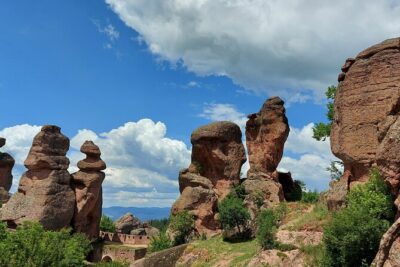
Full-Day Belogradchik Rocks and Belogradchik Fortress from Sofia
Read our review →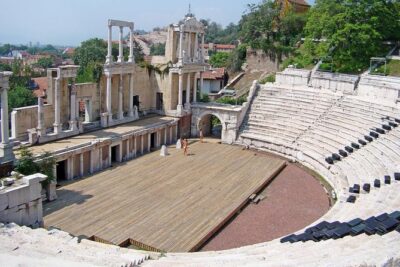
Full-Day Plovdiv and Asen’s Fortress Tour from Sofia
Read our review →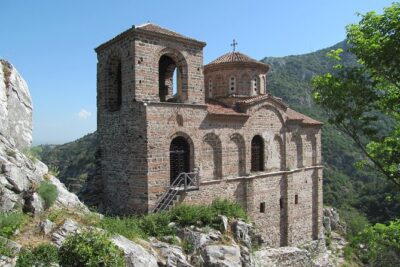
Wonderful Bridges-Bachkovo Monastery-Assen’s Fortress – day tour from Plovdiv
Read our review →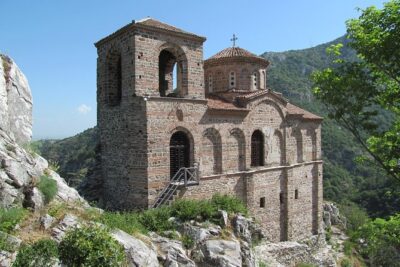
Bachkovo Monastery & Asen’s Fortress – day tour from Plovdiv
Read our review →
Private trip to Bachkovo Monastery and Assen’s Fortress
Read our review →
Plovdiv, Asen’s Fortress and Bachkovo Monastery small group tour with pickup
Read our review →
Browse the lists this tour appears in